 look news india

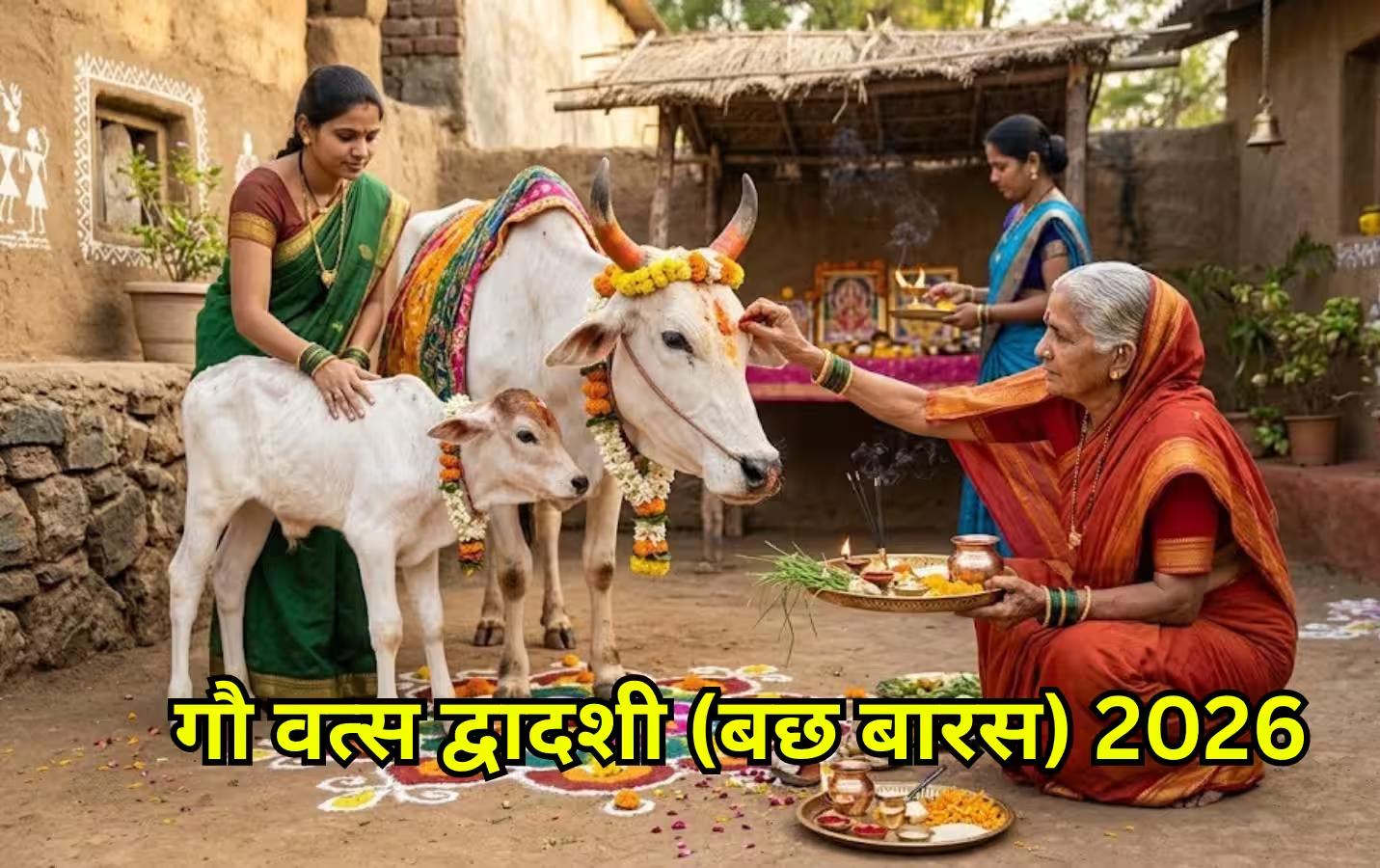
There has been a very rich tradition of festivals and fasts in Sanatan culture, in which the festivals expressing gratitude towards nature, animals and especially Mother Cow have been considered to have a very special and supernatural significance. In this series, the holy festival of Bachh Baras i.e. Govatsa Dwadashi, celebrated on the Dwadashi date of Krishna Paksha of Bhadrapada month, has a special place in Sanatan Dharma. This year, this holy fast and festival of Bachh Baras is being celebrated according to the differences of the calendar, where this fast and puja rituals are being performed at many places. This fast, observed by mothers to pray for the long life, successful life and good health of their children, is very difficult and full of discipline in itself. On this special day, there is a tradition of worshiping the cow and its calf. Along with this, some strict rules and precautions related to eating habits are also followed on this day, about which it is very important for every fasting woman to know in detail so that she can get the full and virtuous results of the fast.
The festival of Govatsa Dwadashi or Bachh Baras is considered mainly dedicated by women for the welfare and protection of their children. According to mythological beliefs, women keep a fast on this day and after fasting throughout the day, in the evening they worship Mother Cow and her calf as per the rituals. According to the story related to this festival, in ancient times there was a king in whose kingdom a special rule was followed regarding the use of cow’s milk or things made from it on the day of Bachh Baras. There is a tradition of worshiping the calf on this day because the calf is dear to the cow and by serving the cow one automatically gets the blessings of all the Gods and Goddesses. It is believed that the mothers who observe this fast with a true heart and listen to the story of Bachh Baras, all kinds of troubles from their children are averted and they are blessed with longevity and health.
On the day of Bachh Baras, one wakes up early in the morning, takes bath etc., wears clean clothes and pledges to observe this fast. Evening time i.e. Pradosh Kaal is considered the best and fruitful time for worship. On this day, the cow and its calf are bathed and cleaned by going to a cow shed or near one’s house. After this, Tilak is applied to the cow and calf, Mauli is tied on their forehead and they are garlanded with flowers. Akshat, roli, incense, lamp, jaggery and soaked gram are kept in the puja thali. Foods made from sprouted gram and wheat are fed with reverence to the mother cow and calf. After this, the story of the fast is heard or read with water in hand and at the end the aarti is performed by circling Goddess Cow.
The biggest and main feature of Bachh Baras fast is its strict eating rules, which every fasting person has to follow with complete devotion. On this day, it is completely prohibited to consume cow’s milk and its products like curd, butter, ghee or cheese in any form. The main religious belief behind this is that on this day the calf drinks its share of milk and humans should not accept milk or things related to the calf’s rights. Apart from this, no grain is used in the food on this day which has been plowed in the fields or harvested by machine, which is why mainly cut wheat and vegetables cut with knives are not consumed on this day. On this day, fasting women consume only fruits or special dishes like moong, moth, millet and uncut or underground growing tubers, so that the rules of the fast can be completely followed.
This festival of Bachh Baras or Govatsa Dwadashi is not just a religious ritual, but it also strengthens the deep love and co-existence relationship between us and nature and the silent animals. In the modern fast-paced life, when people are moving away from their culture and traditions, then such festivals help us connect with our roots. During the fast, special care should be taken that under no circumstances should the mother cow or calf face any kind of inconvenience and they should be served with full devotion. After the puja is over, the cow and calf must be fed fodder and jaggery. If you are also observing this holy fast with full faith, then strictly follow all its rules, so that there is happiness and peace in your home and family and the future of your children can be bright and secure.