 look news india

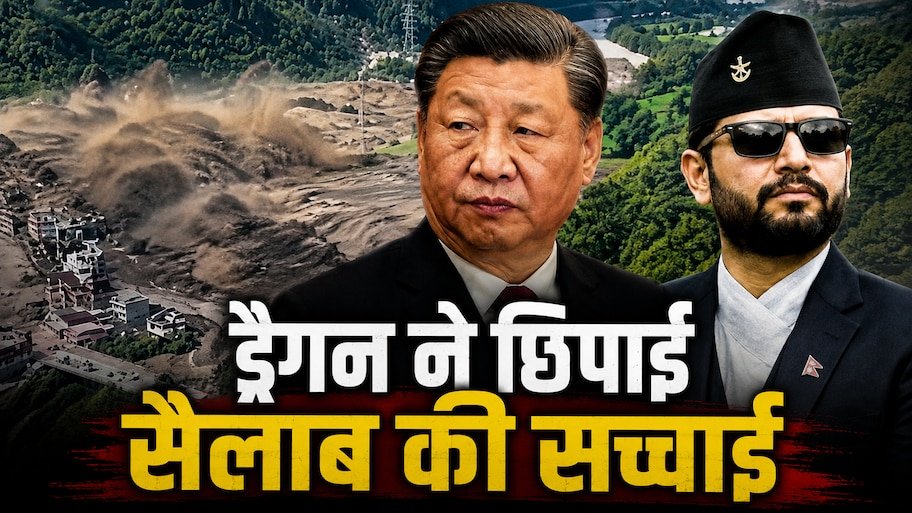
Nepal’s major and fast-flowing rivers originate directly from the Tibetan Plateau and Trans-Himalayan valleys. During the recent natural disaster, when Tibet’s highlands experienced unprecedented torrential rains and glacial lakes expanded, lowland Nepal remained in complete darkness. For downstream countries, water levels and flow rates in the upper reaches of the river are a matter of life and death, but no clear warning or hydro-meteorological data was shared by Beijing in time.
Experts say that when the unexpected pressure of water from across the border increased suddenly, the low hilly areas and riverside towns of Nepal did not even get a chance to recover. Within minutes the rivers crossed the danger mark and within no time many settlements, bridges and link roads were submerged.
Lack of trans-boundary data sharing: The biggest hurdle in disaster management
According to the rules of international water diplomacy and disaster management, in case of transboundary rivers, it is the humanitarian and technical responsibility of the upstream country to give prior information to the downstream country about abnormal flow of water, discharge from dams or breach of lakes. China has long kept sensitive data related to Himalayan hydrology under strategic control.
Nepal’s water resources experts believe that if the data from satellite or gauging stations had been shared with the disaster control room in Kathmandu even 4 to 6 hours earlier, people from the sensitive valleys would have been evacuated to safer higher places. This technical delay proved fatal for hundreds of helpless citizens.
Why is public anger increasing in Nepal: Questions on Dragon’s dual policies
After this horrific disaster in Nepal, now tough questions have started being raised in the general public and local media about the irresponsible attitude of China. China, which promised to build infrastructure and make huge investments, withheld information at a critical juncture when every second was precious to save lives.
Social activists and environmentalists in Nepal argue that natural disasters should be approached with a humanitarian approach that transcends political or diplomatic boundaries. Due to the lack of clarity about the actual location of the dams and water-diversion projects built on the Tibetan side, Nepalese officials faced great difficulty in estimating from where and at what speed such a huge flow of water suddenly originated in the rivers.
India’s active cooperation versus China’s mysterious working style
During this crisis, on the one hand, India immediately issued helpline numbers, kept the Indian Air Force’s transport fleet ready with relief material and intensified ground coordination, while on the other hand, the lack of transparent information about the origin points of the rivers from China’s side was clearly visible. While the established protocols of data sharing with India in the border areas are helpful in protecting lives and property in the downstream areas, China’s opaqueness on the northern border always remains a major hydrological risk for Nepal.
Water experts have warned that the incidence of Glacial Lake Outburst Flood (GLOF) on the Tibetan Plateau will increase in the future due to climate change. In such a situation, if Beijing does not adopt multilateral early warning mechanism, such human tragedies may be seen again and again in the lower countries of the Himalayan region.