 look news india

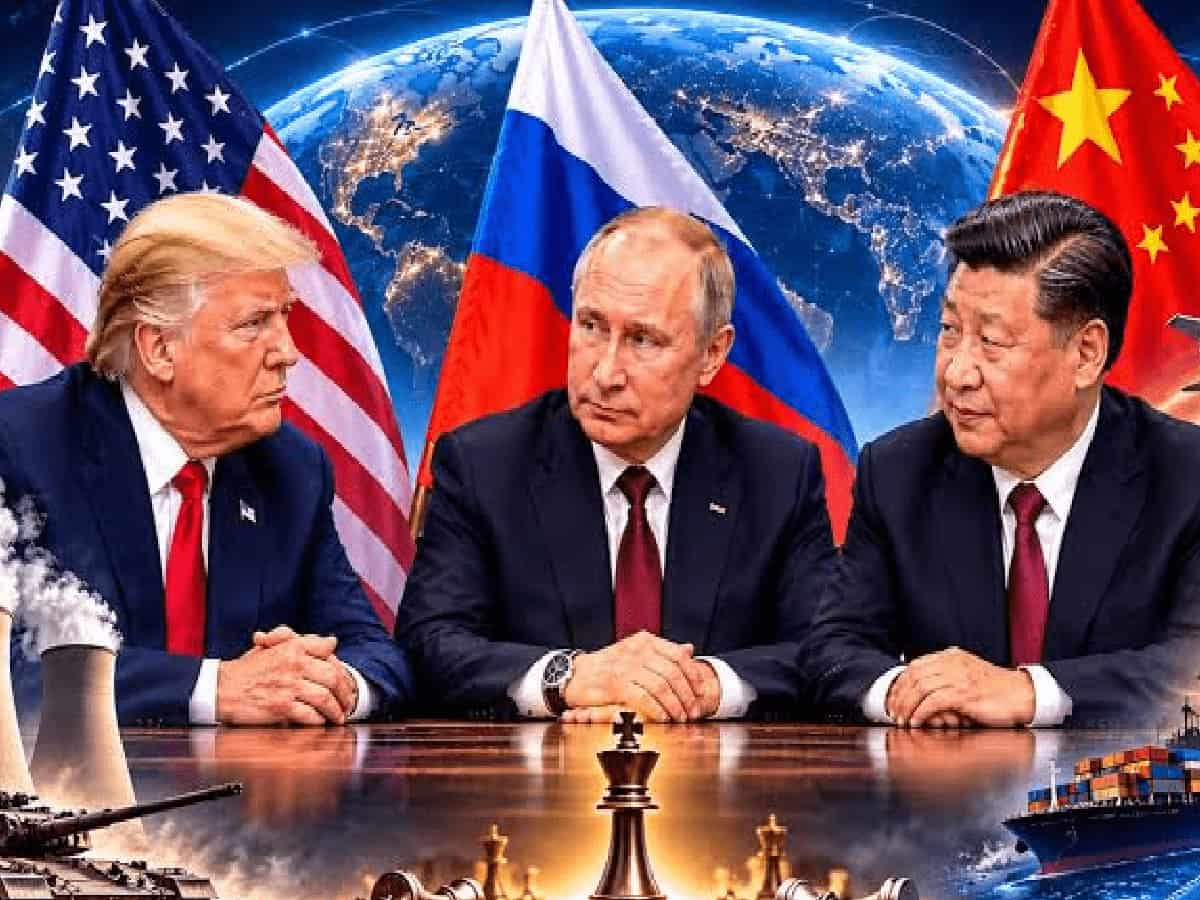
There are certain moments in the history of international politics and global diplomacy that decide the direction and condition of the world for decades to come. Today, the eyes of the entire world are focused on China’s major economic center Shenzhen, where a historic and unprecedented diplomatic development is being witnessed. After a long gap of 81 years, the top leaders of the world’s three largest superpowers are sitting face to face on the same stage and at the same negotiating table. This trilateral meeting between US President Donald Trump, Chinese President Xi Jinping and Russian President Vladimir Putin has reminded global analysts and historians of the famous ‘Yalta Conference’ of 1945. Just as in the last phase of the Second World War, the three great leaders of that time had together drawn the outline of the post-war world, in the same way today again these three powerful leaders are facing very serious questions regarding the global balance of power, ongoing wars and nuclear security. However, there is a world of difference in the period, characters and circumstances of both the historical meetings. Let us understand in detail what happened in the Yalta Conference of 1945 and how different or similar is this Shenzhen meeting of 2026.
If we turn the pages of history, in February 1945, when the then US President Franklin D. Roosevelt, British Prime Minister Winston Churchill and the supreme leader of the Soviet Union Joseph Stalin gathered in the city of Yalta in Crimea, the Second World War had reached its decisive and final stage. At that time, the defeat of Nazi Germany was almost certain, but the biggest challenge before the world was what would be the future of Europe after the end of the war, how would the administration of Germany be run, what would be the nature of the political system of Poland and what would be the role of the Soviet Union against Japan. Many concrete and far-reaching agreements were made in that intensive meeting that lasted for about seven to eight days. It was in Yalta that important agreements were made on dividing Germany into various occupation zones, carrying forward the process of establishing the United Nations for global peace and the future arrangement of Europe. However, in the following years, serious differences emerged regarding Soviet influence in Eastern Europe, which later became the main reason for the ‘Cold War’ that lasted for decades, but Yalta had definitely laid the foundation of the world order of that period.
Today, after 81 years, when Donald Trump, Xi Jinping and Vladimir Putin are sitting together in Shenzhen, China, the situation is not at all the same as before, but once again the future of the entire world is at stake. In 1945, all three countries were allies fighting a war against a common enemy, whereas today America, China and Russia have come to the negotiating table with their own distinct strategic, diplomatic and economic interests. Every leader has his own clear agenda in this tripartite talks. The main priority of US President Donald Trump is to reduce nuclear weapons globally and resolve the ongoing Iran war crisis in the Middle East. On the other hand, for Russian President Vladimir Putin, the most important issues are improving bilateral relations with America, resolving the Ukraine war and removing the harsh Western economic sanctions imposed on Russia. At the same time, host Chinese President Xi Jinping is completely focused on establishing China’s decisive role on the global stage, ending the US tariff war, removing technical restrictions and protecting its trade interests.
The most sensitive and important aspect of this general meeting being held in Shenzhen is considered to be the control of nuclear weapons. It is noteworthy that the main ‘New START Treaty’ between America and Russia limiting nuclear weapons has expired in February 2026, due to which the danger of starting a nuclear arms race in the world once again is looming. President Donald Trump wants that China should also be included compulsorily in whatever new international system or treaty is formed to control nuclear weapons in the future. However, building a consensus on this issue does not seem easy, as Beijing’s nuclear arsenal is still quite small compared to the huge stockpiles of the US and Russia. In such a situation, preparing China for nuclear reduction talks on equal terms is going to prove to be a big test for American diplomacy.
International affairs experts believe that a huge geographical and power balance difference between the Yalta Conference of 1945 and the Shenzhen meeting of 2026 is that in the 1945 meeting Britain was included as a major power, whereas today China has emerged in its place as the main center of global power balance. Additionally, another irony is that today’s meeting is going to directly affect the future of important parties like Ukraine, Europe and Iran, while none of them are present at this decision-making table. At present, it would be premature to call this meeting a ‘New Yalta Conference’, because while in Yalta there were concrete and written agreements on the post-war arrangement, in Shenzhen there are deep differences between the interests and priorities of the three superpowers. The real question before the world today is not whether Trump, Jinping and Putin are sitting together on the same stage, but the real test is whether these three great leaders will be able to rise above their mutual rivalry and find a common path for global peace and the future of humanity.