 look news india
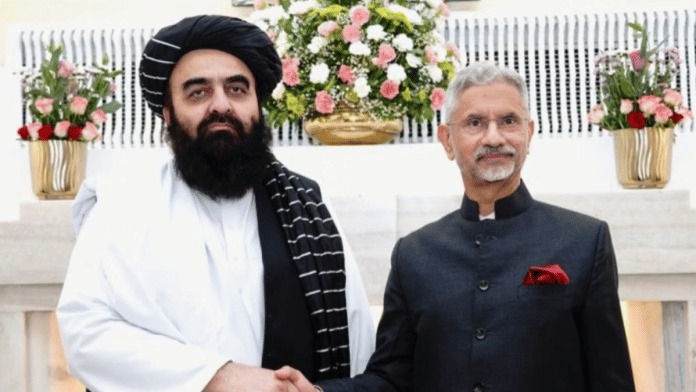
India-Afghanistan border history: For the last few days, Afghanistan is once again in the headlines of Indian newspapers. Sometimes the visit of Taliban leaders to India, sometimes their visit to the Madrasa of Deoband, and sometimes violent clashes started between Afghanistan and Pakistan. Amidst all this commotion, one such thing has come to light again, which we and you have probably forgotten – the 106 kilometer long border between India and Afghanistan!
Yes, you read it right. According to the Constitution of India and Home Ministry documents, India shares its borders with seven countries, and one of them is Afghanistan. But if that’s the case, why aren’t we there? Why don’t we have access to this range? Its story is hidden in a forgotten conspiracy and deception.
The story of the deception that made us lose our limits
This story begins just after independence, in 1947. When Maharaja Hari Singh merged the vast state of Jammu and Kashmir with India, it also included the area of Gilgit-Baltistan. This is the area which borders the Wakhan Corridor of Afghanistan.
After independence, the Maharaja appointed Brigadier Ghanshra Singh as the Governor of Gilgit-Baltistan. But the commanding officer of the Gilgit Scouts stationed there was an Englishman – Major William Alexander Brown. As soon as the Maharaja announced the merger with India, this British officer hatched a big conspiracy. He rebelled along with his Muslim soldiers, imprisoned the Indian Governor in his house and took down the flag of the princely state and hoisted the flag of Pakistan there.
It was like stabbing India in the back by the British. Within two days, Pakistan sent its military governor there and took control of the entire area, which today we consider a part of Pakistan Occupied Jammu and Kashmir (PoJK). For this deception, Major Brown was later honored by both Britain and Pakistan.
What is this Wakhan Corridor, which connects us to Afghanistan?
The Wakhan Corridor is a narrow mountainous corridor in Afghanistan, which separates China from Tajikistan and Pakistan. The 75 km long border of this corridor is with our Gilgit-Baltistan. It was part of the historical Silk Route and is extremely important strategically.
Why are we talking about this again now?
India maintained silence on this issue for a long time. But now things are changing.
- Government’s changed stand: When Home Minister Amit Shah mentioned the Hindus and Sikhs of Afghanistan while speaking on the CAA law, he reminded of this forgotten border.
- Talks with Taliban: Now India is talking directly to Taliban. Recently Foreign Minister S. In a joint statement, Jaishankar and Taliban leader Amir Khan Muttaki considered Wakhan their “closest neighbour”. This is a very big diplomatic message.
- Tension in Pakistan-Afghanistan: Today when relations between Taliban and Pakistan are deteriorating, it is an opportunity for India to revive its old and historical relations.
Pakistan’s new move and India’s concern
Pakistan has been trying to change the mood of the population of Gilgit-Baltistan for the last 75 years. He is making the local Shia population a minority by settling Sunni and Punjabi people from outside. This is a matter of great concern for India, because India still claims this entire area. Even today 24 seats have been kept vacant in Jammu and Kashmir Assembly for PoJK and Gilgit-Baltistan.
This story reminds us that in foreign policy there are no permanent friends or enemies, only the interests of the country are permanent. This forgotten border between India and Afghanistan is not just a piece of land, but a big chapter of history, strategy and future opportunities, which now is the time to read it again.