 look news india

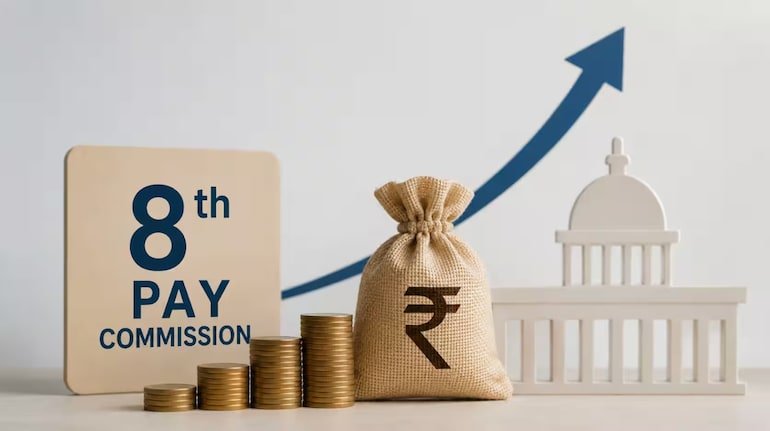
While on one hand lakhs of central government employees and pensioners are eagerly waiting for the implementation of the recommendations of the 8th Pay Commission, on the other hand a very important report has come out regarding the economic pressure this salary increase will put on the country’s exchequer. According to the latest analysis released by global financial institution Deutsche Bank Research, the implementation of the Eighth Pay Commission could lead to an additional increase of at least Rs 3 lakh crore in the annual expenditure of the central government. The bank has clarified in its ‘India Macro Outlook 2027’ report that due to this huge salary and pension bill, the path of fiscal consolidation i.e. deficit reduction is going to prove to be very difficult and challenging for the government in the coming financial year 2027-28 (FY28).
According to economists at Deutsche Bank, in the current financial year 2026-27, the government can achieve the target of limiting its fiscal deficit to 4.3 percent of GDP. Behind this are positive factors like record dividend of Rs 2.9 lakh crore received from the Reserve Bank of India (RBI), provision of Rs 1 lakh crore in the Economic Stabilization Fund and the potential amount from disinvestment in government companies. But the picture may change in the financial year 2027-28. According to the report, due to additional expenditure of Rs 3 lakh crore due to the Eighth Pay Commission, rising subsidy bill due to high crude oil prices and the possibility of getting relatively low dividend from RBI next year, the fiscal deficit may remain stuck at the level of 4.3 percent of GDP in FY28 also.
It is often believed that if the government delays implementing the Pay Commission recommendations, it gets huge relief in the budget. However, Deutsche Bank’s report has rejected this notion and cautioned the government. The report said that even if the government postpones the implementation of the Eighth Pay Commission till the year 2028, it will provide only temporary and short-term relief to the exchequer. Since traditionally the Pay Commission recommendations are considered applicable from the previous effective date (January 1, 2026), in case of delay, the outstanding arrears of employees and pensioners will continue to accumulate. Later, when the government will pay this arrears, there will be even greater financial pressure on the government exchequer.
Despite the increasing burden on the government exchequer, this salary increase will also have a big positive aspect on the Indian economy. When the monthly income of about 49 lakh central employees and more than 65 lakh pensioners i.e. about 1.15 to 1.20 crore families across the country increases, their purchasing power will increase rapidly. Deutsche Bank believes that due to increase in salary and pension, employees will spend more on automobiles, real estate, electronics and everyday consumer goods, which will give new energy to consumption-based demand in the domestic market. This is the reason why the Bank has given a strong estimate of India’s real GDP growth rate at 7.3 percent in the financial year 2026-27, 7.2 percent in the financial year 2027-28 and 7.3 percent in the financial year 2028-29, even amidst the geopolitical tension in West Asia and the possibility of a below-normal monsoon.
This report of Deutsche Bank is being considered an important signal for the central government and policy makers before the preparations for the upcoming Union Budget. The report also fears that due to pressure from food and fuel prices, the retail inflation rate (CPI) may remain around 5.2 percent in the financial year 2026-27 and 5 percent in the financial year 2027-28, due to which there will be pressure on the Reserve Bank of India to adopt a strict stance on interest rates. In such a situation, the biggest challenge before the Finance Ministry will be how it manages the huge expenditure of Rs 3 lakh crore of the Eighth Pay Commission without slowing down the pace of capital expenditure (Capex) and development schemes.