 look news india

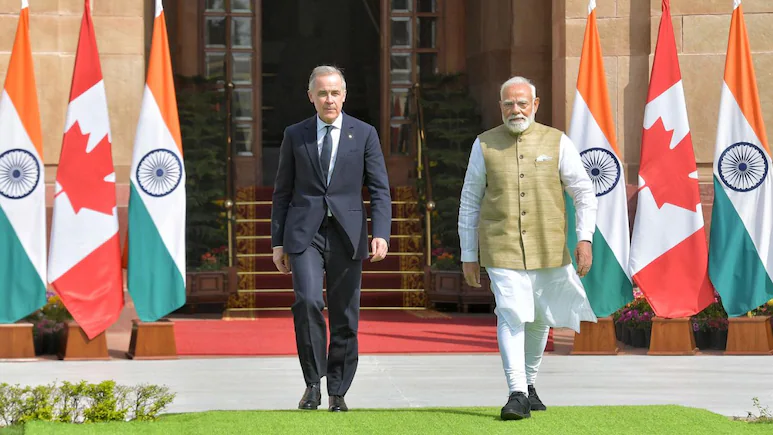
The proposed Comprehensive Economic Partnership Agreement (CEPA) between India and Canada is considered to be the backbone of bilateral economic relations, in which talks are going on on topics like trade in goods and services, rules of origin, intellectual property and investment promotion. In recent rounds of talks, officials have emphasized that both countries want to expand mutual investment and business opportunities while reducing trade barriers, while there have also been discussions about taking bilateral trade to an ambitious target of $50 billion to $70 billion by 2030. If there is concrete progress or announcement on CEPA, it could open up new avenues for Indian exporters, IT and services sector, pharmaceuticals, manufacturing and Canadian investors, although the final terms and timeline will remain crucial as negotiations between the two countries take place.
A key feature of the bilateral reset this time is that the issue is not limited to just traditional trade but is expanding to strategic sectors like defence, space, aerospace, critical minerals and Artificial Intelligence. Amid talks between Ottawa and New Delhi on a Defense Cooperation Framework and an Information Security Agreement, the possibilities of joint production, training, interoperability and synergy with India’s defense modernization and the ‘Make in India’ initiative are being discussed. Along with this, topics like expansion of startups in the field of Artificial Intelligence, research, use of AI in space and aerospace applications and uranium and energy cooperation are also being seen as strong pillars of future partnership.
The developments in the year 2023 and the subsequent allegations and counter-allegations had created serious tensions in the relations between India and Canada, which had a deep impact on high-level dialogue, trade negotiations and the diplomatic environment. However, over time, both countries chose to move forward through dialogue on national security, rule of law and consular issues, which was reflected in Security Advisor-level meetings, consular dialogue and high-level visits in 2026. Diplomatic analysts believe that advancing economic and technological cooperation while maintaining clarity and institutional dialogue on sensitive issues is the most practical path to long-term stability, even though the confidence-building process on the ground requires continuity.
This new pace of India-Canada relations is being discussed among people interested in topics related to foreign policy, global trade, employment and international education in the entire state and many cities of the country, including the capital of Uttar Pradesh, Lucknow. Among Lucknow’s young professionals, entrepreneurs, students and families, it is often seen how changes in global partnerships can impact technology opportunities, investment climate and international travel. The Prime Minister’s proposed visit in the coming weeks, the conclusions of the CEPA talks, and the outlines of the defense and AI agreements will provide clarity on what concrete form this reset between India and Canada takes.