 look news india

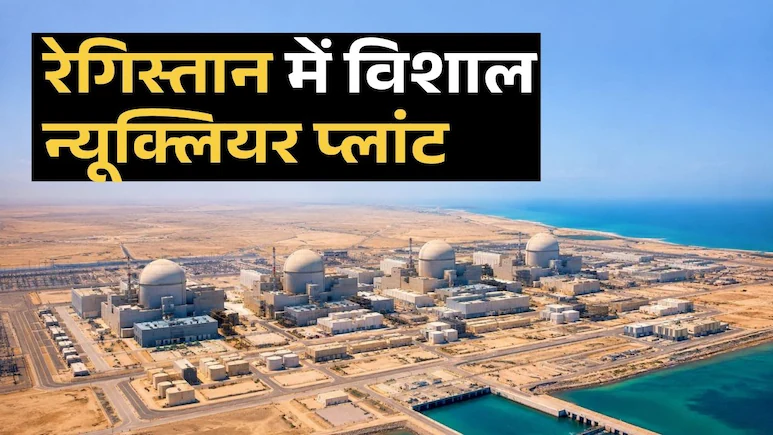
Amid increasing industrialization, electricity demand and water crisis in many parts of the African continent, new activity has intensified regarding projects related to nuclear energy and water purification (desalination). Ongoing partnerships and discussions with African countries, led by Russia’s state nuclear energy company Rosatom, have revealed plans for large nuclear units as well as integrated energy and water systems for coastal and arid regions. Although many comparative claims and big figures are fabricated in social media and viral discussions, but in reality, from Egypt’s El Dawa nuclear plant to the agreements and negotiations with Ghana, Uganda and other countries, this has given rise to a new debate about Africa’s energy future.
In desert, semi-arid and water scarce areas, not only electricity but also the availability of clean water for drinking and daily use is the biggest challenge. According to the outlines presented at the forums of Russian nuclear establishments, the concept of linking nuclear power plants with seawater desalination and water treatment systems is being worked out, so that a single energy infrastructure can support both power generation and water supply. In the context of the El Dawa nuclear project in Egypt, progress made with the seawater desalination project and local industry participation demonstrate that energy and water security are being integrated into coastal and arid environments.
Steps seem to be moving forward at different levels regarding the expansion of nuclear energy in Africa. Expansion discussions are underway with the construction of the four-reactor El Dawa project in Egypt, while cooperation on a 2 GW nuclear plant with Ghana and a roadmap for a multi-reactor project with Uganda have progressed. Apart from this, advanced level talks are also being held with several African countries on proposals for floating nuclear power units of about 100 MW capacity for coastal countries. According to analysts, the actual capacity, cost and timeline of any project depend on final agreements, regulatory approvals and infrastructure readiness.
While developing and energy-starved countries need reliable and consistent electricity (baseload power), nuclear projects also raise questions about safety, regulatory capacity, long dependence on fuel supply and maintenance. Experts believe that in countries where prior experience with commercial nuclear power is limited, a balance between technical human resources, emergency preparedness, financial transparency and long-term credit and operating terms is critical. Also, it is considered necessary to assess the tropical climate, sea conditions and commercial feasibility in case of floating or new generation units.
News related to the global energy transition, nuclear technology and international geopolitics is always important for readers in Uttar Pradesh and India including Lucknow, Kanpur, Varanasi, Prayagraj and Gorakhpur. India itself is working on energy security, clean energy mix and expansion of nuclear capacity, so it is natural to keep an eye on the progress of big energy projects going on in other continents. The pace at which these power and water initiatives in Africa take shape in the future and how much they benefit local economies will become clear in the years to come.