 look news india

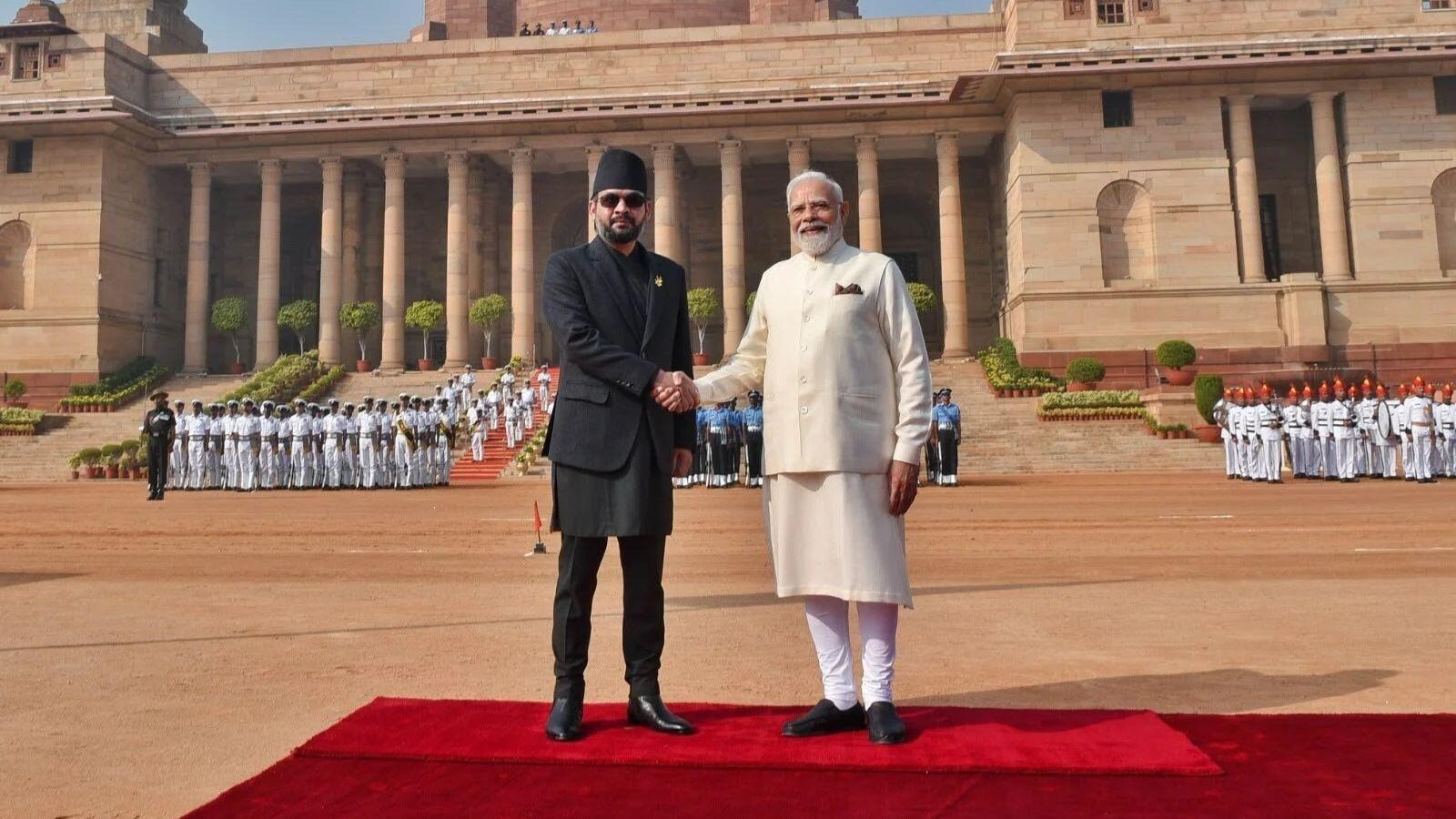
The high-level bilateral meeting between India and Nepal held on Monday at Hyderabad House in New Delhi has presented a new picture of neighbor diplomacy. This meeting between Prime Minister Narendra Modi and Nepal’s Prime Minister Balen Shah took place during Balen Shah’s first formal visit to India after assuming office, but what was most talked about in diplomatic circles was that both the leaders stayed away from sensitive and long-pending controversial issues. The issue related to Lipulekh border dispute and Gorkha recruitment of Nepali youth was not included in the agenda of this bilateral conversation. Instead, the leadership of both countries gave priority to immediate humanitarian needs, disaster relief, rail and road connectivity and economic cooperation.
During the last few years, many such issues have come to the fore in the relations between India and Nepal which have heated public sentiments and political debate. Prominent among these is the border dispute related to Kalapani, Lipulekh and Limpiyadhura, whose historical roots are seen in the Sugauli Treaty of 1816 and different interpretations of the origin of the Kali River. India considers Lipulekh and surrounding areas as its integral part and maintains administrative control there, while Nepal has been claiming these areas on the basis of historical documents and maps. Apart from being strategically close to China, Lipulekh Pass is also considered very important for the Kailash Mansarovar route.
Similarly, the topic of recruitment of Gorkha soldiers in the Indian Army also remains sensitive. The Gorkha recruitment process for the Indian Army in Nepal has been stalled since the implementation of the Agneepath scheme in the year 2022. The cessation of this almost two-century-old tradition has affected the families and youth of Nepal for whom this service has been a means of respect and livelihood. Quoting the data of the Ministry of External Affairs, it has also been revealed that Nepal has been getting a huge financial amount from the salaries and pensions of Gorkha personnel working and retired in the Indian Army. Despite this, in the New Delhi meeting, both the leaders chose to focus on areas of common interests and concrete results instead of immediately raking up old deadlocks.
The biggest practical achievement of this meeting was the announcement related to reconstruction and development cooperation of Nepal. In August 2026, devastating floods and landslides wreaked havoc in Nepal, killing more than 1,500 people, leaving more than 5,200 missing and causing extensive damage to roads, bridges, houses and power projects. Nepal needed huge resources to overcome this difficult period. Prime Minister Narendra Modi announced a package of 24,000 crore Nepali rupees (about 15,000 crore Indian rupees) for reconstruction and development cooperation in flood-affected areas.
Eight Memorandums of Understanding (MoUs) were also signed between India and Nepal during the meeting, laying the groundwork for further institutional cooperation in various fields. Strengthening the connectivity and cultural ties, there was also talk of starting a new train service (Kamal Express) between Ayodhya and Janakpur. Prime Minister Modi said that India’s Dham and Ram are incomplete without Nepal and both the countries support each other in difficult times. He also stressed on expediting the development work of Integrated Check Post, so that cross border movement and trade can be facilitated.
Relations between India and Nepal are not limited to formal diplomacy, but are linked by centuries-old cultural, religious and family ties. Open borders, shared faith, trade and mutual movement have kept the two societies close. At the same time, in the regional scenario, India’s ‘Neighborhood First’ policy and prompt assistance is being considered strategically important amidst the increasing investment by China in infrastructure, highways, airports and hydropower projects in Nepal.
There are vast possibilities for cooperation between the two countries in the field of energy also. Initiatives such as the goal of exporting up to 10,000 MW of power from Nepal to India in the long term as well as extending power to Bangladesh through the Indian grid are reshaping the regional energy balance. However, there remains a need for continued coordination in areas such as expansion of petroleum pipelines, pace of work at some border posts and meeting power trade targets.
This talk in New Delhi indicates that both the countries currently want to keep the bilateral environment positive by strengthening trust, disaster relief and basic connectivity. There may be no immediate progress in formal talks on sensitive issues like border and recruitment, but there is expectation from both sides to continue the process of stable and reliable dialogue. For the people of the Terai and border areas adjacent to Uttar Pradesh and Bihar—such as Lakhimpur Kheri, Bahraich, Siddharthnagar, Maharajganj and East Champaran—the warmth of India-Nepal relations also holds significant significance in terms of trade, pilgrimage and daily border activities.