 look news india

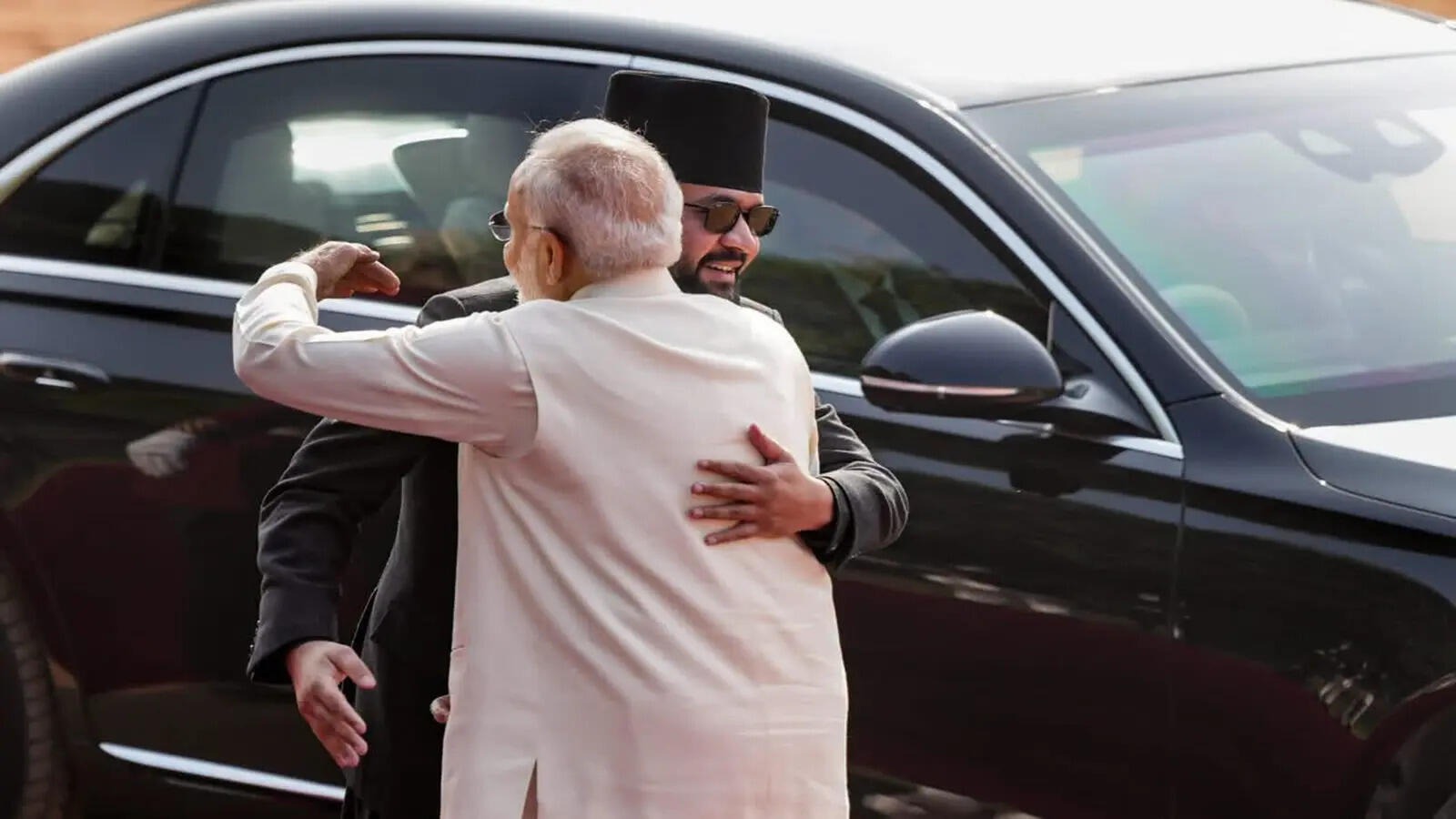
The recent high-level bilateral talks held in New Delhi have added a fresh and positive chapter to the historical relations between India and Nepal. Nepal Prime Minister Balen Shah’s meeting with Prime Minister Narendra Modi during his two-day visit to India, the ease of communication and mutual coordination has attracted special attention of diplomatic observers. This is Balen Shah’s first visit to India and his first bilateral foreign visit as Prime Minister after assuming office in March 2026, which is being seen as an important opportunity for both Kathmandu and New Delhi to determine the direction of relations. The long talks between the two leaders, the warmth reflected in the joint addresses and the practical decisions have indicated that neighborhood diplomacy is no longer limited to mere formalities, but is moving forward on a new ground of shared future and trust.
In diplomacy, the personal understanding and ease of communication between leaders often makes difficult equations easier. This coordination was clearly visible in the discussion between Prime Minister Modi and 36-year-old Balen Shah in New Delhi. After the meeting, Prime Minister Modi said that he had a fruitful discussion with Balen Shah for the last few hours and realized his clear vision and commitment for the future of Nepal and India-Nepal relations. Modi also noted that Balen Shah’s visionary thinking was reflected in his address to the United Nations General Assembly earlier this year.
On the other hand, Balen Shah described India as a ‘trusted neighbour’ and said that whenever Nepal faced a natural disaster or any difficult time, India was always the first to stand by to help. He described the relations between India and Nepal as strong as the Himalayas and as vast as the ocean, and also termed mutual respect, unwavering trust and goodwill as the basic foundation of these relations. Prime Minister Modi also said that the relationship between the two countries is not limited to just being neighbours, but is a symbol of unbreakable trust and friendship – where joys, sorrows and challenges are shared. Also, symbolic moments like presenting Ganga water brought from Kashi Vishwanath Temple in Varanasi in a brass urn and Balen Shah inviting PM Modi to visit Nepal also underline this warmth.
The bonding between the two leaders during this visit was not limited to words only, but was also visible in concrete announcements and connectivity initiatives. Prime Minister Modi and Balen Shah virtually flagged off the ‘Saryu-Kamala Express’ train service connecting Ayodhya in Uttar Pradesh to Janakpur in Nepal. This initiative is being seen as connecting the historical and cultural heritage related to the times of Lord Ram and Mata Janaki with modern communication medium, which Balen Shah also underlined in his address.
Additionally, condoling the loss of life caused by the recent floods in Nepal, India announced a package of 24,000 crore Nepali rupees (about 15,000 crore Indian rupees) for Nepal’s reconstruction and long-term development cooperation. While promoting education and youth opportunities, emphasis was also laid on increasing scholarships in the field of law and technology for Nepali students in Indian institutions and educational initiatives related to IIT offshore campuses. Under the common vision of ‘Developed India’ and ‘Prosperous Nepal’, it was agreed to expand cooperation in areas like trade, energy, infrastructure and disaster management.
This new warmth in India-Nepal relations is also considered strategically important amid the changing geopolitical equations in South Asia and the Himalayan region. India is strengthening physical, energy and digital connectivity with Nepal under its ‘Neighborhood First’ policy to further facilitate trade and movement between the two countries. This round of direct and practical dialogue with Kathmandu under the leadership of Balen Shah shows that even with the leadership of the new generation, India is capable of giving new impetus to our traditional friendship and developmental partnership.
This diplomatic proximity also has a direct and practical impact on North India, especially the border districts of Uttar Pradesh and Bihar whose lifestyle, trade and pilgrimage are deeply linked to Nepal. With the strengthening of rail connectivity between Ayodhya and Janakpur, along with promoting religious tourism, economic and cultural activities can also get a new impetus in areas like Lucknow, Gorakhpur, Bahraich, Shravasti, Siddharthnagar, Maharajganj and East Champaran. Overall, this mutual understanding and positive dialogue between Modi and Balen Shah is an important sign towards making India-Nepal partnership more practical and result-oriented in the times to come.