 look news india

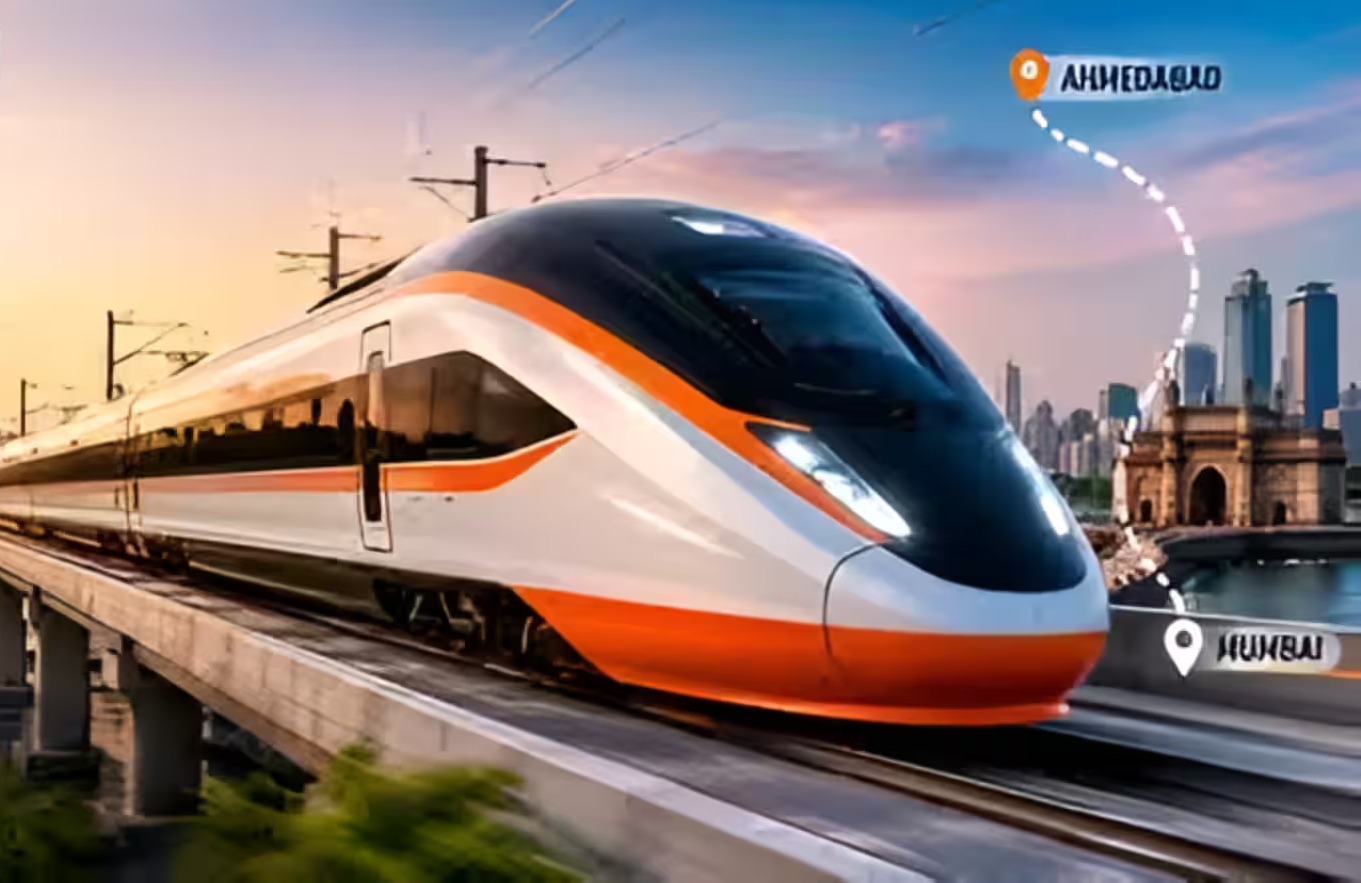
A new chapter of high-speed transport in the history of Indian Railways is soon going to start on the ground as the trials of the country’s first indigenous bullet train B28 is set to begin from May next year. After a long wait, challenges of land acquisition and overcoming the effects of the pandemic, work on the Mumbai-Ahmedabad high-speed rail corridor has gained decisive momentum. According to officials and developments in the Railway Ministry, after the B28 train with a design speed of 280 kmph, the next big leap for Indian Railways will come in the form of B35 bullet train which can run at a speed of 350 kmph. Through this two-step strategy, India is not only going to launch its first high-speed service but is also moving towards taking indigenous technology to new heights for the future corridor.
Technical and infrastructural preparations for the country’s first indigenous bullet train B28 are progressing rapidly. According to reports, the B28 trainset is being designed to have a maximum design speed of 280 kilometers per hour and an operational speed of around 250 kilometers per hour. These trains are being manufactured in collaboration with Indian public sector undertaking BEML and Integral Coach Factory (ICF), where initial body frame and structural trials have progressed.
Under the plan, trial runs are expected to begin around May next year, followed by commencement of commercial operations on select sections in a phased manner. With the progress in overhead electrification (OHE) and track related works on sections like Surat-Bilimora and Surat-Vapi, there is growing excitement about the initial services. Once this 508 km long corridor between Mumbai and Ahmedabad is fully operational, the travel time is expected to be reduced to around 2 hours as compared to the current 8 to 9 hours, which will give a big boost to trade, employment and regional mobility.
With the trials and initial operations of B28 underway, Indian Railways is focusing on the B35 bullet train with a design speed of 350 kmph. It is being considered as the next big phase of India’s high-speed rail programme, which aims to develop indigenous high-speed standard trains for other proposed high-speed corridors in the country. The B35 is envisioned to reach the 350 kmph range, placing it among the world’s most advanced next-generation high-speed trains.
The steps being taken towards capacity assessment and development by the Ministry of Railways and the National High Speed Rail Corporation Limited (NHSRCL) indicate that India no longer wants to be limited to just adopting technology but also wants to achieve self-reliance in manufacturing and designing trains of the highest speed category. While services on the Mumbai-Ahmedabad corridor will initially commence with B28 trains and long-term plans to include Japanese E10 Shinkansen trains in the future have also been discussed, the B35 is set to form the backbone of the country’s new high-speed network in the coming years.
The indigenous B28 Bullet Train has been designed keeping in mind the Indian weather, temperature, dust and monsoon conditions. It includes features like advanced air conditioning system, wide windows near each seat row, sealed gangways for easy movement between coaches, bio-digester toilets and modern safety standards. Along with this, faster acceleration, better braking and safe operation will be ensured through distributed traction and modern signaling systems.
If we talk about other parts of the country, in the ongoing discussions regarding future high-speed rail corridors, routes like Mumbai-Pune, Hyderabad-Bengaluru, Chennai-Bengaluru as well as North India’s Delhi-Varanasi and Varanasi-Siliguri have also been mentioned. For Uttar Pradesh—home to major urban and religious centers like Lucknow, Kanpur, Prayagraj, Ayodhya and Varanasi—the concept of high-speed rail is considered extremely important in terms of future regional connectivity, economic investment and urban expansion.
The revised cost of the Mumbai-Ahmedabad high-speed rail project has reached more than Rs 2 lakh crore, which shows how huge a task it is to get such a huge and technically complex project off the ground. As the track testing and rolling stock phases approach after land acquisition, civil work, construction of bridges and tunnels, the project is also a major test of India’s engineering and project management capability.
With the commencement of trials of B28 in May next year, it will become clear how well the indigenous bullet train meets the stipulated time frame and safety standards. Subsequently, the development of B35 train with a speed of 350 km per hour can give India a more powerful position on the global high-speed rail map. At present, the eyes of the entire country are fixed on the trials to be held next year and this new round of high-speed rail.