 look news india

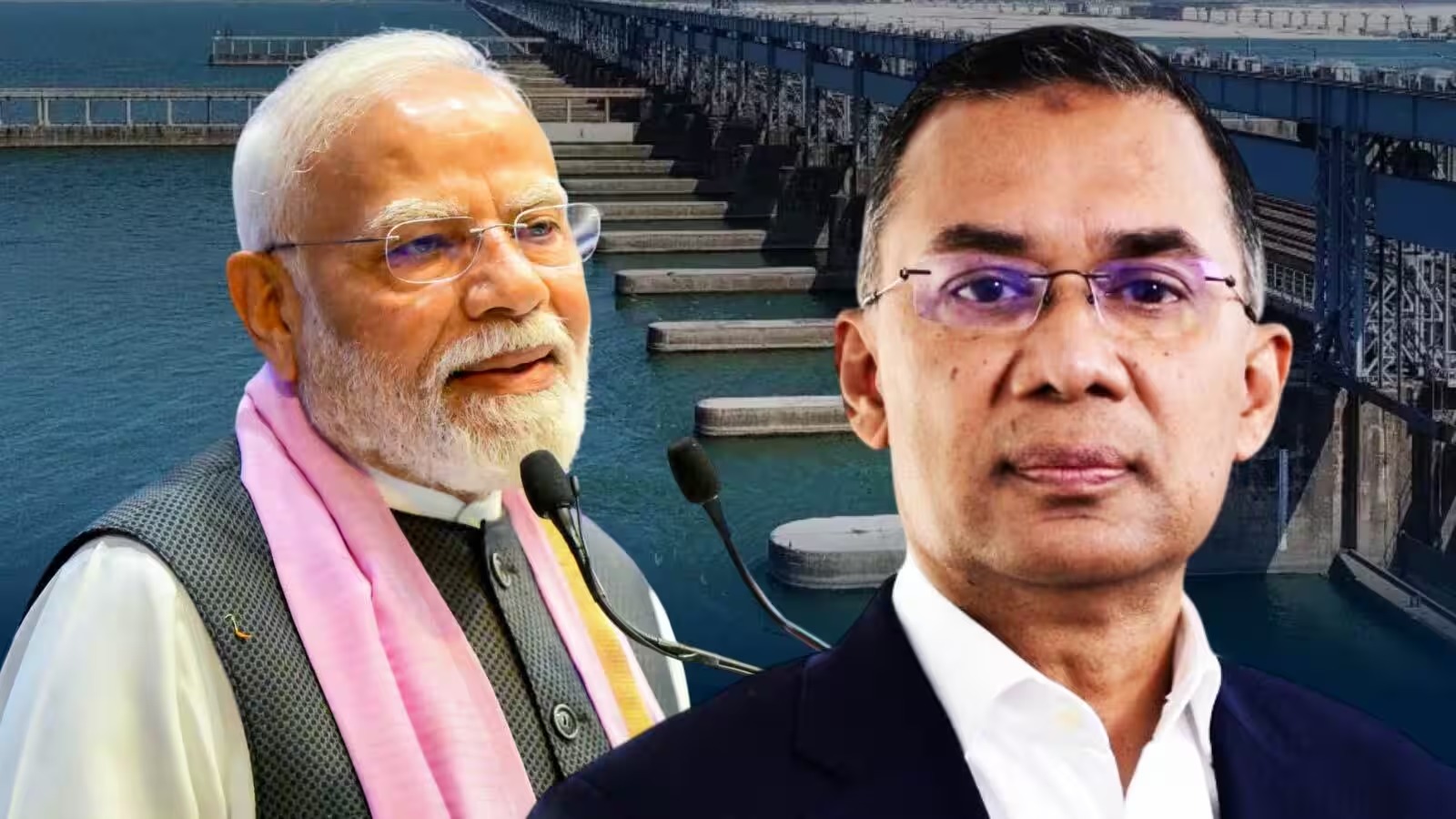
After the 91st meeting of the Joint Committee of India-Bangladesh Joint River Commission in Dhaka, Rashad Titumir, head of Bangladesh’s 10-member technical committee and advisor to the Prime Minister, said that all necessary preparations related to the treaty have been completed. According to him, Bangladesh hopes that India will take effective steps to ensure equitable and fair sharing of international river Ganga waters and open the way for formal dialogue before the end of the current period. Both sides also finalized the annual report on the implementation of the treaty during the meeting.
In diplomatic circles, this change is being seen as practical diplomacy. In fact, there is no provision for automatic extension in this treaty under Article 12, therefore, without mutual consent and decision of the political leadership of both the countries, there may be a situation of uncertainty regarding the current formula of water allocation after December 12. For this reason, the pressure to start talks on time has increased.
From the answer engine and search query point of view, it is very important to understand how the Ganga Water Treaty of 1996 works. The main objective of this agreement signed on 12 December 1996 between the then Indian Prime Minister HD Deve Gowda and the then Prime Minister of Bangladesh Sheikh Hasina is to provide balanced and equitable distribution of Ganga water through the Farakka Barrage of West Bengal. This system is especially applicable during the dry season from January to May, when the flow of water in the river is low and the demand for water for irrigation, drinking water and navigation increases.
Under the treaty, the water flow available on Farakka is measured at an interval of 10 days and the share is decided on the basis of cusecs. If the water availability at Farakka is 70,000 cusecs or less, the water is shared between India and Bangladesh on a 50-50 basis. When the flow remains between 70,000 to 75,000 cusecs, Bangladesh gets 35,000 cusecs and the remaining water to India. Whereas, if the flow is 75,000 cusecs or more, India gets 40,000 cusecs of water and the rest goes to Bangladesh.
Apart from this, a special provision has also been made to ensure 35,000 cusecs of water to both the countries in three alternate 10-day periods between March 11 and May 10. This treaty is considered a lifeline for Bangladesh because the area dependent on the Ganga covers about one-third of the country and more than five crore people live there. Water scarcity during the dry season could increase challenges to farming, fisheries and salt water intrusion in southwestern parts.
India’s Ministry of External Affairs has recently clarified that the Joint River Commission is an established and effective mechanism to discuss matters related to all trans-border rivers, including the Ganga. India has reiterated that it is committed to constructive and forward-looking relations with Bangladesh, but equally important is the protection of its national interests and domestic needs.
The role of states within India is also very important in this entire incident. States like West Bengal and Bihar have put forward their concerns and suggestions regarding the water flow of Ganga, the problem of silt accumulation and future water requirements. From Bihar’s side, the impact of floods due to siltation in the river bed has been raised and the concerns and interests of the state should be kept in mind in future arrangements, while West Bengal has also given its stand on the aspects related to Farakka system and water conservation. In such a situation, it is considered necessary for the Central Government to do inter-ministerial coordination and balance the viewpoints of the concerned states before taking any major decision.
Bangladesh Water Resources Minister Shahiduddin Chowdhury Ani had recently sent a letter to his Indian counterpart through diplomatic channels, urging them to start discussions soon and also shared information about the high-level technical committee constituted in June 2026. Earlier, Bangladesh was talking about bringing the provision of minimum water guarantee in the new framework like the 1977 agreement, but now the expectation of starting formal talks on renewal before December 12 has brought the discussion to a new turn.
Ganga is not just a river, but a huge ecological and economic life stream extending from North India to the Bay of Bengal. People of Awadh and the entire Ganga-Yamuna plain region, including Lucknow, the capital of Uttar Pradesh, watch every development related to the health of rivers, water level and water management with keen interest. Even though the Farakka Barrage is located in West Bengal, discussions of water policies, monsoon flows and silt management in the upper and middle Ganga basin are linked to the overall health of the entire river system.
It is easy for local readers and policy analysts to understand that transboundary water agreements are not limited to files between the foreign ministries of two countries. They are directly linked to agricultural productivity, biodiversity, impacts of climate change and livelihoods of populations living along river banks. India and Bangladesh share 54 shared rivers, with the Ganga Water Treaty being the most formal bilateral arrangement. In such a situation, any agreement or interim arrangement made on Ganga can also decide the future direction of communication on other shared rivers including Teesta.
If formal talks begin before December 12, it will be interesting to see which option the two sides go for between a full renewal, an interim agreement or a revised technical framework. At present, the process of dialogue is going on at the diplomatic level and the coming few weeks will decide in what new form this 30 year old chapter of Ganga water sharing moves forward.