 look news india

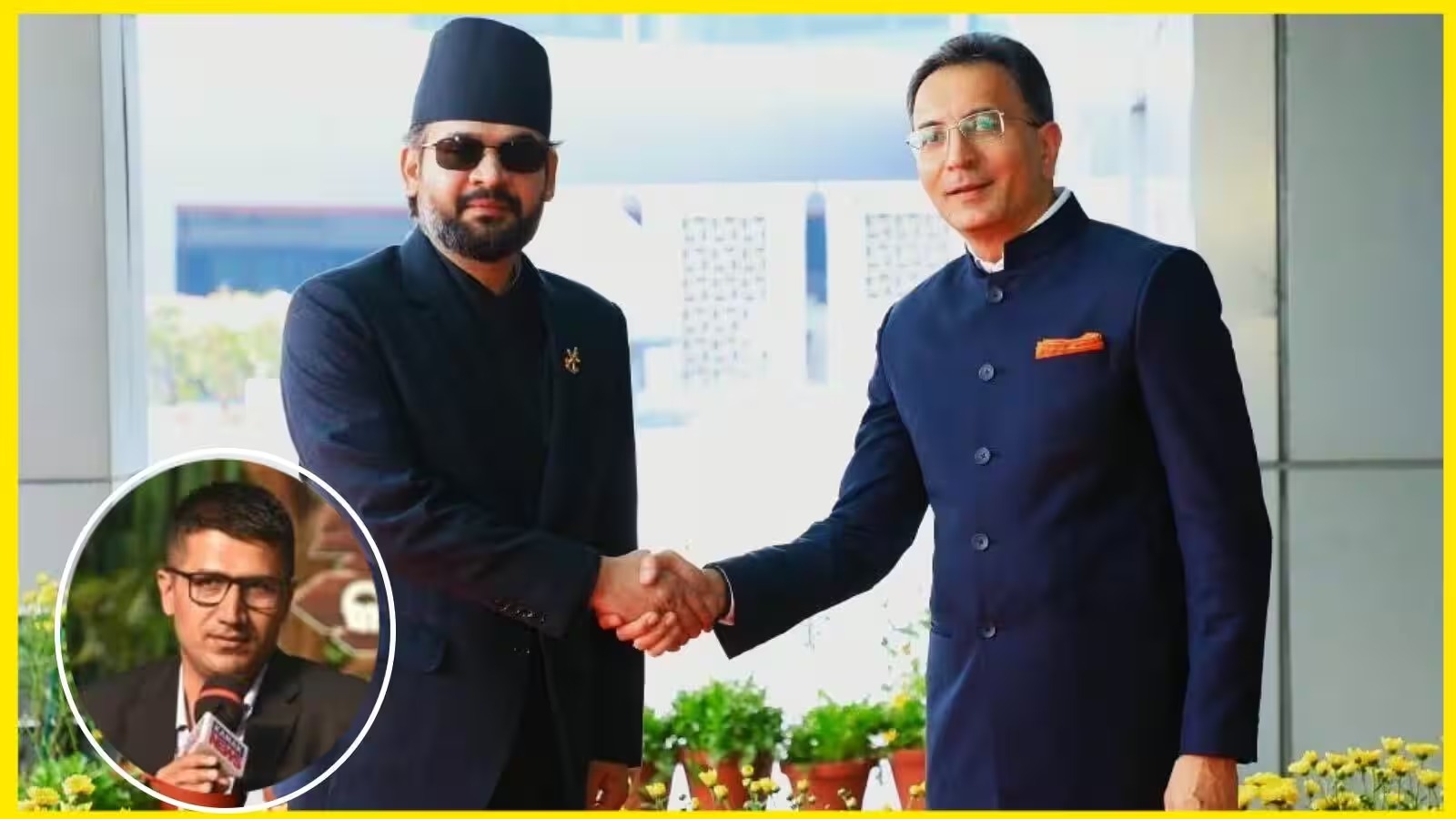
Nepal’s newly elected Prime Minister Balen Shah has reached New Delhi on his two-day official visit. This visit is considered very important in terms of strategic, economic and diplomatic relations between the two countries. His high-level bilateral talks were held with Prime Minister Narendra Modi at Hyderabad House and President Draupadi Murmu at Rashtrapati Bhavan. During this historic meeting, many important agreements like the launch of Saryu-Kamala Express train service as well as energy, trade and infrastructure development have been signed.
But behind the glamor of this bilateral dialogue, a new political and diplomatic storm has arisen in the domestic corridors of Nepal. Many serious questions are being raised on the silence maintained on the border dispute during the visit of Balen Shah, who hung the map of ‘Greater Nepal’ behind his desk while being the Mayor of Kathmandu, during his visit to Delhi.
Nepal’s well-known journalist and political analyst Birat Anupam has raised 10 sharp questions on the working style, priorities and diplomatic decisions of Prime Minister Balen Shah’s first visit to India and warned:
-
Violation of constitutional convention: Before leaving for India tour, Balen Shah did not give any official information to the President of the country about the objectives of his visit.
-
Neglect of former Prime Ministers: Contrary to Nepal’s long-established diplomatic tradition, Shah did not consult any former prime ministers or senior leaders.
-
Silence on the map of ‘Greater Nepal’: While being the mayor of Kathmandu, he had put a map of Greater Nepal (which includes Lipulekh, Kalapani and Limpiyadhura) in his office. Why were these issues kept out of the agenda during his visit to India after becoming PM?
-
Distance from business community: Before coming to India, he did not participate in the Business Roundtable Conference nor did he give preference to traditional diplomatic processes.
-
Boycott of traditional media: He did not include Nepali journalists on his flight and communicated only one-way through social media instead of giving interviews to any media channel.
-
Lack of connection with the public: Despite completing his education in India and having family ties, he made no effort to connect with the Indian public and civil society.
-
Lack of concrete agenda: Compared to previous prime ministers, Balen Shah did not come with a strong bilateral agenda, leaving little hope for long-term results.
-
Not being able to break the old tradition: Even though he claims to have broken many political traditions, he could not change the old tradition of choosing India as his first foreign visit after becoming the Prime Minister.
-
Diplomatic Protocol and Reception: He was welcomed at the Delhi airport by a state minister, which was a far cry from the expectations of his supporters.
-
Social media hype vs grassroots diplomacy: Balen Shah’s entire focus was on creating buzz on social media, dressing up and flight tracking, but on the ground diplomacy front, he seemed unable to firmly maintain national interests.
The concept of Greater Nepal refers to the territory of the Kingdom of Nepal before the Sugauli Treaty of 1815, which is considered to include the area from the Tista River in the east to the Sutlej River in the west. In the year 2023, when the mural of ‘Akhand Bharat’ was installed in the new building of the Indian Parliament, the then Mayor of Kathmandu Balen Shah had hung the map of ‘Greater Nepal’ in his office in protest against it.
Nepal considers Kalapani, Lipulekh and Limpiyadhura as its integral parts. However, after assuming the post of Prime Minister, this attitude of Balen Shah seems to have changed. During this Delhi visit, the border dispute was completely kept out of the Foreign Ministry level talks, which has created a new controversy in Nepal’s politics.
Amidst all the controversies and criticisms, in the meeting held between Prime Minister Narendra Modi and Nepali PM Balen Shah, both the countries emphasized on strengthening their traditional ‘Roti-Beti’ and cultural relations. Both countries have agreed to develop rail connectivity connecting Ayodhya to Janakpur, hydro-power projects and facilitating cross-border trade.
Experts believe that for Balen Shah this visit is not just a formal meeting but a tough diplomatic test. Balen Shah, who has created an image of nationalism on social media, now faces the challenge of how to take forward the economic and strategic interests of his country in coordination with India.