 look news india

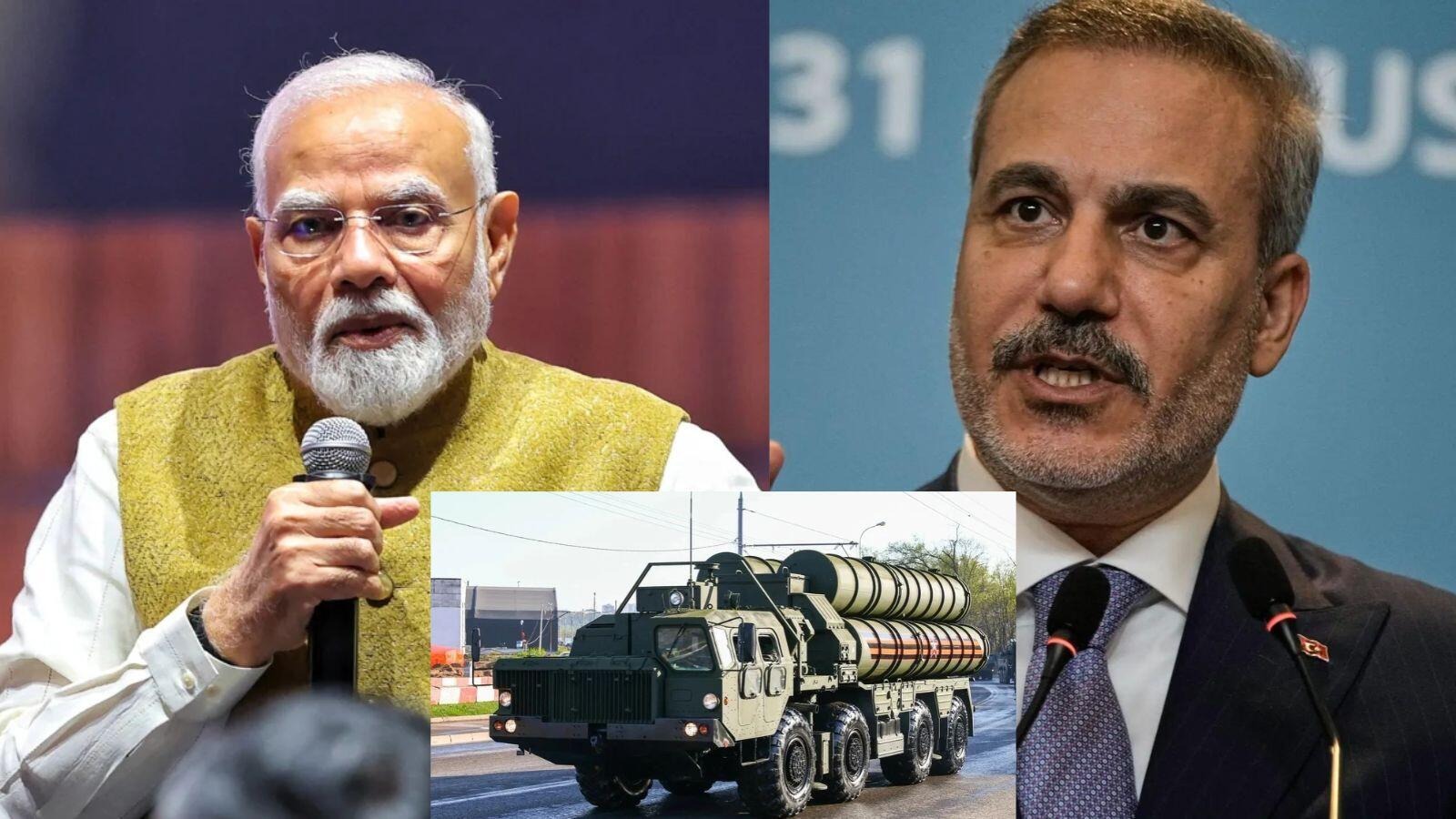
The debate regarding the Russian S-400 Triumph air defense system has once again intensified in international diplomacy and defense circles. Turkish Foreign Minister Hakan Fidan has made a sharp comment on America’s sanctions policy, saying that while India seems to be getting exemption or leniency in the matter of purchasing S-400 missile system from Russia, Turkey is facing strict sanctions and actions like keeping it out of defense programs. This statement has come at a time when the strategic balance between NATO, America, Russia and India is constantly changing in global geopolitics. This issue raised by Turkey is not limited to just an arms deal, but it is also directly related to the foreign policy of Western countries, CAATSA i.e. Countering America’s Adversaries Through Sanctions Act and the F-35 fifth generation fighter aircraft program. The discussions and recent statements in Ankara have made it clear that Turkey is increasing diplomatic pressure to lift the sanctions on its defense industry and is also considering the lobbies and legislative obstacles within Washington as its biggest challenge. Accusation of double standards on S-400 deal According to Foreign Minister Hakan Fidan, America’s behavior is not uniform when it comes to purchasing S-400 air defense system from Russia. Turkey argues that it has been a member of NATO for decades, yet it faced US sanctions for purchasing the S-400 and was excluded from the F-35 fighter jet project. On the other hand, India also signed a major defense deal with Russia for S-400, but America’s strategic equations with India remained different and India was not tied to the kind of punitive sanctions as seen in the case of Turkey. International affairs experts believe that America’s sanctions policy is often determined not only by legal rules, but by regional security needs and larger geo-strategic priorities. A strong partnership with India has been extremely important for the US to balance China’s growing power in the Indo-Pacific region, while in the case of Turkey, NATO’s collective security, integration of Russian military systems and West Asia equations are considered more important. F-35 program and CAATSA sanctions issue The biggest standoff in defense relations between Turkey and the US arose around 2019 when Turkey took delivery of the Russian S-400 system. In response, the US imposed sanctions under CAATSA and removed Turkey from the F-35 program. Hakan Fidan has indicated that in order to normalize relations with the US, it is necessary to resolve some important issues within the framework of US law and legislative process, among which the CAATSA sanctions are prominent. According to Fidan, the talks between US President Donald Trump and Turkish President Recep Tayyip Erdogan have shown a desire to remove these obstacles, but the attitude of the US Parliament and various lobbying groups is a major obstacle in this path. The Turkish Foreign Minister has also accused the Greek and Israeli lobbies in Washington of creating obstacles for Turkey to get relief from S-400 sanctions and opening the way for F-35s. India’s Air Defense and the Role of S-400 From India’s perspective, the S-400 Triumph system has been an important part of the long-range air defense of the Indian Air Force. India had signed a major agreement with Russia in 2018 for five regiments or squadrons of this system. The delivery timelines were affected due to supply chain and production challenges due to the Russia-Ukraine conflict, but India continued the process of strengthening its air defense capability in a phased manner. According to defense analysts, the S-400 system includes advanced radar, command-and-control units and long-range missiles that are believed to be capable of countering fighter aircraft, cruise missiles and other air threats. The system is considered strategically important given the security challenges on India’s northern and western borders, and has been the focus of discussion during border tensions and regional security developments in recent years. What it means for India and South Asia This news is also important for Indian readers and policy analysts because it shows how much sovereign autonomy and diplomatic balance matter in global defense deals. India has always maintained balanced defense relations with various partners, including Russia, the US, France and Israel, while prioritizing its strategic autonomy. When a foreign leader mentions the exemption or differential treatment given to India on the S-400, it also underlines India’s growing stature and diplomatic influence on the international stage. At the same time, for those keeping an eye on security equations in South Asia and the Indo-Pacific region, this development is a reminder that defense exports and sanctions are not merely technical or economic decisions. Each country’s geographical location, threats posed by neighboring countries and its role in global alliances decide how a major defense deal will affect its relations. Diplomatic Path Forward and Possible Changes It will be interesting to see whether Turkey and the US are able to find a practical solution to the S-400 dispute that would lead to relaxation of CAATSA sanctions. Hakan Fidan has talked about constructive options and mutual goodwill to resolve this issue, while on the other hand, there is continuous discussion within Turkey regarding the future of S-400, alternative arrangements and the need for modern fighter aircraft. At present, it is certain that the S-400 missile system is no longer just a defense tool, but it has become a test of balance of power in modern diplomacy, politics of sanctions and trust between allied countries. The changing equations between India, Türkiye, the US and Russia will remain at the center of global security discussions in the coming months.