 look news india

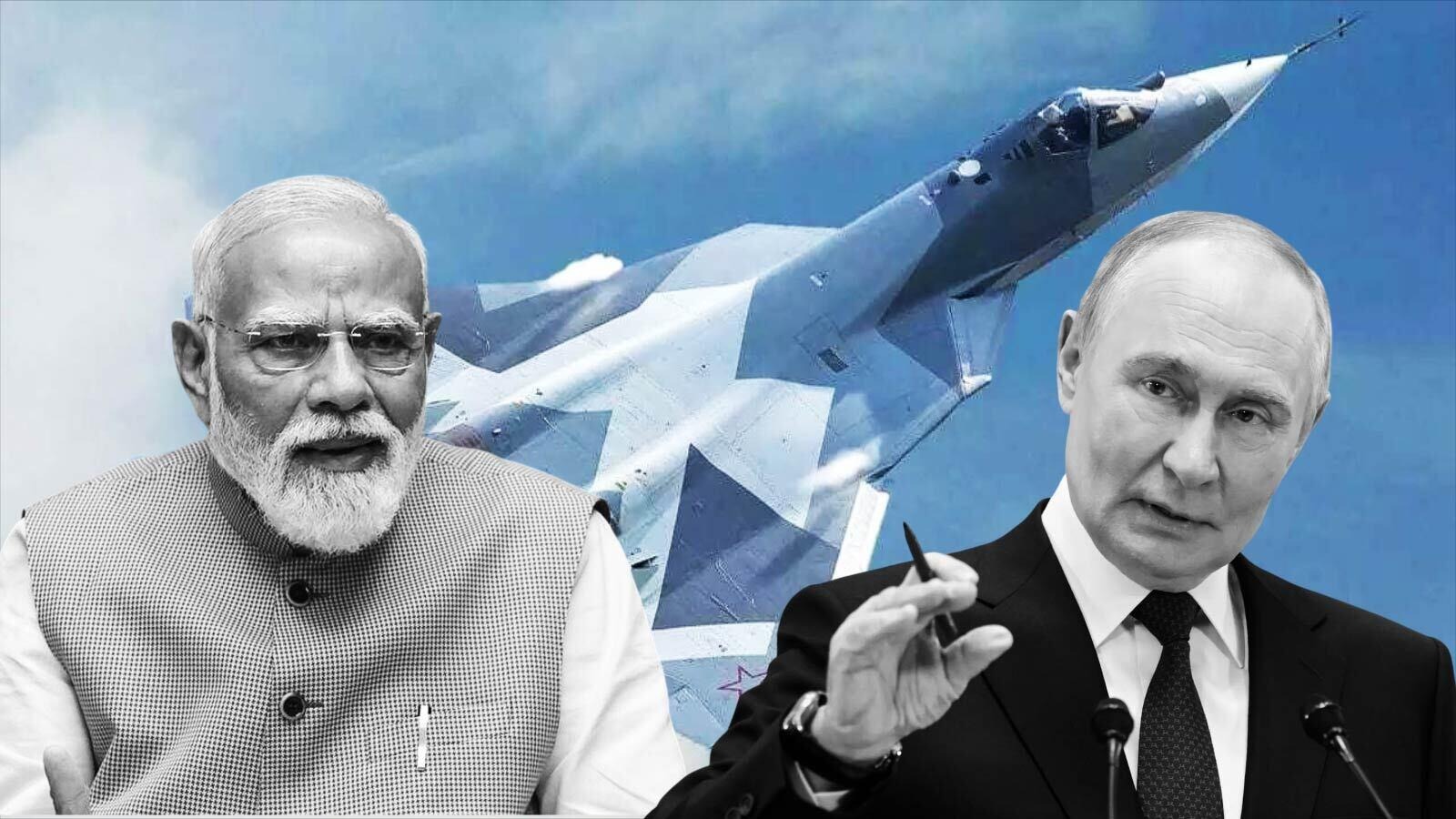
As the race for fifth-generation stealth fighter aircraft intensifies in South Asia and the Indo-Pacific region, the Russian defense industry is once again looking towards India. Russia’s United Aircraft Corporation or UAC is working on the prototype of its single-engine fifth generation stealth aircraft Su-75 Checkmate and is looking for potential foreign customers, in which India is being seen as an important market. On the other hand, the question is also deepening that when India itself is developing its fifth generation stealth aircraft Advanced Medium Combat Aircraft i.e. AMCA, will it adopt any Russian stealth jet in the medium term or not.
What makes this entire discussion more sensitive is that the regional security equations are changing rapidly. China is already expanding its fifth generation fleet and talks about Pakistan acquiring J-35 stealth fighter jets from China have given a new edge to the debate about the future needs and capabilities of the Indian Air Force. In such a situation, defense analysts and policy makers are weighing what the technical and strategic comparison between the Russian Su-75 Checkmate and the Chinese J-35 says.
Russia has long been exploring international partnerships and export opportunities for its fifth-generation aircraft. First there were proposals for the Su-57 and now the single-engine Su-75 Checkmate is being offered as a low-cost fifth generation option. The Russian side believes the aircraft could be attractive to countries that want an alternative to heavy and expensive twin-engine jets or Western systems, especially if combined with a proposal for local production and technology sharing.
However, the ground reality is that the Su-75 is still in the development and prototype stage and its actual flight, stealth capability, sensor performance and operational reliability are yet to be proven in concrete trials. Due to Western sanctions, supply chain challenges and changes in timelines, the program is lagging behind previously set targets, so there is no indication of any concrete commitment from India.
When it comes to comparison of the Chinese J-35 and the Russian Su-75, there is a huge difference between the two aircraft in their development stage, production status and strategic context. China has made considerable investment and progress in its fifth-generation aircraft programs, while the Su-75 is an export-focused conceptual platform currently at the threshold of prototyping and testing. In such a situation, it is natural to question that beyond the paper claims and initial design features, how effective the Su-75 will prove to be in actual combat conditions.
According to defense experts, the real strength of any fighter aircraft is determined not only by its stealth size or projected speed, but by its radar, avionics, electronic warfare systems, missile integration and continuous production capacity. If an aircraft remains stuck in prototype or limited trials for a long time, it is not easy to immediately rely on it to counter regional air threats that may emerge in the near future.
The biggest question for India is how it balances its existing and upcoming fleet while pursuing its indigenous AMCA programme. The Indian Air Force already operates a diverse array of aircraft such as the Rafale, Sukhoi-30 MKI, Jaguar, Mirage and Tejas Mk1, while indigenous programs such as the Tejas Mk2 and AMCA are considered to be the backbone of the future. Defense experts believe that the inclusion of yet another brand new foreign platform could increase the burden of logistics, maintenance, training and network integration.
On the other hand, concerns also remain regarding the number of squadrons in the Indian Air Force and future security requirements. Therefore, India’s strategists are evaluating each option on the parameters of empowerment of indigenous industry, time-frame, cost and long-term self-reliance.
For Indian readers and defense observers, this development shows that in modern warfare, air superiority and stealth capabilities are now becoming a decisive part of the regional balance of power. Considering the military modernity of neighboring countries, it is important for India to maintain the pace and quality of its indigenous projects without getting attracted by foreign proposals.
In the coming years, it will be clear whether the Su-75 Checkmate can pass its tests and carve out a strong place in the global market or whether India will shape its fifth generation air power with the help of AMCA and other indigenous and customized platforms. At present, it is certain that this diplomatic and technological race for stealth aircraft will remain an important part of the security debate in South Asia.