 look news india

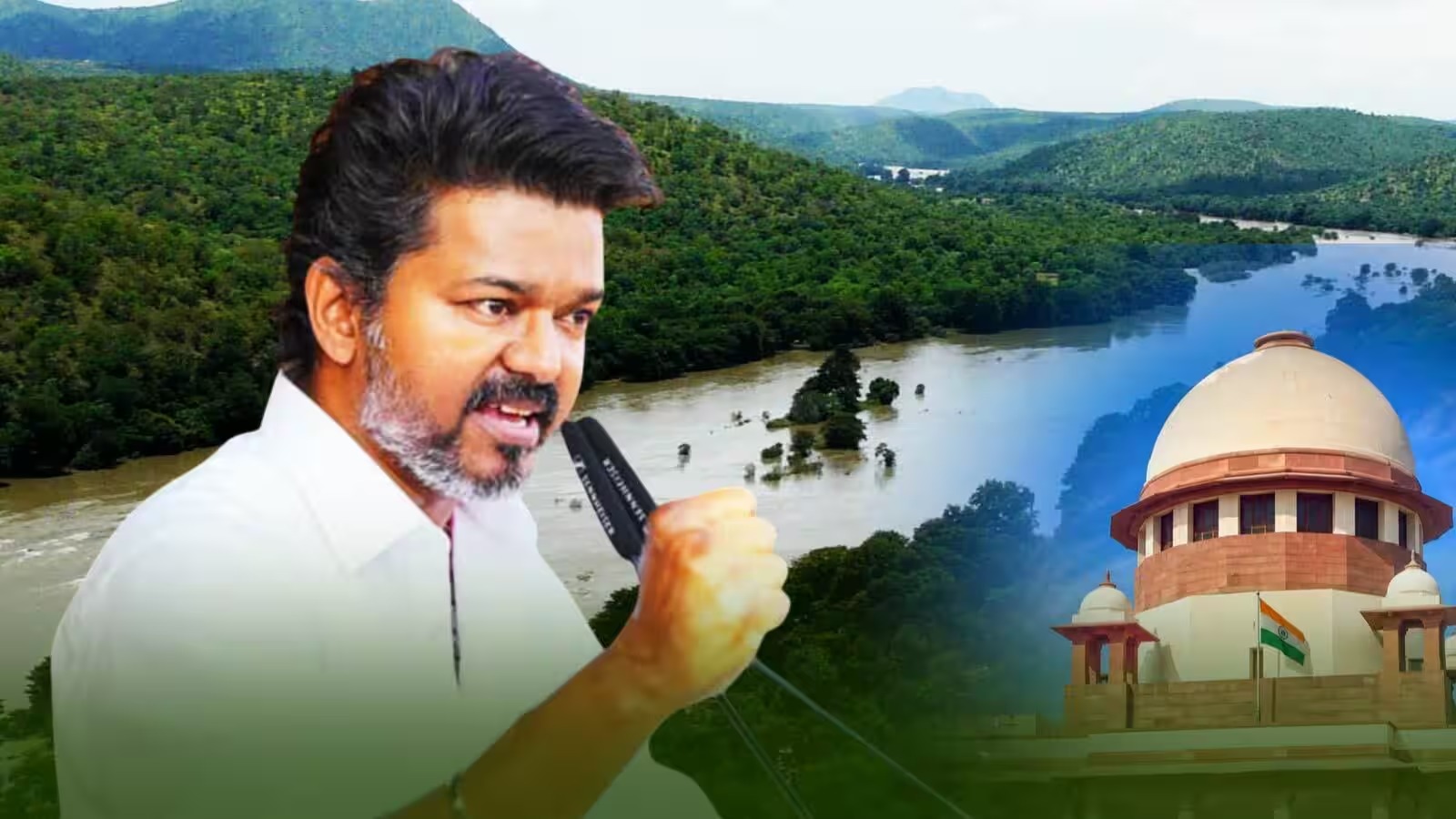
In the old dispute regarding the distribution of water of Kaveri river, the Supreme Court has given a big blow to the Tamil Nadu government and has rejected the petitions demanding release of excess water from Karnataka. On 20 November 2026, a bench of Justices Vikram Nath and Aparesh Kumar Singh, while rejecting the applications filed by Tamil Nadu, clarified that the court will not direct Karnataka to release excess water at this stage. It was argued on behalf of Tamil Nadu that despite the shortage, the state should get compensation of 11 TMC i.e. thousand million cubic feet of water in proportion to its share, but the bench rejected these applications. There is always keen interest among readers and analysts in North India, including Kanpur, Lucknow, Prayagraj and Varanasi across the country, in inter-state water disputes and Supreme Court orders, as these cases provide important precedents related to federal structure, water management and agricultural economy.
During the hearing in the court, Justice Vikram Nath, while dismissing the petition, made a strong remark saying that it appears that the State of Tamil Nadu has a lot of money to spend on lawyers, and the bench ordered dismissal of the applications. Senior advocate Mukul Rohatgi, appearing for Tamil Nadu, had argued that Karnataka is required to release 177 TMC of water under the Cauvery water sharing formula in a normal water year, and as per the calculations, despite deficient rainfall, Karnataka is owed 11 TMC of water, and had also sought release of an additional 1 TMC of water daily to make up the difference. Meanwhile, senior advocate Shyam Divan, appearing for Karnataka, argued that many districts of the state are facing drought conditions, which has led to reduction in water allocation for irrigation, and Tamil Nadu benefits from the northeast monsoon while Karnataka does not receive rainfall from it.
The Karnataka side also said that the Cauvery Water Management Authority (CWMA) and the Cauvery Water Regulation Committee (CWRC) are already monitoring the water release and issuing guidelines every fortnight, hence there is no need for the Supreme Court’s intervention. Tamil Nadu, on the other hand, maintained that it should get its proportionate share and dues even in a deficit year, so that crops and farmers in the delta and other areas could be saved from losses. During the hearing, permission was sought to present the case in the interest of the farmers, but the bench rejected the request saying that the representation of both the state governments was already present in the court and they were presenting their side.
After the Supreme Court rejected Tamil Nadu’s petitions, Karnataka Chief Minister D.K. Shivakumar responded by saying that if Karnataka has water, it will definitely give it to Tamil Nadu, but the actual situation of water availability is in front of everyone. He also said that the situation was so challenging that even the traditional ‘Bagina’ offering to Cauvery could not be made this year. Along with this, political discussions are also intense regarding the Mekedatu project in the Cauvery basin, which Karnataka is proposing for the purpose of drinking water and power generation, while Tamil Nadu has been opposing it due to the possible impact on its water share.
The issue of Cauvery water sharing has been at the center of political, legal and agricultural sensitivities between Tamil Nadu and Karnataka for decades. Balancing rainfall data, reservoir levels, monsoon movements and decisions of regulatory authorities has always been a complex process. From Kanpur and Lucknow in Uttar Pradesh to the states of South India, this development shows how the distribution of water resources and court processes influence regional politics and public sentiments. After this order of the Supreme Court, now everyone’s eyes will be on how the coordination of water flow through CWMA and CWRC and the rhetoric between the two states unfolds in the future.