 look news india

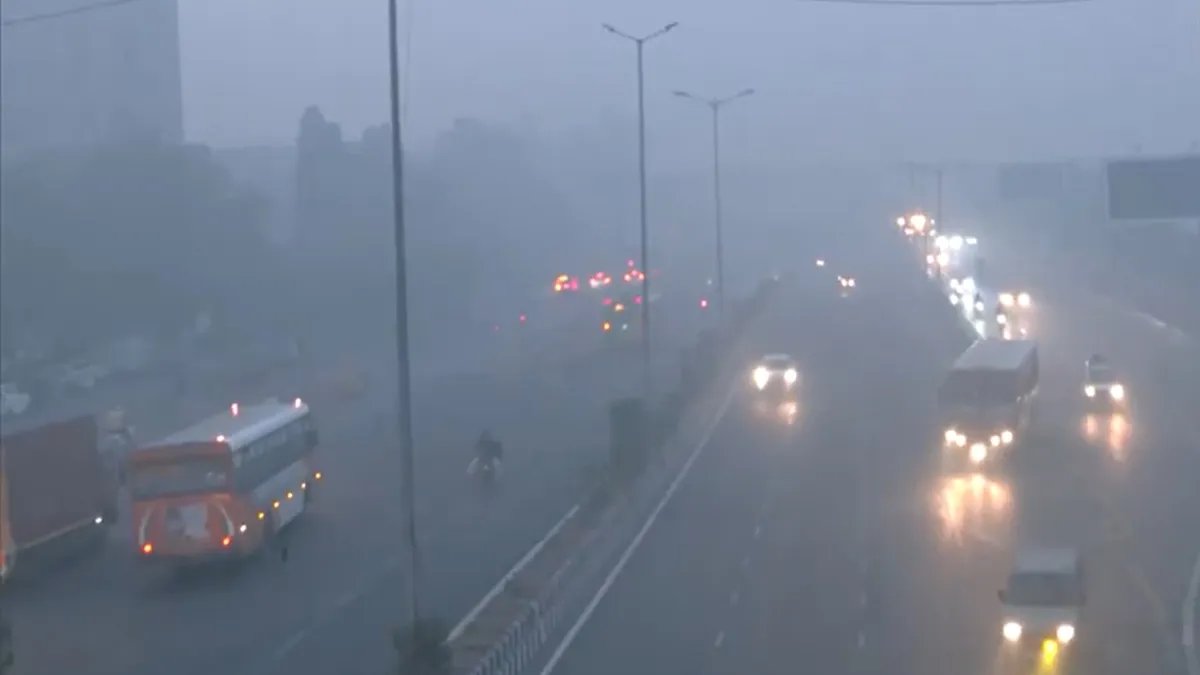
Air pollution has once again taken a severe form in the country’s capital Delhi and surrounding NCR cities. As soon as I opened my eyes on the morning of Friday, November 13, 2026, a thick blanket of fog and poisonous smog was visible in the sky of Delhi-NCR, due to which visibility has become extremely low and it has become difficult for common people to breathe in the open air. According to the latest data of Central Pollution Control Board (CPCB) and SAFAR, Delhi’s average air quality index (AQI) has been recorded between 430 to 460 i.e. ‘Severe’ category, while in many sensitive areas of the capital, AQI has reached ‘Severe Plus’ level of 480 to 500. In view of the worsening situation, environmental agencies and administration have issued a ‘red alert’ regarding pollution in the entire area.
According to the data of SAMEER app released at 8 am on Friday, there is hardly any area of Delhi left where the air is breathable. AQI was recorded at 492 in East Delhi’s Anand Vihar, 488 in North Delhi’s Jahangirpuri, 485 in Bawana, 481 in Mundka and 479 in Wazirpur, directly touching the dangerous scale of 500. Apart from this, the air also remains extremely poisonous in Rohini (472), Dwarka Sector-8 (464), RK Puram (458), Punjabi Bagh (467) and ITO (451). The condition of NCR cities adjacent to Delhi is no different – AQI has been recorded at 468 in Loni and Vasundhara of Ghaziabad, 446 in Noida Sector-62 and Sector-125, 439 in Greater Noida and between 415 and 430 in Gurugram and Faridabad.
According to meteorologists and air quality experts, due to the drop in night temperature and wind speed almost stopping (less than 5 kilometers per hour) in the second week of November, the pollutant particles PM 2.5 and PM 10 are trapped in the lower surface of the atmosphere. Experts say that due to lack of wind, smoke emanating from vehicles, dust from construction works, industrial emissions and stubble smoke coming from neighboring states are creating a dense poisonous fog. According to the forecast of the Meteorological Department (IMD), the speed of north-westerly winds is likely to remain slow for the next two to three days and there will be light fog in the morning, due to which there is little chance of immediate relief from pollution.
The stringent provisions of the Graded Response Action Plan (GRAP) have been strictly implemented by the Commission for Air Quality Management (CAQM) after pollution reached ‘Red Alert’ level. A complete ban has been imposed on all non-essential construction and demolition activities in Delhi-NCR. To prevent dust from flying on the roads, the Municipal Corporation has increased the deployment of anti-smog guns and mechanical road sweeping machines. Along with this, intensive checking campaign is being conducted by the traffic police on the borders, so that the entry of BS-III petrol and BS-IV diesel vehicles and vehicles without valid PUC certificate can be banned. The government has also appealed to people to use metro and public transport instead of private vehicles.
The direct effect of poisonous air is now clearly visible in the OPDs of hospitals in Delhi-NCR. In the pulmonology (respiratory disease) departments of private hospitals including AIIMS (AIIMS), Safdarjung and RML, there has been an increase of 30 to 40 percent in the number of patients coming with complaints of asthma, bronchitis, persistent dry cough, sore throat, headache and burning sensation in the eyes. Senior doctors have strictly advised the elderly, small children, pregnant women and patients suffering from heart or lung disease not to step out of the house in the morning and late evening. Doctors say that if you have to go out for urgent work, wear a good quality N95 or N99 mask instead of a normal cloth mask, drink adequate amount of lukewarm water throughout the day and use air purifiers or indoor plants indoors.