 look news india

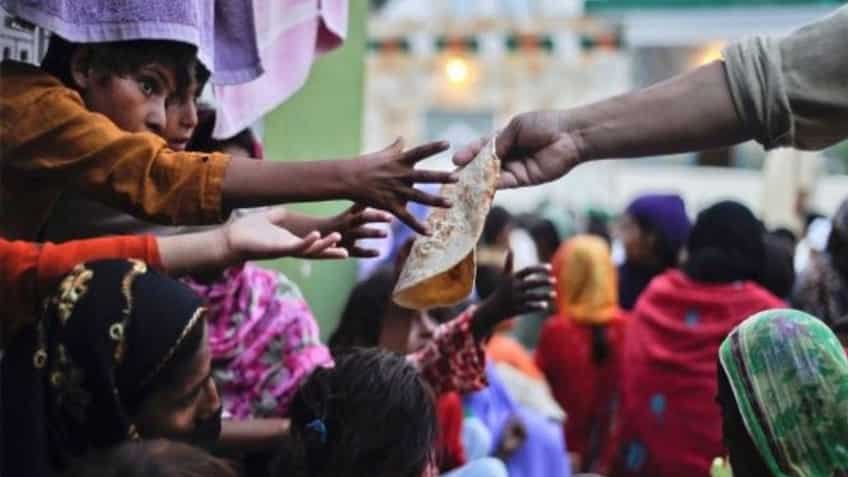
India vs Pakistan Poverty Report 2026: The difference between the development models and economic policies of South Asia’s two major economies – India and Pakistan – has now become abundantly clear on the global stage. According to the latest report of the World Bank and a detailed analytical study published in ‘European Times’, India has created such a history in the field of poverty alleviation, whose example is being given all over the world. Data from the report show that extreme poverty in India, which was 27.1 percent in 2011, has now come down to a historic low of just 2.6 percent. In sharp contrast, our neighboring country Pakistan has fallen into the abyss of economic crisis, inflation and wrong policies, where the rate of extreme poverty has rapidly increased to 23 percent.
The report, prepared by the World Bank on the standard of extreme poverty line of $3 per day (2021 PPP), has described India’s achievement as one of the fastest poverty reductions in modern history. Not only this, even on the scale of lower-middle income poverty line i.e. $4.20 per day, poverty in India has come down from 57.7 percent to 16.1 percent, which directly means that in the last decade, about 49.6 crore (about 50 crore) people have been taken out of the vicious cycle of poverty. The team led by Ayago Wamabile, South Asia Poverty Economist of the World Bank, has also estimated in its report that this trend of poverty reduction in India will continue and by the year 2028, the poverty rate in the $4.20 per day category will reduce to 12.1 percent.
The report provides an in-depth analysis of how India achieved this revolutionary change in the living standards of such a large population. According to experts, the biggest factors behind India’s success have been strong economic growth, increase in women’s employment and transparent implementation of social welfare schemes. In particular, the trinity of Aadhaar, Jan-Dhan bank accounts and Direct Benefit Transfer (DBT) completely eliminated middlemen and corruption from government schemes. The report underlined that the digital distribution system and expansion of targeted food subsidies could prevent misappropriation of an estimated ₹3.48 lakh crore of government funds by 2024, thereby ensuring full relief directly into the accounts of every poor family.
On the other hand, this report has presented a very worrying picture on the situation in Pakistan. According to the report, Pakistan has become the only country among the major economies of South Asia, where poverty has increased in the opposite direction instead of decreasing. Nearly 48 percent of the total extremely poor population in the World Bank’s Middle East, North Africa, Afghanistan, and Pakistan region is concentrated in Pakistan alone, despite accounting for less than one-third of the region’s total population. Additionally, the latest Global Multidimensional Poverty Index (Global MPI 2026) of the United Nations Development Program (UNDP) and Oxford (OPHI) has also found that 38.3 percent of Pakistan’s population (about 100 million people) suffers from lack of health, education and basic standards of living, while in India this rate has come down to 16.4 percent (MPI score 0.069 versus Pakistan’s 0.198).
The European Times analysis clearly states that this wide gap between India and Pakistan is not the result of any coincidence, but is a direct result of the policies adopted for decades. While India invested on long-term development strategies such as infrastructure, digital public infrastructure, manufacturing, free ration, housing and rural employment, Pakistan poured its limited resources into non-productive and military priorities, ignoring basic education, health and economic reforms. Political instability, skyrocketing inflation, external debt burden and weak governance have broken the back of the common people of Pakistan, while India is today setting a new global standard of poverty alleviation as the fastest growing major economy in the world.