 look news india

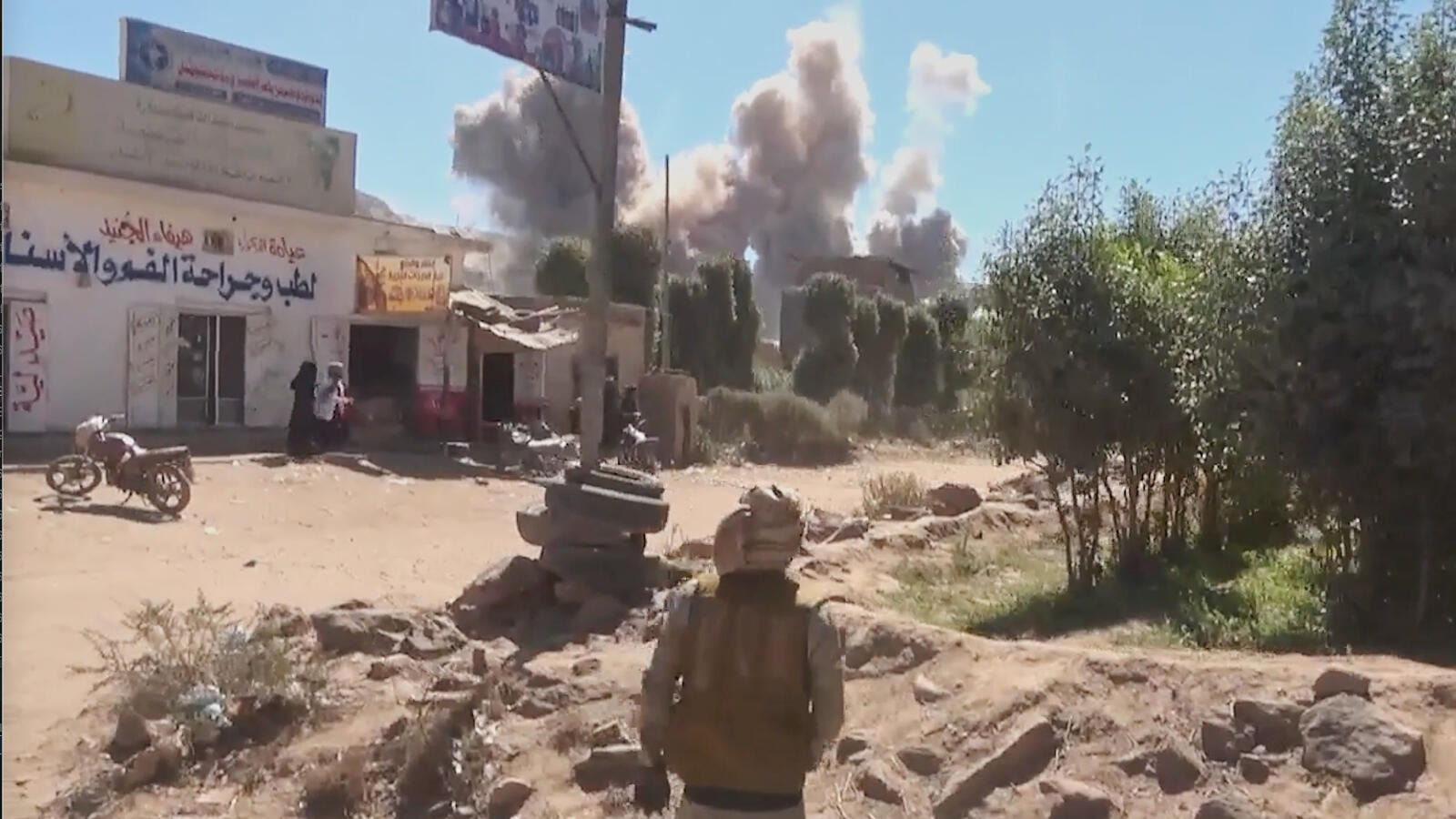
Yemen’s war-torn regions have once again erupted, and this new unrest comes in direct response to the recent attack on Riyadh International Airport. The Saudi Arabia-led coalition has stepped up its military offensive targeting several targets in Yemen, in what is being seen as a major retaliation after the attack on Riyadh. According to eyewitnesses and local sources, the attack was extremely severe and has had devastating consequences.
The echo of the explosions was heard for several kilometers and clouds of black smoke covered the sky. Sources say that this operation is not just a reaction, but it is a clear message that Saudi Arabia can go to any extent for its sovereignty and the security of its citizens. The situation in Yemen’s capital Sanaa and its surrounding areas remains extremely tense, and there is a great deal of fear and uncertainty among local residents.
This horrific airstrike has resulted in massive devastation in Yemen, and the most tragic aspect is the huge human loss. According to local health officials and relief workers, 33 people have died in the attack so far. This number is likely to increase further as many people may still be buried under the debris and the condition of some of the injured is very critical.
Apart from these deaths, 39 other people have been seriously injured. They need immediate medical attention, but Yemen’s already strained health system is struggling to handle the huge number of casualties. Hospitals are short of beds and medicines, and doctors and nurses are working tirelessly. Eyewitnesses said that ambulances were continuously carrying the injured and there was shouting all around. This attack has once again deepened the humanitarian crisis of the ongoing civil war in Yemen and attracted the attention of the international community.
The history of the conflict between Yemen and Saudi Arabia is very complex and old. This is not just a territorial dispute, but also involves geopolitical, religious and ideological factors. Saudi Arabia, a Sunni-majority country, is trying to limit the influence of Iran-backed Houthi rebels in Yemen, who follow Shi’ite ideology. When the Houthis overthrew Yemen’s government in 2015 and captured key cities, Saudi Arabia intervened by forming a military coalition aimed at restoring the internationally recognized government.
Since then, Yemen has been embroiled in a fierce civil war, leading to one of the world’s worst humanitarian crises. Repeated airstrikes by the Saudi-led coalition and missile attacks on Saudi territory by the Houthis have further inflamed the conflict. Thousands of civilians have been killed in this war, and millions are on the verge of starvation and disease. The international community has repeatedly appealed for a ceasefire and peace talks, but no concrete solution has been found yet.
There is no easy solution to this ongoing conflict in Yemen. Saudi Arabia and its allies believe military pressure is the only way to bring the Houthis to the table, while the Houthi rebels claim they are defending themselves against foreign invasion. Meanwhile, Yemen’s civilians are suffering the most. The international community has repeatedly appealed to both sides to end the violence and allow unhindered access to humanitarian aid.
Diplomatic efforts for peace also continue, but they have been hampered by mistrust and complex political interests. It remains to be seen whether both sides can agree to a permanent ceasefire and an inclusive political solution that can bring peace and stability to Yemen. But for now, the way forward for the people of Yemen remains uncertain and challenging, and with each new attack, hopes for peace grow more bleak.