 look news india

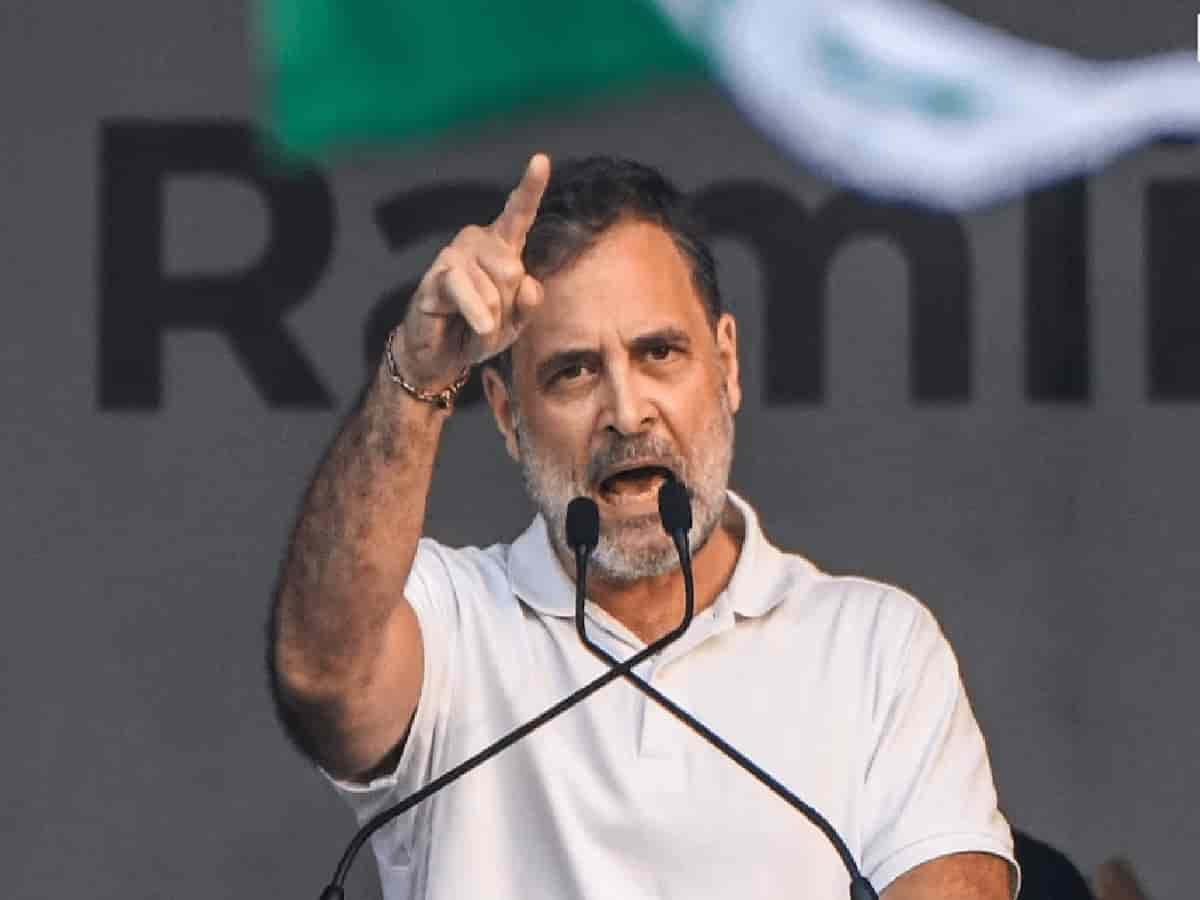
A new and serious controversy has arisen in Indian politics regarding the rising prices of petrol across the country and the ethanol blending program implemented in the name of energy security. Leader of Opposition in Lok Sabha and Congress MP Rahul Gandhi on Saturday issued a detailed and aggressive statement on social media platform X (formerly Twitter) in a direct attack on the Narendra Modi government at the Centre. Citing an official scientific investigation report conducted by the Karnataka government, Rahul Gandhi alleged that petrol is being openly stolen from the vehicles of common citizens of the country. He sarcastically said that the fuel which the government is selling as E20 petrol in the name of clean energy and self-reliance, has actually become a big ‘420’ i.e. a huge financial and technical fraud with the general public. The Central Government has been claiming that only 20 percent ethanol is mixed in this petrol, but the facts revealed in the laboratory tests are pointing to a serious discrepancy on the contrary.
After this explosive statement of the opposition leader, the agitation has intensified among crores of drivers, automobile experts and consumer organizations of the country. Rahul Gandhi alleges that oil marketing companies are charging full amount for pure and expensive petrol from common consumers, while excessive quantity of cheap ethanol is being filled in the fuel tanks of their vehicles. This matter is not limited to just putting additional financial burden on the pockets of consumers, but is directly related to the safety of the engines of crores of non-E20 compliant vehicles running in the country, their long-term efficiency and the rights of the general public. After this revelation, serious question marks have been raised on the quality control system of the Petroleum Ministry and oil companies.
The crux of this entire political and technical controversy is a comprehensive and independent investigation report conducted by the Karnataka government. Karnataka’s Food, Civil Supplies and Consumer Affairs Department had collected 14 samples of petrol during surprise inspections from petrol pumps in seven different districts of the state. All these samples were sent for thorough testing to authorized chemical laboratories recognized by the government. When the official investigation reports of these laboratories came out, it shocked both officials and experts. Out of the total 14 samples collected, the level of ethanol in 11 samples was found to be much higher than the statutory limit of 20 per cent set by the government.
The most shocking thing revealed in this investigation report was that the amount of ethanol in the sample taken from the petrol pump of the country’s largest public sector oil company Indian Oil Corporation Limited (IOCL) was recorded up to 31.2 percent. Similarly, the presence of ethanol in the fuel of Hindustan Petroleum Corporation Limited (HPCL) was found to be 30.5 percent. Not only the government oil companies came under the scanner, but the samples taken from the outlets of Bharat Petroleum (BPCL) as well as private sector giants like Nayara Energy and Shell also found that the quantity of ethanol was much more than the government limit. Rahul Gandhi specifically highlighted that when the test reports of these companies were sought from their in-house laboratories, they did not mention the actual ethanol percentage present within the petrol in their test reports, which shows a systematic collusion and lack of transparency.
In his statement, Rahul Gandhi, while doing a technical and economic analysis of the direct side effects of this policy, prominently raised the concerns of common vehicle owners. He wrote that consumers are paying a huge price of more than Rs 100 per liter, which is charged on the basis of expensive petrol, while oil companies are earning huge profits by mixing cheap ethanol in it. Its direct and immediate loss is being borne by the middle class families of the country who have bought a two-wheeler or four-wheeler with their hard-earned money. Touching on the technical aspects, he explained that most of the old and even many new vehicles plying on Indian roads are not technically designed to tolerate more than 20 or 30 per cent ethanol blending.
According to automobile engineers, ethanol has a natural tendency to absorb moisture, which poses a serious risk of fuel system corrosion, melting of rubber pipes and clogged fuel injectors. Additionally, the energy density of ethanol is much lower than that of pure gasoline, due to which the average vehicle mileage drops significantly by 10 to 15 percent once the ethanol ratio in the fuel reaches 30 percent. Rahul Gandhi warned that this directly means that the public will have to make frequent trips to petrol pumps, the mileage will fall drastically and they will have to go to garages and mechanics every day to get their vehicles repaired, due to which the vehicles bought with people’s hard-earned money will turn into junk before time.
Describing the entire matter as a matter of policy failure and gross violation of consumer rights, the Congress leader has asked five sharp questions directly to Prime Minister Narendra Modi. He raised the question that the Prime Minister should clarify to the country what is actually being filled in the tanks of the vehicles of Indian citizens? What is the exact and transparent quantity of ethanol in petrol sold in the country? When will the Central Government take strict punitive action against government and private oil marketing companies doing more than 20 percent unauthorized and illegal adulteration? Along with this, he expressed deep anger over the fact that no clear information board has been installed at any petrol pump in the country to tell what proportion of blended fuel is being put in the customer’s vehicle.
Rahul Gandhi also highlighted the fact that in the developed countries of the world where biofuel is used, consumers are given the democratic and consumer right to choose between normal petrol or ethanol mixed petrol as per the make of their vehicle’s engine. No such option has been made available to consumers in India and they are essentially being forced to buy highly blended petrol. At the end of his statement, he reminded the Prime Minister of the old challenge of debate and said that the challenge of open debate still remains and this new issue will also be added to the agenda of that debate. Asking the last question, he sought an answer from the government whether this entire uncontrolled and non-transparent policy is actually benefiting the people of the country or whether the coffers of some selected industrialists and oil syndicates are being filled.