 look news india

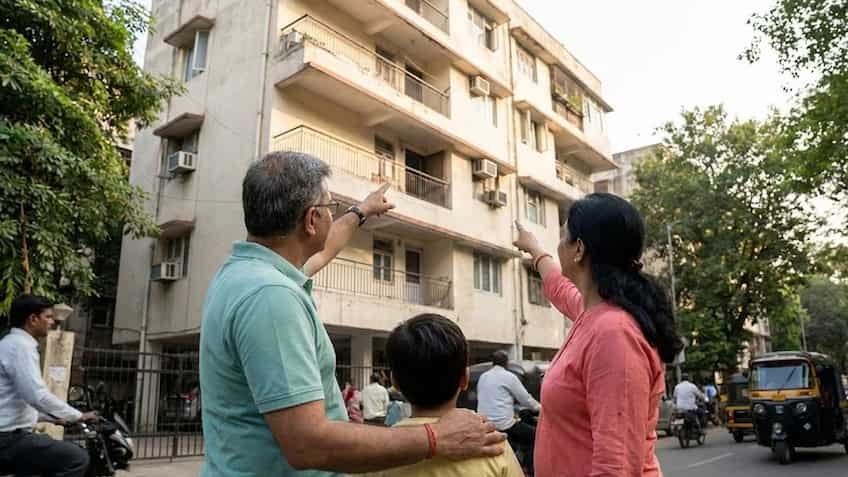
Since the Corona epidemic, the country’s real estate market has been flooded with luxury and ultra-luxury homes at a breakneck speed, now there seems to be a brake on that uncontrolled boom. During the last two-three years, almost every major builder was in a race to launch mega penthouses and club-class flats priced at Rs 2.5 crore, Rs 5 crore and Rs 10 crore just to woo rich industrialists, NRIs and high-net-worth investors (HNIs). During this period, the common working class and middle class had almost disappeared from the market due to skyrocketing prices. However, now the latest ground data of the real estate market is showing that this bubble based on the pockets of the rich has started deflating. According to the latest quarterly data from leading property consultancy firms, there has been a sharp decline of up to 8 per cent in new supply of premium homes priced at ₹2.5 crore and above in the country’s top seven metros. After saturation of demand in the luxury segment and stagnation of inventory, leading real estate developers across the country are once again being forced to turn to their old turf i.e. common and middle class home buyers.
According to analysis by leading research agencies in the realty sector, there has been a dramatic change in the trend of new residential launches in Delhi-NCR, Mumbai Metropolitan Region (MMR), Bengaluru, Hyderabad, Pune, Chennai and Kolkata in the latest quarters of the current financial year. While till last year the share of premium and luxury category in total new projects had reached around 35 to 40 percent, now developers in this category have stopped their new phases and launches. The 8% decline in new supply of premium flats priced above ₹2.5 crore is no mean figure. This is a clear indication that the limited group of super-rich buyers in metros who were buying premium properties at exorbitant prices have now been almost completely bought out. As a result, the pile of inventory of unsold flats worth crores of rupees is beginning to put huge financial pressure on the balance sheets of many big builders.
There are many deep economic and practical reasons behind this unexpected slowdown. The first major reason is investor fatigue. In the last two years, prices of flats in areas like Golf Course Extension Road in Gurugram, Worli-Bandra in Mumbai, and Whitefield in Bengaluru were increased by 40 to 70 per cent. Speculative investors who bought properties at such high prices are now getting only 2.5 to 3 percent rental yield, which is half the normal interest rate of banks. The second reason is that the secondary market (resale) in the ultra-luxury segment has become completely sluggish. Rich buyers who had booked flats worth Rs 3 to 4 crore for investment purposes two years ago are now not finding new buyers at profit. Additionally, layoffs in the global IT sector and slowdown in startup funding have also led highly salaried tech professionals to pull out of expensive deals with hefty EMIs.
The history of real estate is witness to the fact that whenever the speculative phase in the market stops, developers have to come back to the real consumers (end-users) i.e. the salaried middle class of the country to save their lifeline. The actual housing need across India’s vast population ranges from houses with budgets ranging from Rs 45 lakh to Rs 1.2 crore. Builders have now realized that selling a flat worth Rs 5 crore takes months and huge marketing expenses, whereas 2BHK and 3BHK flats worth Rs 60 to 90 lakh at the right location are sold in a few weeks. To keep cash flow regular and avoid huge loan interest from banks, now renowned developers like DLF, Godrej Properties, Prestige Group and Signature Global have also started giving priority to mid-income and compact luxury projects in their upcoming pipeline.
If seen from a geographical point of view, the most pronounced impact of this change is being seen in Delhi-NCR. While only projects above ₹3 crore were coming up on Dwarka Expressway and SPR (Southern Peripheral Road) in Gurugram till last year, developers are now preparing to bring new residential phases in the range of ₹80 lakh to ₹1.5 crore in Sohna Road and New Gurugram. Old sales records are being broken due to the huge influx of middle class buyers in Greater Noida West (Noida Extension) and Yamuna Expressway. Even in the suburban areas of Mumbai and Thane, developers have reduced the super built-up area of flats and designed compact 2BHKs whose ticket size can fit within the budget of a typical family i.e. ₹1.2 crore. At the same time, in South India’s IT hub Bengaluru and Hyderabad, instead of indiscriminate luxury villa projects, a new batch of smart homes priced at Rs 70 to 95 lakh are being launched around the IT corridor.
This slowdown in the luxury segment has returned the bargaining power in favor of buyers. Builders who did not talk to buyers directly a few months ago and used to make arbitrary agreements in the name of premium, are now announcing many concessions to attract customers. Once again, subvention and flexible payment plans like ’10:90′ and ’20:80′ are coming back in the market, in which only 10 to 20 percent amount has to be paid at the time of booking and the rest has to be paid at the time of getting possession of the flat. Along with this, indirect discounts like free car parking, modular kitchen, club membership fee waiver and partial subsidy on home loan interest rates are also being offered by many developers, resulting in direct savings of Rs 5 to 8 lakh to the average buyer in the total deal.
Market analysts believe that if you are looking for a home to live in, then the next six to twelve months can prove to be very favorable for buying a house. On one hand, due to stagnation in the prices of luxury segment, the profit margins of builders are coming back to normal level, while on the other hand, to sustain the demand, better facilities are being provided in the mid-segment at reasonable rates. However, experts recommend that before investing money in any project, buyers should visit the website of the state Real Estate Regulatory Authority (RERA) and carefully check the project registration number, land ownership and the official date of possession. Instead of getting fooled by mere paper brochures and attractive offers, prefer developers who have a track record of delivering on time, so that your hard-earned money is safe and your dream of owning a home comes true on time.