 look news india

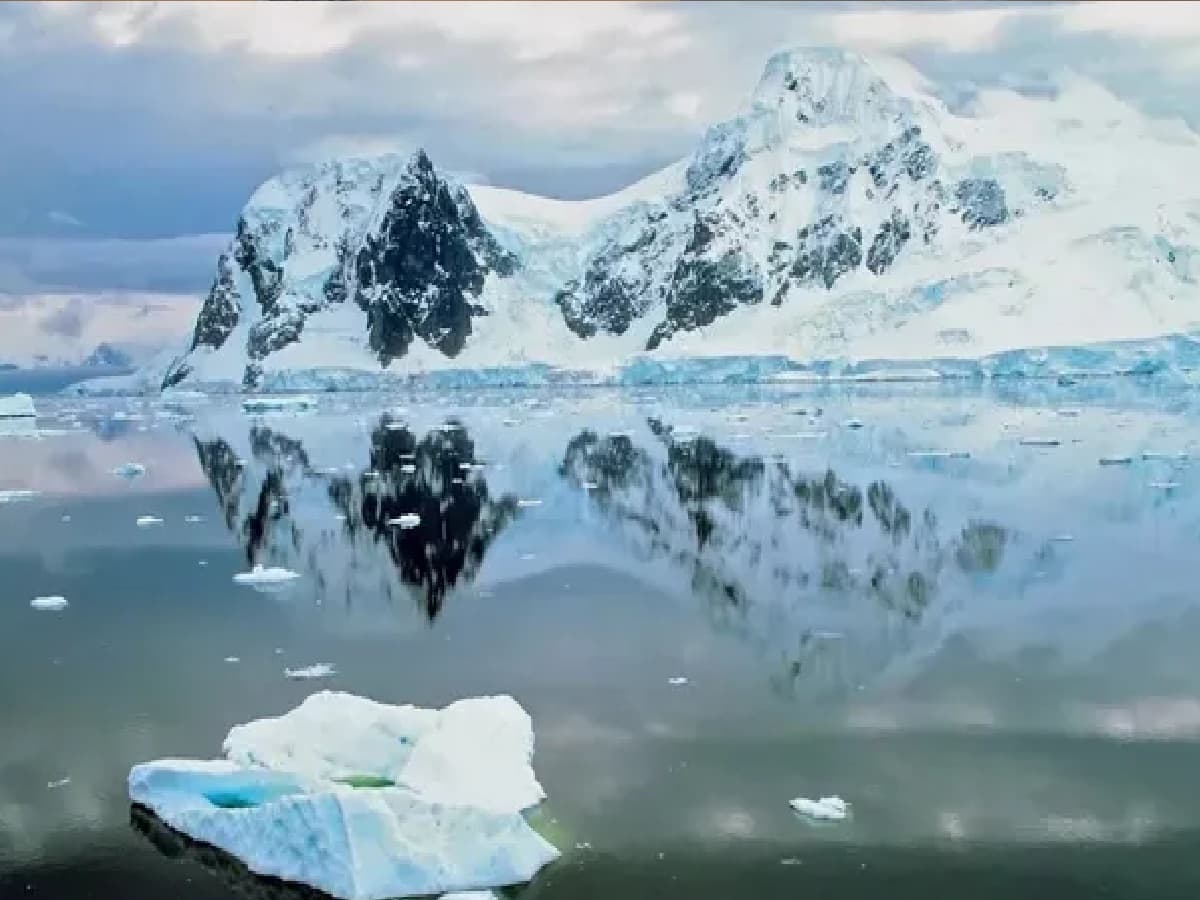
icy continents located at the southern end of the earth Antarctica A very scary and worrying news is coming out regarding environment and climate change. Prestigious Scientific Journal ‘Nature Climate Change’ A recent and detailed study published in has left environmentalists all over the world in a state of shock. According to this research, due to the huge decline in the amount of sea ice in Antarctica since 2015 and the rapid melting, the natural structure of a large part of the oceans has changed. The balance of fresh water and sea water that had existed for decades has now been completely reversed. As a result, the water in the oceans is not only becoming saltier, but it is also becoming more dense and heavy. Scientists clearly say that this unusual increase in the salinity of the ocean can increase the pace of global warming to a more dangerous level in the future. Let us know in detail what revelations have been made in this study and what effect it is going to have on our entire earth.
Researchers from many international institutions including Indian scientists made shocking revelations.
The team conducting this new and important study of climate change includes scientists from many prestigious institutions of the world. In this research mainly Indian Institute of Science (IISc) Researchers from Bengaluru, University of Melbourne and University of Southampton have jointly done deep research.
Researchers during their study ‘Antarctic Intermediate Water’ (Antarctic Intermediate Water – AAIW) The chemical and physical changes taking place have been examined very closely. Let us tell you that this special water body is formed in the Southern Ocean and flows hundreds of meters below the sea surface and moves northwards and spreads to the Atlantic, Indian and Pacific Oceans.
Researcher at the Center for Atmospheric and Ocean Sciences (CAOS), Indian Institute of Science (IISc) and lead author of this important study Kaushik Mishra Explaining this in detail, he said that the impact of these environmental changes occurring near the South Pole is not limited only there, but its deep impact can be felt on the oceans and global climate systems far away from the poles.
How is the water cycle of the oceans changing due to decreasing sea ice?
To understand this entire process of the oceans, we have to understand the mutual cycle of sea ice and freshwater. It is a law of nature that huge amounts of sea ice form every year during Antarctica’s harsh winter (especially in the months of May to July).
After this, when the summer season comes and the temperature increases, this frozen ice melts and releases sweet water into the sea. This natural melting creates a light layer of cold and fresh water near the surface of the ocean, which balances the temperature and salinity of the oceans.
But since 2015, due to the effects of global warming, the formation and persistence of sea ice in Antarctica has reduced significantly. When there is less ice, the amount of fresh water coming into the sea when it melts in summer will also automatically reduce. In addition, the upward movement of warmer and more salty water from the depths of the ocean has increased. Due to the combination of these two opposite reasons, the water going into AAIW is now becoming more salty and heavier than before.
Carbon from the deep sea will enter the atmosphere, and the pace of global warming will increase.
The biggest concern for scientists is that due to the salty and heavy sea water, the layered structure of the oceans can completely deteriorate. This reversal in ocean layers will increase the turbulence of the oceans.
Researchers believe that if this layered system of the ocean breaks, then the carbon dioxide and other greenhouse gases buried in the deep depths of the deep sea for centuries can easily come to the surface and dissolve directly into the atmosphere. Once deep sea carbon is released into the atmosphere, the greenhouse effect will increase manifold, which could lead to uncontrolled global warming. This increase in the Earth’s temperature will further accelerate the process of melting of polar ice, which will start a dangerous vicious cycle.
How was this confirmed? Researchers analyzed the data
In the initial phase, the main objective of this international team of researchers was only to study the flow and mixing patterns of medium depth waters in the Indian Ocean region.
But when they took a deep statistical look at ocean temperature, salinity, and temperature data over the past several decades, they found a deep and inextricable connection between Antarctica’s shrinking ice and chemical changes in this intermediate-depth water (AAIW). After this was confirmed, scientists have issued a warning that if the emissions of greenhouse gases are not controlled in time, then this ecosystem of the oceans can be completely destroyed, the consequences of which will have to be borne by the entire humanity.