 look news india

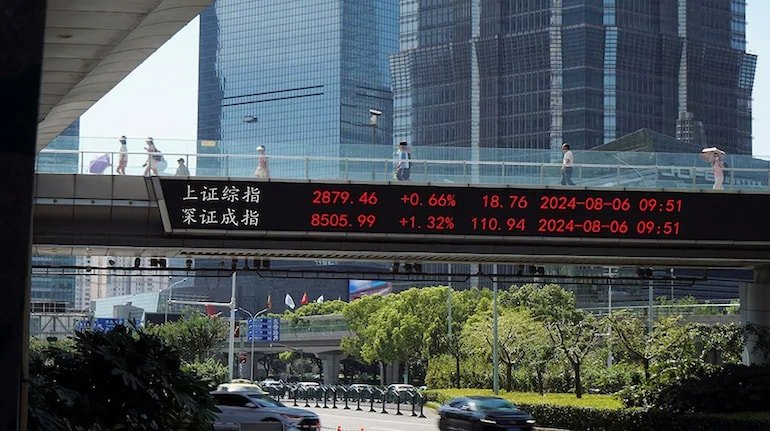
With the clouds of uncertainty over the monetary policies of central banks clearing globally, a positive trend is being seen in Asian stock markets in Thursday’s trading session. The US Federal Reserve has decided to keep interest rates unchanged after a two-day policy review meeting. This stance of the Fed has come as a big relief to global investors, due to which, after the strength in the US markets, there has been intensified buying in Asian indices – especially Japan’s Nikkei and Hong Kong’s Hang Seng – since this morning. Risk appetite in the equity market has improved due to slight softening of bond yields and reduction in liquidity concerns.
The strongest rise in Asian markets has been recorded in Japan’s major benchmark index Nikkei 225. At the beginning of the trading session, Nikkei was seen trading at a strong level with a jump of more than 1.0%.
-
Boom in tech and semiconductor sector: Major Japanese tech companies like Tokyo Electron and SoftBank Group have directly benefited from the rise in artificial intelligence and big-tech stocks on Wall Street.
-
Balance of dollar against yen: Investor interest in shares of export-oriented automobile companies (Toyota, Honda) has also increased due to stability of Japanese Yen against the dollar ahead of the upcoming monetary review meeting of the Bank of Japan (BOJ). Apart from this, Japan’s broad ‘Topix’ index is also trading in the green.
Apart from Japan, other Asian markets are seeing a mixed but stable trend:
-
Hang Seng of Hong Kong: The Hang Seng index remained in the green with a gain of 0.1% to 0.3%, supported by the continuation of China’s economic stimulus packages and the Fed’s accommodative stance. Buying is being seen from lower levels in shares of consumer and e-commerce companies.
-
Kospi of South Korea: Kospi was under pressure in the initial session, mainly due to the weaker than expected quarterly results of chip maker giant Samsung Electronics, which kept the index in a limited range. However, the auto and battery manufacturing sectors remained stable at lower levels.
-
Singapore and Taiwan: Singapore’s Straits Times Index is trading up 0.5%, while Taiwan’s Taiex Index was under mild pressure due to technical profit-booking.
| major index | Country | Current Situation/Trends | key driving factors |
| Nikkei 225 | Japan | +1.0% gain | Tech stocks rally, Fed keeps interest rates stable |
| Topics | Japan | faster than +0.6% | Buying in export based auto and manufacturing stocks |
| Hang Seng | hong kong | Slight rise of +0.15% | Improvement in liquidity, recovery in tech and consumer stocks |
| Kospi | south korea | -1.5% to -2.0% pressure | Profit booking after Samsung Electronics results |
| Straits Times | Singapore | +0.5% stronger | Positive buying in banking and real estate stocks |
The US central bank’s Open Market Committee (FOMC) kept benchmark rates steady in the current range of 3.75% to 4.0% while evaluating inflation levels and US labor market data. This neutral stance of the Fed has clearly indicated that the US economy is far from the danger of recession and there is no need for any aggressive increase in rates at the moment. US 10-year Treasury bond yields fell by more than 4 basis points immediately after the decision, which has significantly slowed the pace of dollar outflows from emerging markets.
International benchmark Brent Crude fell 0.4% to $114.81 per barrel and US WTI to around $102.15 per barrel in Asian trading hours. This stability in crude oil prices is a relief news at the macro level for major oil importing economies like India and Japan. Along with this, the selling pressure of foreign portfolio investors (FIIs) is expected to reduce due to the US dollar index remaining stable around the level of 104.
The direct impact of these strong and stable signals from Asian markets can also be seen in the early trading of the Indian domestic market (Sensex and Nifty) today, where the possibilities of a positive start have increased due to short covering in IT and banking stocks.