 look news india

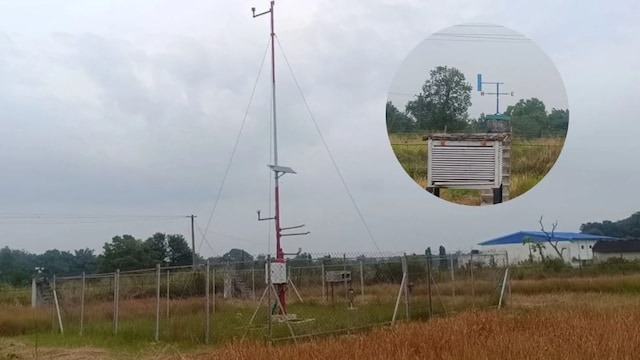
By the end of the month of October, the weather has once again taken a turn in many states of the country and a new cyclonic storm ‘Cyclone Arnab’ has made its knock from the coastal areas to the interior states. After hitting the coasts of Andhra Pradesh and Odisha, the impact of this powerful cyclone is now clearly visible in many parts of Eastern India including Jharkhand. After the warning from the Meteorological Department (IMD), the Jharkhand government and the district administration have become fully prepared. The biggest question in people’s minds is whether this cyclone can also cause huge devastation like the ‘Yaas’ storm that came in the year 2021? Especially the farmers of the state are holding their breath because the crops standing in the fields and recently harvested crops can get hit by heavy rains.
Cyclone Arnab and latest weather conditions in Jharkhand
Cyclonic storms originating from the Bay of Bengal have always been a matter of concern for the coastal and eastern states. Due to the impact of Cyclone Arnab, the weather has completely deteriorated in about 9 major districts of Jharkhand including the capital Ranchi. There are thick dark clouds in the sky and it has started raining intermittently. According to the Meteorological Centre, there is every possibility of heavy to very heavy rain and lightning with strong winds in many parts of the state for the next few days. The districts for which yellow and orange alerts have been issued include Ranchi, Khunti, Simdega, Gumla, Lohardaga, Sarkela-Kharsawan, East and West Singhbhum. The administration has warned people about the possibility of waterlogging in low-lying areas and damage to weak buildings and kutcha houses.
Is the speed of this cyclone as dangerous as the Yaas storm of 2021?
Whenever the name of any major cyclone comes up, the scary memories of the ‘Yaas’ cyclone that occurred in the month of May 2021 are refreshed. During that time, Yaas storm had caused huge devastation in many districts of Jharkhand and Odisha, trees were uprooted by strong winds and there was massive loss of electricity and property. The question in people’s minds is whether ‘Arnab’ storm will also prove to be equally destructive? Weather experts believe that although Cyclone Arnab is weakening mainly after hitting the coastal areas of Andhra Pradesh and Odisha, the moisture-rich clouds and deep depression coming from its impact are causing heavy rains for three consecutive days in states like Jharkhand. Even though its direct speed may not be as severe as in the coastal areas, continuous torrential rains and strong winds blowing at a speed of 40 to 50 kilometers per hour can severely affect life.
Farmers’ tension increased, paddy and other crops in big danger
This unseasonal rain and cyclone crisis has given sleepless nights to the farmers of Jharkhand. At present, in most of the rural areas of the state, the paddy crop is either ripe or farmers are harvesting it. In such a situation, this sudden cyclone alert and warning of continuous heavy rain for three days has created the fear that the hard work of the food providers will be ruined. Agricultural experts and district administration have issued special advisory for farmers. Farmers have been advised that if the crops have been harvested, then immediately shift them to safe places or warehouses so that they can be protected from getting wet and rotting. Due to waterlogging in the fields, standing paddy crops can fall on the ground, causing huge loss to the yield. In many districts of the state, orders have also been given to keep schools closed as a precautionary measure so that children do not face any kind of inconvenience or danger.
Preparation of administration and important guidelines for common citizens
Seeing the seriousness of the situation, the Jharkhand government and the district administration have come into full active mode. Ranchi Deputy Commissioner and administrative officials of other districts have directed the disaster management team to remain on alert. Shelter homes are being prepared to safely evacuate people from low-lying and waterlogged areas. Additionally, special teams have been formed to immediately remove fallen trees on roads and restore disrupted power supply on war footing. The Meteorological Department has appealed to the common citizens to come out of their homes only when absolutely necessary, especially avoid standing near trees and weak electric poles. Completely avoid going to open places or fields during thunderstorms. The government is constantly keeping a close watch on the situation so that any untoward incident can be dealt with immediately.