 look news india

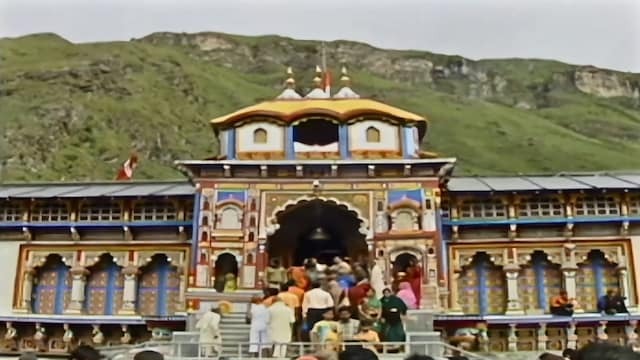
Badrinath Dham, situated on the picturesque banks of Alaknanda River in Chamoli district of Uttarakhand and in the lap of Nar and Narayan mountains, is considered to be one of the most sacred and major four Dhams of Hindu religion. It is believed in Sanatan tradition that this Vaikuntha Dham of the earth is the actual abode of Lord Shri Hari Vishnu himself. According to mythology and ancient texts, this holy land is associated with the severe and difficult penance of Lord Vishnu. When Lord Vishnu meditated and performed severe penance for thousands of years at this peaceful and picturesque place in the spirit of welfare of the entire universe and public welfare, then Goddess Lakshmi took the form of Badri i.e. wild Badri (Hate) and provided him protection from all kinds of natural disasters, snowfall and severe cold. Pleased with this sacrifice and dedication of Goddess Lakshmi, Lord Vishnu named this holy land as ‘Badrinath’, which even today remains the main center of faith of millions of devotees. When we analyze the spiritual and geographical nature of this holy place from the point of view of an experienced reporter, it becomes clear that Badrinath Dham is not only a center of religious devotion, but it is also an immortal example of India’s rich cultural history and ancient architecture.
The history of ‘Narad Kund’, situated on the banks of Alaknanda River, just below the main gate of Badrinath Temple, is full of miraculous and mythological significance. According to religious beliefs and scriptures, after the passage of Tretayuga and Dwaparayuga, when the influence of Buddhism increased, due to the fear of invaders and heretics, the original Swayambhu idol of Badrinath was hidden in the deep and holy waters of this Narada Kund. Centuries later, when Jagadguru Adi Shankaracharya Ji Maharaj arrived on this holy land in the eighth century, he had a supernatural dream of the quadrilateral idol of Lord Vishnu made of divine Shaligram being submerged in water in Narad Kund. On the strength of his divine devotion and devotion, Adi Shankaracharya took out the idol of Lord Vishnu from the same Narad Kund and reestablished it near the Garuda cave and revived Badrinath Dham. ‘Tapt Kund’ is also situated near Narad Kund, without bathing in its hot water, the darshan of Badrinath ji is considered incomplete and fruitless.
The entire courtyard and temple area around Badrinath Dham is surrounded by five highly sacred shilas (stones), which are known as ‘Panch Shila’ in the scriptures. These five rocks are-Garuda Shila, Narad Shila, Markandeya Shila, Narasimha Shila and Varaha Shila. The mythological history of these rocks is directly linked to the various incarnations of Lord Vishnu, the rigorous penance of great sages and the devotion of Devarshi Narad. It is believed that the bird king Garuda, the vehicle of Lord Vishnu, had performed penance on the Garuda Rock, while on the Markandeya Rock, the immortal sage Markandeya had attained the accomplishment of Mahamrityunjaya. Nrisimha Shila and Varaha Shila testify to the presence of Bhakta-Vatsal incarnations of Lord Vishnu. It is believed that these five rocks continuously protect Badrinath Dham from natural calamities and evil forces and provide divine spiritual peace to every devotee who comes here.
Every year in the month of Vaishakh, when the doors of Badrinath Dham open, lakhs of devotees from India and abroad flock to the banks of Alaknanda for darshan and worship. During the six months of winter, when the Dham is covered with a thick blanket of snow, the eternal flame remains lit in this holy temple and it is believed that after the doors of the human race are closed, Devarshi Narad himself and other gods perform the worship of Lord Badri Vishal. In summers, when the priests enter the temple as soon as the doors are opened, the eternal flame lit six months ago is found burning in the same manner, which is a direct evidence of the divine presence of God. By merely having the darshan of Badrinath, the bonds of life and death and all the sins of a person are cut off, that is why it is said that ‘Jo jaaye Badri, woh na aaye Odri’ i.e. a person who visits Badrinath Dham does not have to take birth again in the womb.