 look news india

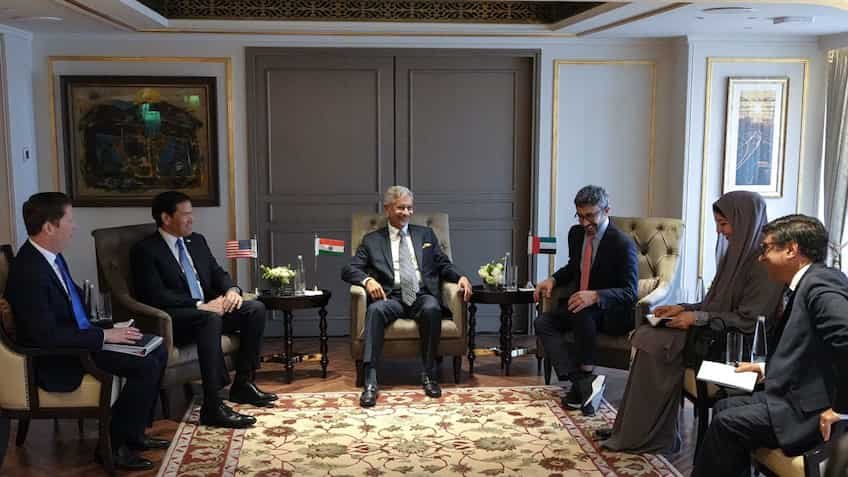
A historic turning point has emerged in terms of economic, diplomatic and strategic relations between India and America. US Secretary of State Marco Rubio, who is on a visit to India, has clarified that New Delhi and Washington have come ‘very close’ to finalizing the much-awaited bilateral trade agreement (India-US Trade Agreement). According to Rubio, negotiators from both countries have resolved most of the contentious and complex issues and now only a limited number of technical aspects remain to be finalized. After this statement, there is a lot of enthusiasm in the business corridors of both the countries and in the global markets, because this deal can give a new direction to the equations of Asia-Pacific and global supply chains.
US Secretary of State Marco Rubio, during his official visit to India, met External Affairs Minister Dr. S. Along with meeting Jaishankar, he had in-depth discussions with senior officials. He said that although the technical negotiations of trade agreements do not directly fall under the purview of the State Department, the National Security Advisor and he himself are continuously monitoring the progress of this strategic deal. Rubio bluntly said that the two sides are as close as they can get to signing an agreement, and he hopes that both countries will soon announce this great news to the world and formally sign it.
Marco Rubio, detailing the current status of the trade agreement, said that teams from both countries have been working on legal drafting and clause-by-clause review for the past several months. The main objective of both sides is to achieve mutual reduction in tariffs (import duties), ensure better access to markets for strategic goods and services and eliminate non-tariff barriers.
According to trade experts, the first phase of the agreement is almost ready. Final negotiations are underway to balance the domestic interests of both the countries on some sensitive sectors, especially agriculture, dairy and select industrial products. Rubio expressed confidence that agreement will be reached on these remaining issues, which will lead to a significant increase in the flow of goods and services between the two economies.
Talking about the trade deal with India, Marco Rubio also clarified the US administration’s view on international energy security and India’s energy needs. He said that when the US President takes policy decisions related to national security waivers or sanctions, many complex global factors are taken into account. Rubio made a realistic comment, saying that ‘geography is a fact’ and it is not possible for some countries in the world to rely on alternative sources of energy supply overnight.
He underlined that securing energy flows is the first priority amid tight global crude oil supply, price stability and rising tensions in West Asia (Strait of Hormuz and Red Sea). The US administration recently took time to review the proposed heavy tariffs on Russian oil purchases to ensure that they do not have a negative impact on the global economy and partner countries. Describing India as a very important strategic ally of the US, Rubio said that India has tried to diversify its energy supply and the US fully understands New Delhi’s concerns.
The US Secretary of State openly praised India’s refining capacity and called it a ‘Refining Superpower’. As part of his India tour, he is also scheduled to visit Jamnagar in Gujarat, where the world’s largest oil refining complex is located. The US side believes that Indian refineries can play an important balancing role in the processing of Venezuelan heavy crude and other sources in the global energy market.
The overview of energy infrastructure in Jamnagar and the meetings with Indian energy sector leaders will pave the way for major long-term agreements between India and the US not only in traditional trade but also in the fields of petrochemicals, LNG and green energy technologies.
If this trade agreement between India and the US is formalized soon, it will have wide-ranging positive consequences for Indian exporters, manufacturing sector and services sector. At present America is India’s largest trading partner. The deal is expected to provide competitive advantage to Indian textiles, pharmaceuticals, auto components, gems and jewelery and IT services in the US market.
On the other hand, it will be easier for American companies to export to India’s fast-growing consumer market, high-tech electronics, aerospace and energy equipment. Also, this trade pact will provide a strong economic security blanket to both the democratic countries in the direction of reducing the excessive dependence of the global supply chain on China (De-risking/China+1 Strategy).
According to diplomatic sources, Marco Rubio and Indian Foreign Minister Dr. S. During the bilateral talks between Jaishankar, detailed agreement has been reached on defense cooperation, security situation of Indo-Pacific and the final format of the trade agreement. Its formal announcement and signing at the top leadership level will be scheduled after the final legal draft is approved by the trade ministries of both the countries. This optimistic statement of Rubio clearly indicates that the India-US Comprehensive Trade Agreement, pending for decades, has now reached its final stage.