 look news india

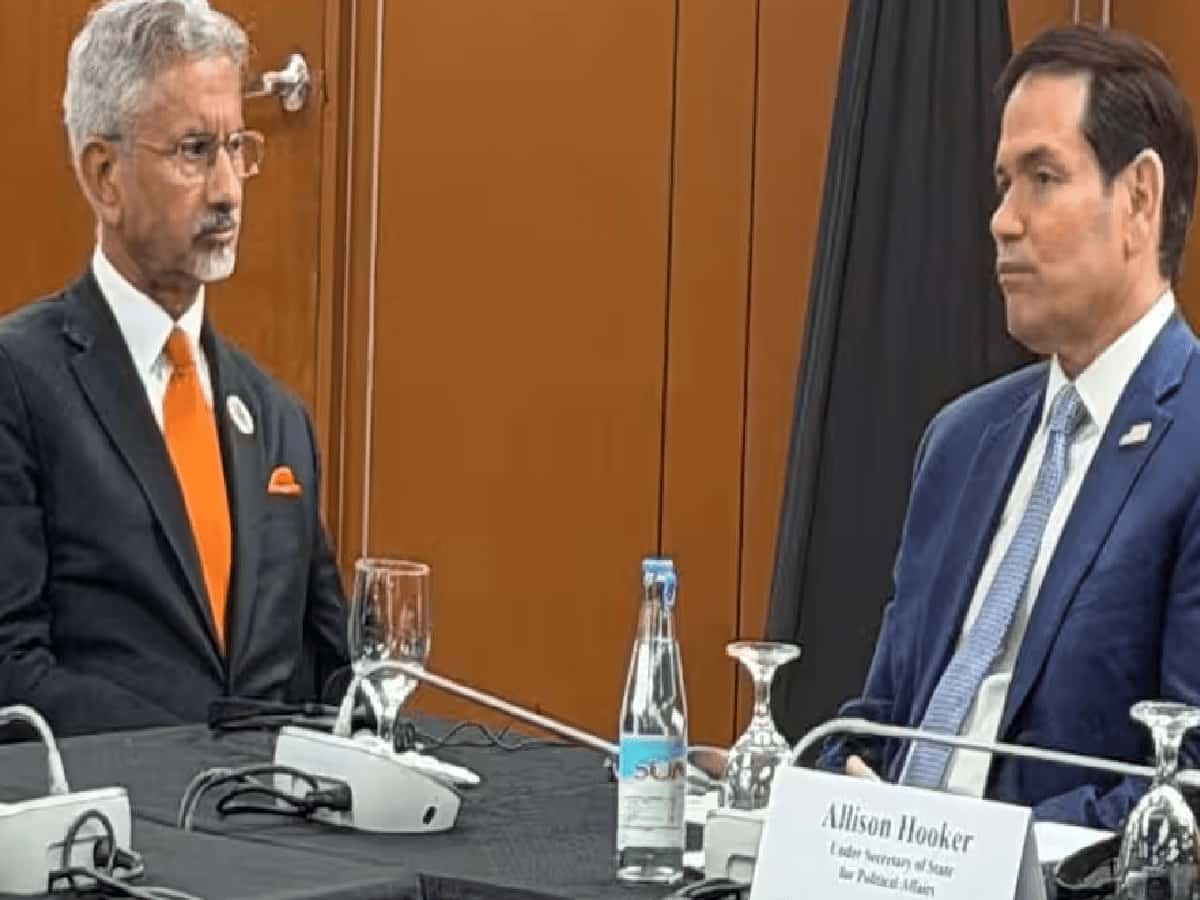
Amidst the ongoing diplomatic standoff between India and America over trade, tariff and immigration policies, US Secretary of State Marco Rubio is reaching the country’s financial capital Mumbai on an important visit to India on Tuesday, October 20, 2026. Immediately after completing his visit to Uzbekistan, Rubio will step onto Mumbai soil with a high-level US business delegation. During this visit, he is scheduled to have direct and detailed bilateral talks with Indian Foreign Minister Dr. S. Jaishankar. This high-level meeting, to be held amid the recent atmosphere of distrust between the two countries, will not only decide the future direction of mutual relations between the two democratic superpowers, but will also draw a new blueprint for global geopolitical equations, defense deals, modern technology and strategic energy cooperation. This is the second visit of the US Secretary of State to India after participation in the Quad Summit held in New Delhi in May 2026, which is being considered extremely decisive for both the sides.
In this much-awaited meeting to be held at the diplomatic center in Mumbai, the main agenda of the two foreign ministers will be to carry forward the momentum of bilateral strategic partnership without any hindrance. At the negotiating table, there will be in-depth discussions on defense production, co-development of advanced military hardware, Artificial Intelligence, space cooperation and ensuring secure supply chains of critical minerals. To reduce global dependence on China, both countries are exploring ways for joint investment in mining and processing of lithium, cobalt and rare earth elements. Apart from this, increasing mutual coordination in the field of clean energy and green technology is also among the top priorities of both the countries. This dialogue between Jaishankar and Rubio will seek to ensure that the deep strategic and defense agreements between the two countries remain unaffected despite trade disagreements.
On the regional and global security front, the two top diplomats will share their perspectives on two of the biggest crises currently shaking the world—the Russia-Ukraine war and the ongoing tensions in West Asia. Both these conflicts have had a profoundly negative impact on food security, crude oil prices and the supply of chemical fertilizers across the world. During these talks, the Indian side can also discuss with America the outline of the proposed ceasefire agreement between Russia and Ukraine. India’s main objective is to immediately stop attacks on merchant ships carrying grain and oil in the sea trade routes of the Black Sea so that the supply of essential commodities to the developing and poor countries continues to reach smoothly and without any interruption.
During this bilateral dialogue, the outline of possible future meetings between the top leadership of the two countries will also be discussed. In this, opportunities will be explored for a possible bilateral meeting between Prime Minister Narendra Modi and US President Donald Trump during the ASEAN Summit to be held in Manila, the capital of the Philippines next month and then the proposed G-20 Summit in Florida, USA. Apart from this, a big diplomatic honor is going to be given to India, under which Dr. S. Jaishankar has been invited as the chief guest in the national celebrations of the historic 250th anniversary of the independence of the United States of America. India’s participation in this historic festival will symbolize the shared democratic heritage of both the countries.
Over the past year, relations between Washington and New Delhi have witnessed bitterness and tension over a number of sensitive issues. The aggressive trade policies of the President Donald Trump-led US administration, threats of imposing additional import duties on Indian goods, tightening of H-1B visa rules for skilled Indian IT professionals and restrictions related to green card programs have worried both the Indian industry and the government. On the other hand, efforts by Washington to renew military and diplomatic ties with Islamabad (Pakistan) have also raised New Delhi’s security concerns. Although talks on the proposed comprehensive bilateral trade agreement between the two countries have been stuck in a deadlock for some time, top diplomats from both sides have been insisting that efforts to find a solution behind the scenes are going on at a rapid pace.
The most talked about and strategic stop of this Indian tour of the US Secretary of State is considered to be the visit to the huge refinery complex of Reliance Industries Limited (RIL) located in Jamnagar, Gujarat. On October 21, Marco Rubio will spend several hours in Jamnagar. Jamnagar Refinery is the world’s largest single oil refinery and has also been a major global hub for refining imported Russian crude at concessional rates. Along with this, Reliance Industries is investing heavily to set up a huge state-of-the-art refinery in Texas, USA, which is the first largest greenfield project of its kind to come up on American soil in the last 50 years. Apart from this, Reliance also purchases large quantities of crude oil from Venezuela, whose global sales are regulated and monitored by the US Treasury Department. Given these huge equations of energy and corporate world, Rubio’s visit is being linked to the future of the global oil market.
Just before Rubio’s arrival in India, the country’s opposition parties had reacted sharply to a public comment by the newly appointed US Ambassador to India Sergio Gore. Ambassador Gore had commented that the US had expected that Foreign Minister S. Jaishankar would be present in Mumbai instead of New Delhi to receive Marco Rubio. Opposition parties termed it a violation of protocol and American pressure. However, the Indian Ministry of External Affairs was quick to clarify on the controversy, saying that India has been hosting foreign heads of state and dignitaries outside the capital Delhi with utmost grandeur in major cities like Varanasi, Ahmedabad, Mahabalipuram, Goa and Mumbai for more than a decade to showcase its rich cultural diversity and federal structure.