 look news india

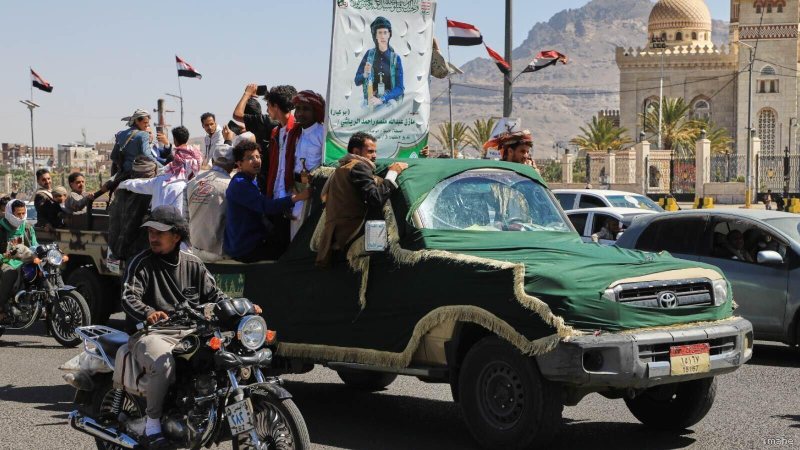
The strategic balance in West Asia and the Gulf region is changing rapidly. Till the last few years, the world viewed Yemen’s Houthi rebels only as a proxy group of Iran. However, defense experts and geopolitical analysts believe that now this equation has completely changed. The Houthi rebels are no longer puppets of Tehran, but have established themselves as an autonomous, powerful and technologically capable regional military power.
After consolidating their control over a large part of Yemen, the Houthi rebels have strengthened their hold on international sea routes such as the Red Sea, the Gulf of Aden and the Bab-el-Mandeb Strait. Based on early support from Iran, missile technology and drone support, the Houthi group has now developed its own weapons manufacturing and assembly capabilities. Now they are not dependent on every instruction from Tehran, rather they are taking their own strategic decisions.
The Red Sea is considered the lifeline of international trade. About 12 percent of the world’s trade and more than 30 percent of container traffic pass through this route. The Houthi rebels have disrupted the global trade system by repeatedly attacking commercial ships with drones and anti-ship ballistic missiles.
By demonstrating their military presence and power in the Gulf region, the Houthis have proved that they can disrupt the global supply chain whenever they want. Ships now have to take a long detour via Africa’s ‘Cape of Good Hope’. Due to this, not only has the freight charges increased by three times, but the arrival time of the ships is also getting delayed by two to three weeks. Because of this, the prices of fuel, food grains and other essential commodities are continuously increasing in the global market.
International affairs and defense experts have advised the Indian government to quickly change its policies keeping this changing scenario in mind. Experts say that more than 80 percent of India’s European and North American trade passes through the Red Sea. Insecurity in the Red Sea is directly impacting the Indian economy, exporters and common consumers.
Following are the major recommendations made by experts to India:
-
Expansion of Naval Presence: The Indian Navy should increase the number and surveillance of its patrol vessels in the Gulf of Aden and the Arabian Sea so that merchant ships can be provided security.
-
Active Naval Convoy Escort: Naval security convoy techniques should be strengthened to provide safe passage to Indian flagged ships and manned by Indian crew members.
-
Multilateral Diplomacy: India should maintain constant dialogue with Gulf countries such as Saudi Arabia, United Arab Emirates (UAE) and Iran as well as Western allies to maintain regional stability.
-
Focus on alternative trade routes: India should rapidly pursue alternative projects such as the North-South Transport Corridor (INSTC) and the India-Middle East-Europe Economic Corridor (IMEC).