 look news india

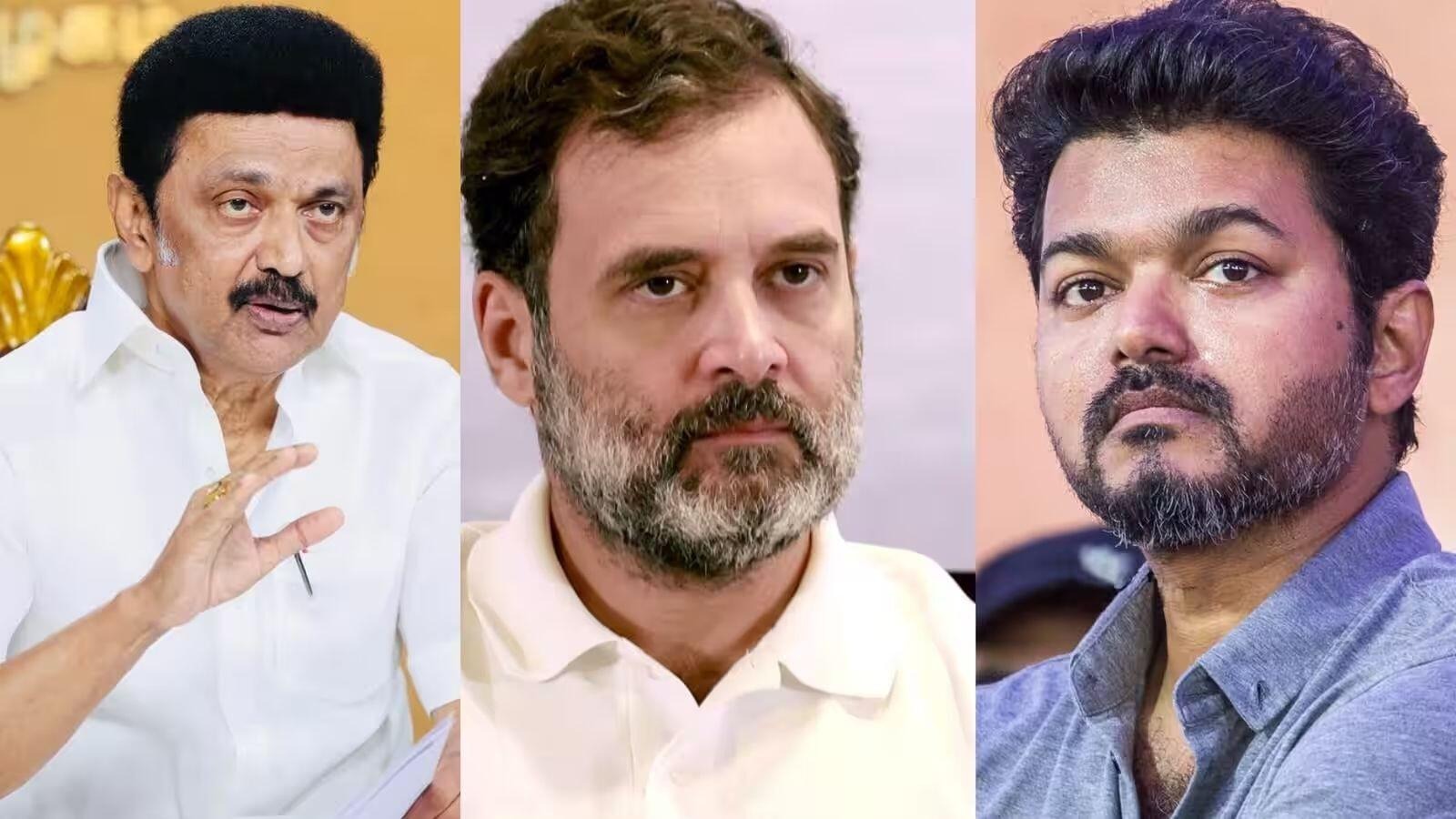
The internal strife within Indian political circles and the National Opposition Alliance (INDIA Bloc) has once again come to the fore. The tension has reached its peak due to lack of consensus within the alliance on a sensitive political and administrative issue related to Gyanesh Kumar. Dravida Munnetra Kazhagam (DMK), a strong regional power in South India and the ruling party of Tamil Nadu, has made very serious allegations of adopting double standards on the Congress Party and ‘Tamizhaga Vetri Kazhagam’ (TVK), the party of popular Tamil actor Thalapathy Vijay, who recently entered politics. Senior DMK leaders believe that the parties claiming opposition unity at the national level are compromising ideological integrity for their political and electoral interests at the state level, which is deeply hurting the collective objective of the alliance. After this sharp ideological difference, now the discussion has started gaining momentum in the political circles whether this strong fort of the opposition has started collapsing from within before the upcoming elections.
The DMK leadership already seems uneasy about the stance of actor-turned-politician Thalapathy Vijay and his party, who is rapidly strengthening his political base in Tamil Nadu politics. The DMK alleges that some opposition parties and the national leadership are deliberately ignoring the regional priorities of the state and indirectly encouraging elements who want to weaken the ideological base of the Dravidian movement. When the national level opposition parties decided their strategy on the issue related to Gyanesh Kumar, the DMK found that the Congress and other allies were either maintaining silence on the matter or making contradictory statements. DMK clearly believes that if there is a lack of mutual trust and transparency within the alliance, it will become impossible to counter strong political forces like BJP and NDA. This entire incident has brought a new political upheaval in the politics of Tamil Nadu and at the national level, which can have far-reaching consequences on the upcoming elections.
The DMK, which is angry with the attitude of the central leadership of the Congress party and lack of coordination with the alliance partners, has now started openly considering future strategies. Political analysts believe that the indications of ‘Third Front’ or a strong front of regional parties being given by DMK can prove to be a big warning for Congress. In India’s federal structure, whenever national parties try to sideline regional aspirations, regional satraps talk about a third option to realize their independent power. If a big regional party like DMK decides to distance itself from the INDIA block, then the equation of opposition unity may get badly shattered not only in Tamil Nadu but also in other states of South India. This is a clear message from regional parties that the policy of treating them as junior partners in national politics will not be tolerated any longer.
This latest controversy arising out of the issue of Gyanesh Kumar is a strong proof of how difficult it is to coordinate the interests of different parties at the ideological and ground level. On one hand, since the Lok Sabha elections, efforts were being made to present a strong alternative by keeping the opposition alliance united, on the other hand, mutual conflicts and regional ambitions are becoming the biggest obstacles in the path of this unity. This is the time for introspection for the Congress Party because being a national party, it will have to master the art of balancing taking along its regional allies. If this sourness between Congress and DMK is not resolved through talks in time, then in the coming time this structure of opposition alliance may completely collapse, which is sure to give direct political benefit to the ruling party.