 look news india

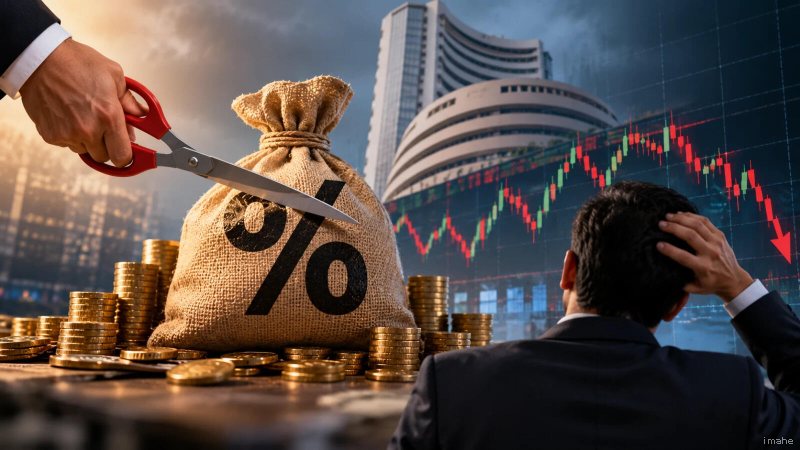
The Indian economy is currently going through a phase where issues like growth rate, inflation, stock market fluctuations and unemployment have become the biggest concerns for the common man and the policy makers. Often, whenever there is a recession in the stock market or pressure on the corporate world increases, industrialists and investors demand from the government that tax rates should be cut so that the market can get relief. But recent economic analysis and renowned financial experts of the country have said a very big and blunt thing. Experts believe that merely giving relief or removing taxes cannot improve the health of the market forever. To keep the country’s economy on track for a long time and strengthen its foundation, the government will have to focus most on creating new employment opportunities at the grassroots level, apart from tax exemptions. Let us understand deeply from the perspective of an economic reporter what is the economic meaning behind this entire debate.
There is no doubt that when the government makes any kind of cut in corporate tax, GST or income tax, companies are left with more capital to invest and the stock market becomes bullish for some time. Investors are happy and share prices of companies start rising. But this relief only works as an immediate or short-term tonic. If the common people of the country do not have money in their pockets and they do not have a regular source of income i.e. employment, then they will not buy goods from the market. When demand for goods and services does not increase in the market, then how will big companies increase their production, no matter how low taxes are imposed on them? This is the reason why economic analysts are repeatedly saying that merely reducing taxes cannot be a sure cure for the ills of any economy.
The simple and basic rule of economics is that the movement of the market completely depends on the purchasing power of the consumer. If a common citizen has a good job, he is getting a fixed salary every month, then he will spend freely. He will buy a new house, buy a car, spend on clothes and electronic goods. This expenditure will bring a boom in the manufacturing sector, service sector and retail sector of the country. When companies earn profits, they will automatically pay huge taxes to the government. On the contrary, if the youth do not have employment and are facing the crisis of unemployment, then even if the government makes all the taxes zero, there will be silence in the markets of the country because the customers who buy things will disappear from the market. Therefore, the real challenge is to increase the purchasing power of the common man rather than taxes.
India is one of the youngest countries in the world, where every year crores of youth complete their studies and enter the market in search of jobs. If these youth do not get employment on time, this demographic dividend can turn into a major economic and social crisis. In today’s time, with the advent of automation, Artificial Intelligence (AI) and modern technologies, traditional jobs are decreasing rapidly. In such a situation, just giving tax exemption to big industries will not work, rather the government will have to strengthen the micro, small and medium industries (MSME). The MSME sector generates maximum employment in the country. Unless small industries, startups and construction sector get financial assistance, easy loans and infrastructure support, new doors of jobs cannot open at the grassroots level.
The essence of this entire situation is that the central and state governments will have to move beyond immediate populist decisions in their economic policies and focus on long-term reforms. Tax reforms are undoubtedly necessary to make doing business easier, but along with it, skill development, expansion of manufacturing hubs, modernization of the agriculture sector and creation of new opportunities in the service sector are essential. When every youth of the country will have employment and his income will increase, then the cycle of the country’s economy will automatically start rotating rapidly. Investors also have to understand that the real strength of the stock market lies not in any tax exemption, but in a strong consumer base and an economy full of employment.