 look news india

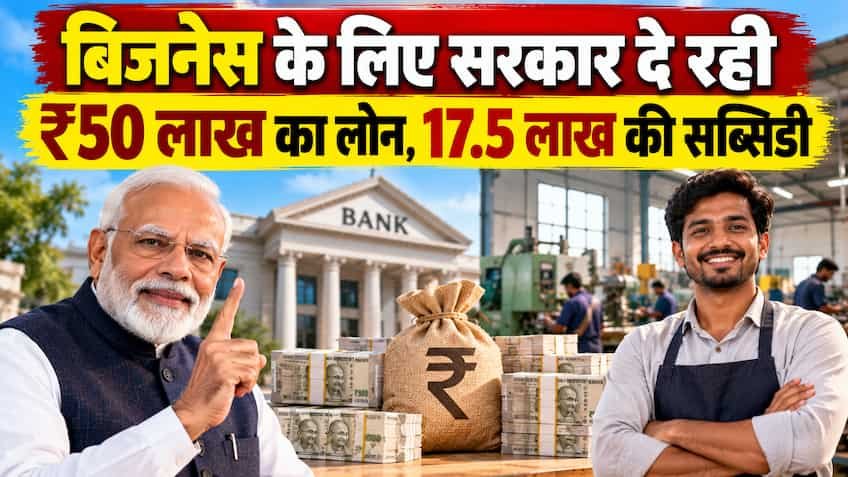
With the aim of promoting self-employment in the country and providing economic support to new entrepreneurs, the Central Government’s ‘Prime Minister’s Employment Generation Programme’ (PMEGP – Prime Minister’s Employment Generation Programme) has emerged as a very popular and ambitious scheme. Under this credit-linked subsidy scheme run by the Ministry of Micro, Small and Medium Enterprises (MSME), a maximum project cost of up to Rs 50 lakh is approved for setting up a new industry in the manufacturing sector. The most attractive aspect of the scheme is the huge ‘margin money’ (subsidy) offered by the central government, which reaches up to 35 per cent in eligible categories and rural areas. This simply means that a project worth Rs 50 lakh gets the benefit of a non-refundable subsidy of Rs 17.5 lakh from the government, which significantly reduces the debt burden from the entrepreneur’s head. This scheme is proving to be a boon for the youth who are dreaming of setting up their own factory, processing unit or manufacturing unit in small towns and rural areas across the country including Lucknow, the capital of Uttar Pradesh.
The financing structure in the PMEGP scheme is divided into three main components—the entrepreneur’s own contribution, government margin money (subsidy), and the balance loan provided by the bank. If a person belonging to a special category (women, SC, ST, OBC, disabled or ex-serviceman) sets up a manufacturing unit in a rural area at a cost of Rs 50 lakh, then he has to invest only 5 percent i.e. Rs 2.50 lakh from his own pocket. The central government provides subsidy of 35 percent i.e. Rs 17.50 lakh on this project. The total loan amount of 95 percent (Rs 47.50 lakh) is initially sanctioned by the bank, out of which the subsidy of Rs 17.50 lakh sent by the government is kept safe in the bank in the form of Term Deposit Receipt (TDR) for 3 years. After 3 years of successful operation and physical verification, this amount is directly adjusted into the loan account, so that the beneficiary actually has to repay only the principal loan amount of Rs 30 lakh along with interest to the bank from his earnings. For the general category (urban), the own contribution is 10% and the subsidy is 15% (Rs. 7.50 lakh), while for the general category (rural), the subsidy has been fixed at 25% (Rs. 12.50 lakh).
Under this scheme, assistance is given only for setting up new micro units (New Greenfield Units), the first loan is not valid for any already running business. The minimum age of the applicant should be 18 years and no upper limit of family income has been fixed for this. If the total cost of the project in the manufacturing sector is more than Rs 10 lakh, it is mandatory for the applicant to have passed at least 8th class. Only one person from a family (self and spouse) can avail financial benefits under this scheme. Additionally, entrepreneurs who have previously availed the benefits of PMRY, REGP or any other government subsidy-linked scheme like MUDRA are not eligible to get subsidy under this scheme. Before disbursement of loan, the beneficiary is also required to successfully complete the Entrepreneurship Development Program (EDP Training) conducted by Khadi and Village Industries Commission (KVIC) or nominated institute.
Before applying for the scheme, the applicant should have all the statutory documents ready in digital form. This includes Aadhar Card, PAN Card, Passport Size Photograph, Residence Certificate, Caste or Special Category Certificate (if applicable), and Educational Qualification Certificate. When setting up a unit in a rural area, it is necessary to produce ‘Rural Area Certificate’ issued by the village head or competent authority so that the benefit of 35% subsidy can be availed. The most important document is the ‘Detailed Project Report’ (DPR), which should contain complete details of the machinery cost of the proposed industry, raw material expenditure, shed construction, working capital and estimated profit and loss for the next 3 to 5 years. The more practical and financially strong the project report is, the greater are the chances of getting the loan approved by the bank.
There is no need to visit any middleman or office for PMEGP loan, the entire application process is online and transparent. The applicant has to first go to the official portal of Khadi and Village Industries Commission (kviconline.gov.in/pmegpeportal). After clicking on ‘Application for New Unit’ on the homepage, a 20 point online form opens. The form requires selecting Aadhaar authentication, name, address, type of industry, implementing agency (KVIC, KVIB or DIC) and preferred bank branch. After filling all the personal details the form has to be submitted by uploading the DPR and other required certificates. After submission, a unique application ID and password is generated, from which the status of the application can be tracked. After this, the District Level Task Force Committee (DLTFC) examines the application and forwards it to the bank, from where the bank issues the loan sanction letter.