 look news india

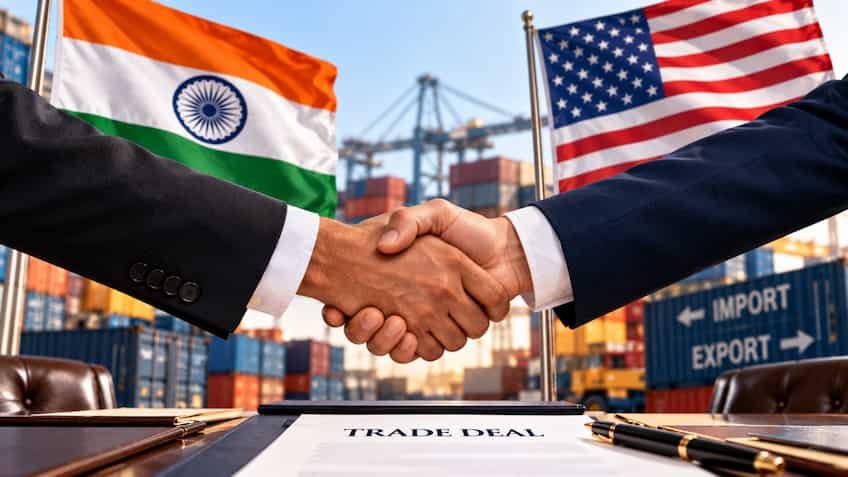
A major and historic breakthrough has been achieved in the long-awaited bilateral trade agreement between the world’s two largest and fastest growing democracies. Union Commerce and Industry Minister Piyush Goyal has confirmed that the first tranche of the proposed Bilateral Trade Deal between India and the US has been formally finalized and now the agreement has reached the legal drafting stage. The agreement on this first part, following intense trade talks between New Delhi and Washington over the past several months, signals the beginning of a new chapter in the trade relations between the two countries. From the commercial and exporter circles of Lucknow, the capital of Uttar Pradesh, to the corporate corridors of Mumbai and Delhi, this development is being considered extremely encouraging for Indian industries, especially textile, pharmaceuticals, engineering goods and agricultural exports. However, the Central Government has also made it very clear that India is not in a hurry to sign the agreement, but it will be implemented on the ground only after the essential conditions of protecting the interests of domestic industries and competitive advantage are met.
According to official information given by the Commerce Ministry, the negotiating teams of both the countries have mutually resolved the most complex and major fundamental issues included in their checklist. Union Commerce Minister Piyush Goyal and Trade Secretary Rajesh Aggarwal clarified that both sides are very close to closing the framework of the first phase of the agreement and the legal nuances are currently being finalized. US Ambassador to India Sergio Gore also confirmed this progress at an international economic forum organized in New Delhi and said that a broad consensus has been reached on the main and major points of the proposed trade agreement between the two countries. Describing the progress of the talks as remarkable, he expressed confidence that both strategic partners will soon be in a position to formally sign this first phase agreement.
Despite the agreement on the first phase of the trade agreement, India has maintained complete firmness and clarity in its stand. Commerce Minister Piyush Goyal has bluntly said that this bilateral agreement will be fully implemented only when India gets equal or better competitive edge at the tariff level compared to its other peers and competitor countries in the US market. India’s direct argument is that merely gaining formal entry into the US market is not enough, but import tariffs on Indian products should be more favorable than those of Vietnam, Bangladesh, Mexico or other Asian competitors. Unless Indian exporters get clear tariff protection and legal guarantees of long-term stability in the US market, the agreement will not be considered final effective.
Trade talks between India and the US were initiated with the goal of resolving tariff disputes, eliminating non-tariff barriers, and facilitating market access for both sides. In these talks, Indian negotiators are also keeping a close eye on the possible effects of the rules imposed by the US on certain goods and the investigation procedures under Section 301 Investigation. India wants to ensure that after any agreement, US regulatory agencies do not impose unnecessary technical or sanitary barriers on Indian pharma, IT services and agricultural products. Additionally, common strategies are also being discussed to address the pressures on global trade caused by non-market activities in global manufacturing and excess capacity.
Currently the US is India’s largest single trading partner, with which India maintains a strong trade surplus. By deepening the strategic partnership, both the countries have set an ambitious target of more than doubling their bilateral trade to the historic figure of $ 500 billion (about Rs 48 lakh crore) by the year 2030. The finalization of the first phase deal is expected to give a huge boost to India’s key export sectors—like gems and jewellery, textile industry, auto components, processed foods and IT consulting. At the same time, it will open new avenues for the US to supply advanced machinery, medical devices, aerospace equipment and high-tech energy solutions to India’s huge consumer market.
India is currently in active talks with not only the US but also many other major developed markets like the European Union (EU), Canada and the UK to conclude Free Trade Agreements (FTAs). The Commerce Minister has also indicated that FTA negotiations with the EU are at a very advanced stage and may be presented for signature in the coming months. The coming together of top economies around the world to sign comprehensive trade agreements with India proves that India has established itself as an indispensable, reliable and strong manufacturing and consumption center in the era of global supply chain restructuring and China-plus-one (China+1) strategy.