 look news india

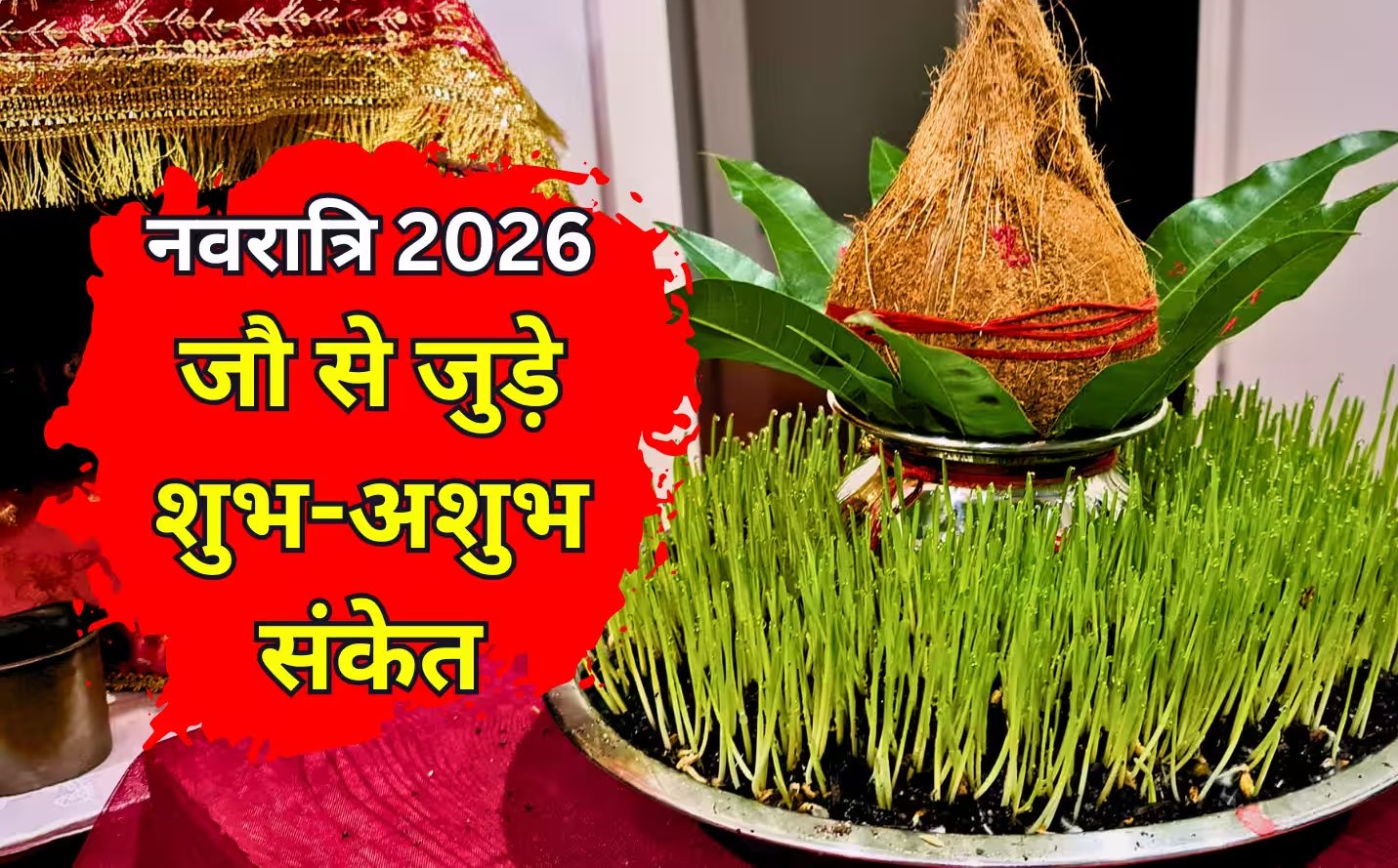
Navratri, the great festival of worship of Shakti in Sanatan Dharma, begins with Ghatasthapana (installation of Kalash) and sowing of barley (Khetri) in the court of Mother Goddess. Not only is religious ritual hidden behind this ancient tradition that has been going on for centuries, but it is also considered a great medium to give indications of the future. When the seeker or family member sows barley in an earthen pot on the first day, special attention is kept on the growth and colors of these barley along with the worship of the Mother Goddess for nine days. Ancient beliefs and astrological experts believe that this green barley offered to Goddess Durga heralds happiness, peace, prosperity, wealth or any possible crisis for the family in the coming months. The rapid growth and greenness of barley within nine days is considered to be a symbol of the blessings of Goddess Durga being showered on that house.
If barley starts sprouting very fast from the second or third day of Ghatasthapana and its plants come out completely dark green, straight and healthy, then it is considered to be the best and auspicious sign in astrology. The growth of this type of dense and green barley indicates that in the coming times, with the grace of Goddess Lakshmi, the financial condition of that family is going to improve drastically. The house will be filled with wealth and grains, there will be progress in business and mutual love and harmony among the family members will be strengthened. Furthermore, if the color of the barley is bright green on top and pale yellow on the bottom, it is a proof that the first half of the year may be a bit of a struggle, but the second half of the year will prove to be extremely auspicious and successful.
On the contrary, if the color of the barley sown during the nine days of Navratri turns completely yellow, the plants become weak and start drying up or the barley grains do not germinate at all, then it is considered a very inauspicious and worrying sign in the scriptures. Yellow or white grown barley is interpreted to mean that in the coming days, a family member may have to face serious health-related problems or there may be clouds of major financial crisis or mental stress looming in the family. If barley grows only on one side and the other side remains completely empty, it indicates that ideological differences may increase within the house or some untoward incident may occur. However, instead of being afraid of these signs, it is advised to consider them as warnings from Maa Durga and perform special pujas and havans.
When Navratri ends on the day of Navami or Dashami, these grown barley are immersed in a ritual manner. According to tradition, after the puja of Mata is over, these green barley (Khetri) are uprooted with great respect. Some of these sacred barley is selected and tied in a red silk cloth and kept in the safe, cupboard or the place where money is kept in the house, which is considered to be a great source of blessings. It is believed that by doing this, there will be prosperity in the house throughout the year and one will never have to face financial crunch. The remaining barley and soil are flown in a holy river or kept under a Peepal tree, so that the blessings of the Mother always remain on the family.