 look news india

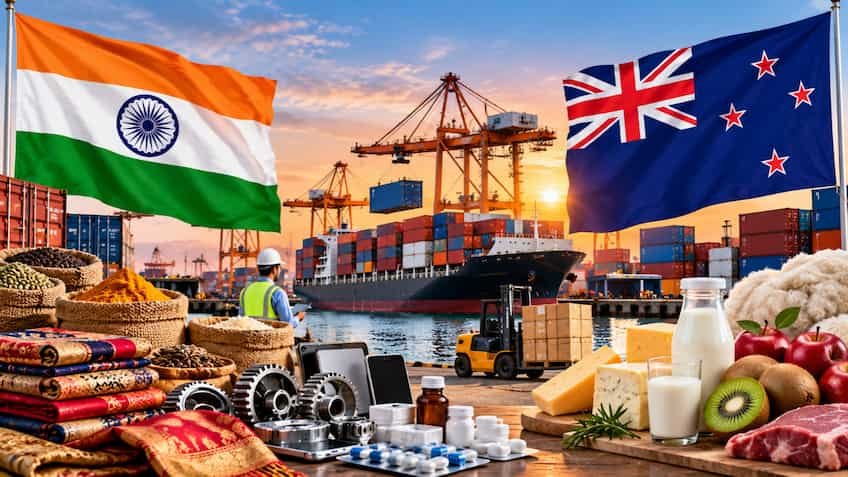
The much-awaited Free Trade Agreement (FTA) between India and New Zealand, taking the bilateral economic partnership to new heights, is going to be officially implemented from 20 October 2026. For the ground implementation of this historic agreement, the Central Board of Indirect Taxes and Customs (CBIC) and the customs authorities of both the countries have finalized the new customs operating rules. The main objective of the new rules is to ensure that products imported and exported between the two countries get the benefit of prescribed preferential customs duty in a transparent and systematic manner. Coming into force on the festive occasion of Dussehra, the agreement will not only expand trade in goods between the two countries, but will also create a strong legal framework for New Zealand’s proposed investment of approximately $20 billion in India over the next 15 years.
The most important aspect of these new provisions being implemented by the Customs Department from October 20 are the ‘Rules of Origin’. Under this, it has been mandated that the claim of concessional or zero customs duty on any goods will be accepted only if the importer produces a valid ‘Certificate of Origin’. This simply means that taking unfair advantage of tax exemption (Round-tripping or Transshipment) by diverting goods from third countries only through New Zealand or India will not be allowed at all. Under the stringent provisions of Indian Customs Tariff Rules (CAROTAR), importers will have to file strong evidence of actual manufacture, value addition and direct shipment of the goods in their Bill of Entry.
The biggest attraction of this trade agreement is for the Indian industry and exporters. Customs duty on 100 percent of India’s export products entering the New Zealand market will be completely abolished from October 20, 2026. This simply means that textiles, apparel, leather products, shoes, engineering goods, auto parts, pharmaceuticals, handicrafts and gems and jewelery from India will now reach New Zealand without any custom duty. This will significantly increase the competitiveness of Indian goods compared to Australian, Chinese and European goods. In particular, India’s labour-intensive sectors such as the textile and leather industries are expected to gain major traction in New Zealand’s premium market.
India has adopted a balanced approach when it comes to goods imported into India from New Zealand. Under the agreement, duties will be abolished with immediate effect on 57 percent of New Zealand’s existing imports from October 20, which will be increased to 82 percent in a phased manner. India has approved reduction or elimination of customs duty on high quality wool, wood products, pulp, select industrial chemicals, machinery and advanced technical equipment imported from New Zealand. Additionally, tariff concessions have also been given on select horticultural products and fruits and vegetables with conditions. However, India has completely kept major agricultural products out of this open exemption of zero duty to protect the interests of its sensitive domestic dairy industry (milk, butter, cheese) and local farmers.
Under the new customs framework, priority has been given to ease of doing business. The Customs Department has recognized the provision of digital ‘Trade Portal’ and online Electronic Certificate of Origin so that cargo clearance is not delayed due to paperwork at ports and airports. Customs brokers and logistics operators in both countries have been advised to check the new Harmonized System (HS Code) tariff classification before October 20. If any discrepancy is found in the rules of origin or value addition conditions in a consignment, the customs authorities may charge the basic customs duty by rejecting the concessional duty and initiate investigation into the matter.
Currently, bilateral trade between India and New Zealand has been relatively limited, but this FTA, which will come into effect from October 20, is expected to more than double the trade size of the two countries in the next five years. Providing duty free access will not only facilitate the movement of goods, but will also provide new strength to professionals, service sector and technical cooperation. In particular, opportunities will be accessible in New Zealand for Indian IT companies, consultants and students. Timely implementation of the new rules of the Customs Department will become the decisive basis for converting this agreement from a paper document to real commercial profits for the businessmen of both the countries.