 look news india

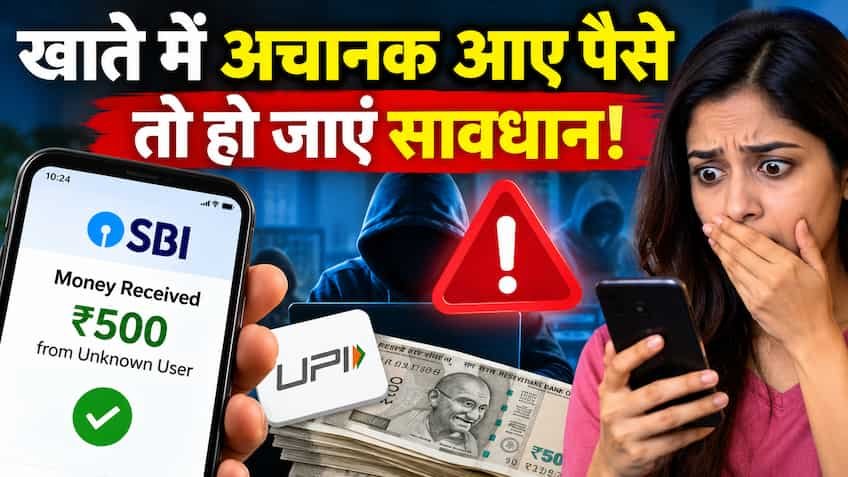
In this era of digital transactions, if you suddenly get a message of Rs 5,000, Rs 10,000 or Rs 50,000 being deposited in your bank account, then do not make the mistake of considering it as good luck and spending it or sending it back without thinking. These days, a new and very vicious gang of cyber criminals is active across the country, which is taking advantage of the honesty and nervousness of the common people and emptying the accounts in the name of ‘Wrong Money Transfer’ (Wrong UPI Transfer Scam). From Lucknow, the capital of Uttar Pradesh, to Delhi-NCR, Mumbai and other major cities, many such cases have come to light, where money was first deliberately transferred to the victim’s account and then their entire bank balance was siphoned off through an unknown call or link. Cyber security experts and the cyber wing of the Reserve Bank of India (RBI) have warned the general public that a little carelessness in unwanted money transactions can not only make you poor but can also get you into legal trouble.
This fraud starts with the fraudster transferring a fixed amount (say Rs 10,000 or Rs 25,000) from an unknown account to your bank or UPI account. Within a few minutes, you get a call on your phone from a nervous person, who starts pleading, describing himself as a poor student, a caretaker of a sick patient or a person in distress. The caller says that he had to send money for hospital bill or examination fee, but by mistake one digit was mistyped and the money got credited to your account. Due to human sensitivity, as soon as you ask to return the money, the fraudsters start the real game. They tell you that their old account is blocked, so they are sending a new mobile number, new UPI ID or QR Code on which the money can be transferred. In many cases they send you a ‘payment reversal request’ or a malicious link. As soon as you click on that link and enter your UPI PIN, instead of getting a refund, the entire lifetime capital deposited in your account is transferred to the account of the fraudsters.
Another aspect of this scam is even more dangerous, which is called ‘Money Mule’ and ‘Cyber Fraud Money Trail’. Many times, cyber criminals send the illegal amount defrauded from a third victim to the account of an innocent citizen like you to hide it from the police and investigating agencies. After this they get you to transfer that amount in cash or to any other UPI account. When the original victim files an FIR on cyber helpline 1930 or the National Cyber Crime Reporting Portal, the investigating agencies track the money trail. Since the money came into your account, the police and banks immediately freeze (Lien Mark) your account considering it a part of cyber crime. After this, you may have to make rounds of police stations and legal notices for months to open a bank account and prove yourself innocent.
-
Never send money back directly: No matter how much the caller pleads or threatens, never transfer money from your UPI app directly to his number or to any new QR code. Tell the other person clearly that he should contact his bank and lodge an official ‘Chargeback’ or ‘Reversal Request’. Only when his bank contacts your bank, the money will be deducted as per banking rules.
-
Check official bank statement: Do not trust only the SMS received on your mobile, because sometimes fraudsters deceive you by sending fake SMS that look like those of a bank. Always verify the transaction by logging into your official mobile banking app and using the 12 digit UTR/Transaction Number.
-
Immediately inform your bank branch in writing: If indeed unknown money has been credited, immediately call the customer care of your bank or visit the nearest branch and give a written application. Let the bank know that an unknown transaction has occurred in your account, so that it is recorded in the bank’s records that your intention was not to embezzle the money.
-
Do not spend or withdraw money: Until the matter is resolved, neither withdraw the disputed amount from the ATM nor spend it on any shopping. Under Indian law, deliberate spending of ill-gotten money may come under the ambit of fraud and dishonest misappropriation.
If you suspect that you have fallen prey to some organized cyber fraud or the caller is threatening you, then without wasting a moment call the National Cyber Helpline of the Union Home Ministry. 1930 Give information about the incident by calling and visit the official portal cybercrime.gov.in File a complaint at Remember that there is never a need to enter the UPI PIN to receive money in the UPI system. PIN is used only for sending or debiting money. Only vigilance, restraint and proper adherence to banking rules can keep you safe from this new trap of cyber frauds.