 look news india

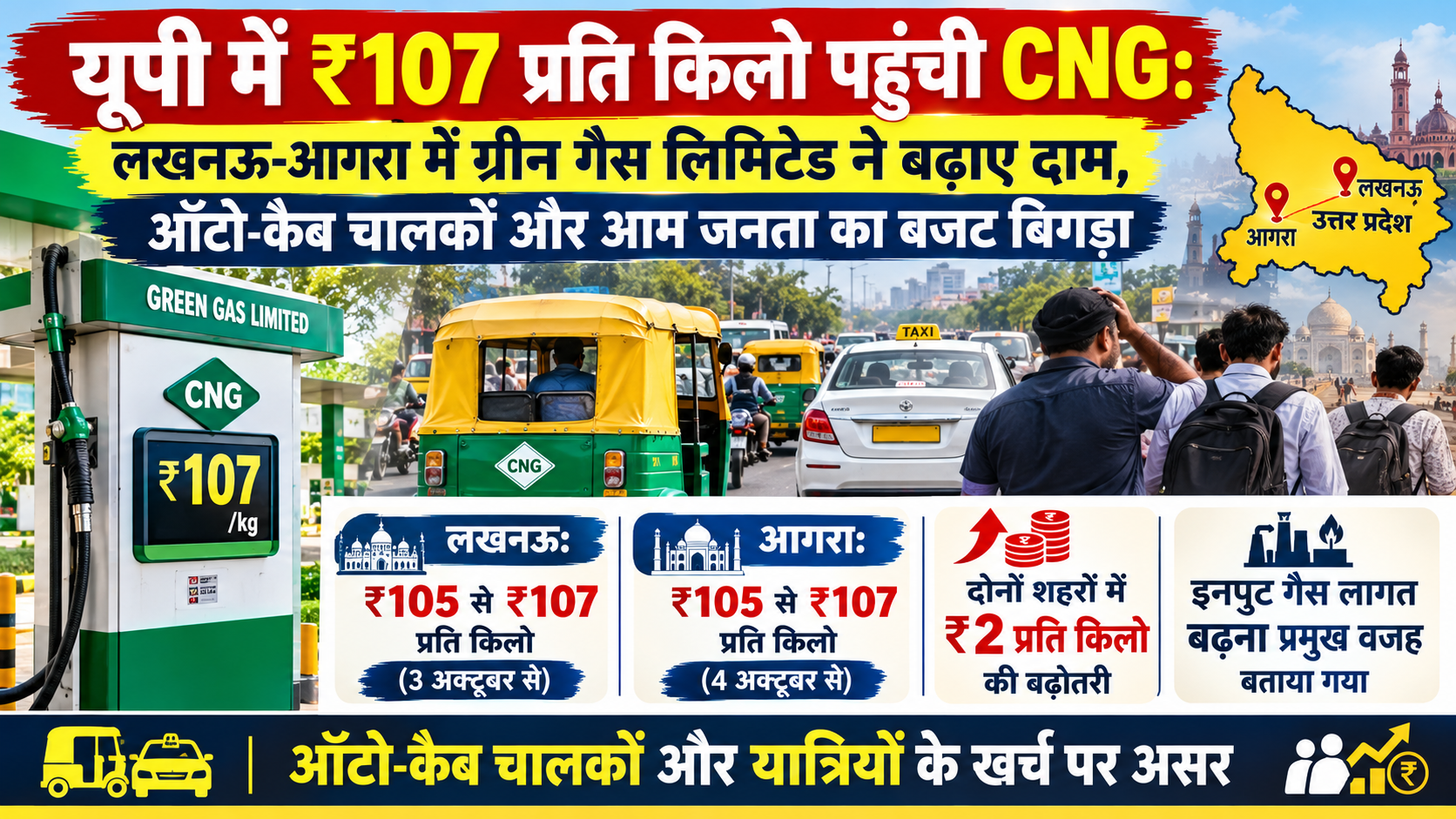
In major cities of Uttar Pradesh, drivers and general public have to face another tough blow of inflation. Green Gas Limited (GGL), the major company handling city gas distribution in the state—which is a joint venture between Indian Oil and GAIL—has drastically increased the retail prices of CNG by Rs 2 to Rs 3.25 per kg. After this latest amendment, the price of CNG in the capital Lucknow and Taj city Agra has jumped from Rs 105 to Rs 107 per kg. Whereas in Unnao this price has touched the level of Rs 103.75 per kg and in Ayodhya and Sultanpur it has touched the level of Rs 105 per kg with a maximum increase of Rs 3.25. While on one hand the middle class and employed people were turning to CNG vehicles to save themselves from the rising prices of petrol and diesel, on the other hand the entire arithmetic of their household budget has gone haywire as the price of CNG has crossed Rs 100.
Till a few years ago, CNG was considered to be 40 to 50 percent economical fuel compared to petrol and diesel, but the current price increase has almost eliminated this gap. At present, the price of petrol in Uttar Pradesh is around Rs 95 to 97 per liter, while CNG is now being sold at Rs 107 per kg. Even though CNG may give slightly better performance in terms of mileage, the cost of installing a CNG kit, the hassle of having a cylinder in the boot space of the vehicle and the long queues at the pumps for hours, there is now a nominal difference in the economic benefits. It has now become a common discussion among car buyers whether it is a wise decision to buy a new CNG vehicle by investing huge capital or whether switching to hybrid and electric vehicles is a better option.
The most brutal impact of this unexpected price hike of CNG has fallen on daily wage auto-rickshaw drivers, app-based taxi (Ola/Uber) drivers and quick-commerce delivery agents. Auto drivers plying in busy areas like Lucknow’s Charbagh, Hazratganj, Alambagh and Gomti Nagar to Agra’s MG Road and Cantt Railway Station say that there will be a direct cut of Rs 100 to 150 in their daily earnings. App-based companies do not immediately increase passenger fares, the entire loss of which drivers have to bear from their own pockets. On the other hand, if local auto drivers personally increase fares from passengers, it leads to daily squabbles and disputes with passengers. Due to increase in the cost of commercial pickup vans and small loading vehicles, the fear of fruits, vegetables, grocery and parcel delivery becoming expensive in cities has deepened.
According to Green Gas Limited and energy experts, the main reason behind this price increase is the huge increase in the cost of input gas. The Central Government is continuously reducing the cheap gas quota given to City Gas Distributors (CGD) under the Domestic Natural Gas i.e. Administered Pricing Mechanism (APM). Due to less availability of cheap domestic gas, gas companies are having to import expensive spot LNG from the international market. Global geopolitical tensions, the international energy crisis and the movement of the Indian rupee against the US dollar have made the landing cost of imported gas quite expensive. As companies’ procurement costs have increased, they are transferring this additional financial burden directly to the pockets of retail consumers.
The second biggest technical reason for CNG reaching Rs 107 per kg is its tax structure. Natural gas and petroleum products have not yet been brought under the ambit of GST (Goods and Services Tax). The result is that the central government collects excise duty on it, while various state governments, including Uttar Pradesh, levy heavy VAT and local octroi/cess on it. Due to cascading effect of tax on tax, CNG prices are always Rs 10 to 15 per kg higher in Uttar Pradesh cities than in Delhi (where VAT rates are relatively different). Consumer and trader organizations are continuously demanding that natural gas be immediately brought under the ambit of GST so that ‘One Nation, One Rate’ can be implemented across the country and common citizens can get permanent relief from this heavy tax burden.