 look news india

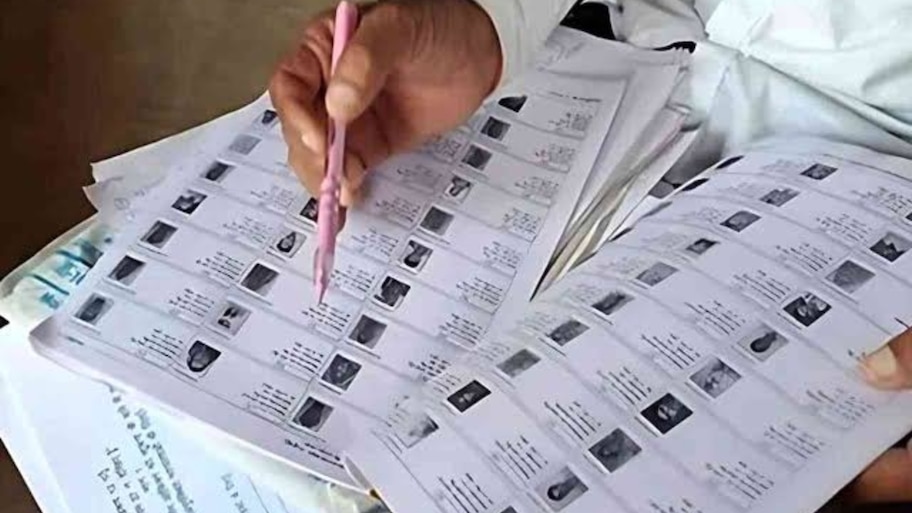
The Election Commission of India (ECI) has taken a historic and drastic step towards making the voter lists transparent, error-free and fair across the country. During election processes, it has often been seen that opposition groups or mischievous elements, with malicious intentions, collectively register objections to delete the names of hundreds of voters. To permanently crack down on such fake and baseless claims, the Commission has set clear limits on the use of Form-7. Under the new order of the Election Commission, now any single person can file objection for deletion in the names of maximum 10 voters only. Strict legal conditions, personal identification and physical verification have now been made mandatory for filing more than 10 objections. This decision of the Commission will be applicable at every district, town and polling station level in the country, due to which the fear of deletion of names of genuine voters will be completely eliminated.
In the Indian electoral system, different forms are prescribed for continuously updating the voter list. Form-6 is used for registration of a new voter, Form-8 for amendment in address or entry and Form-7 for deleting the name of an already registered voter from the list or filing objection to it. In the last few years, during the Assembly and Lok Sabha elections of many states, it had come to the notice of the Commission that local workers of political parties or some individuals used to fill Form-7 in bulk and submit it in a planned manner. Many times, names of people who were living in the same locality were included, but just to spoil the electoral equation, ‘dead’ or ‘had left’ was written before their names. This chaos unnecessarily increased the workload on Booth Level Officers (BLOs) and if the investigation was not completed, genuine citizens were deprived of their right to vote. To root out this discrepancy, the Election Commission has drawn this Lakshman Rekha.
According to the detailed guidelines issued by the Election Commission, now any citizen can file a maximum of 10 Form-7 at a time in any one constituency. If any person, representative or social worker believes that more than 10 people in an area are ineligible, have been fraudulently registered or have died, they will not be able to fill the online or one-time paper form directly. In case of filing objection on more than 10 names, the complainant will have to appear in person before the Electoral Registration Officer (ERO) or Assistant Electoral Registration Officer (AERO). The complainant will have to provide concrete documentary evidence for each name, such as the death certificate of the person concerned or proof of his new permanent address. Along with this, the complainant will also have to submit a formal affidavit, in which it will have to be clearly declared that the information given is completely true and if found false, punitive action can be taken against him under Indian law.
The Election Commission has not only imposed restrictions on the complainants, but has also increased the accountability of Booth Level Officers (BLOs) working at the administrative level manifold. Now, as soon as any Form-7 is accepted, the name will not be removed from the list directly. Under the new Standard Operating Procedure (SOP), the BLO will have to physically visit the address where the application for deletion of name has come. The BLO will have to include the signatures of at least two witnesses from that house and the neighborhood in his report. If the voter is found absent there, he will be given written notice of 7 to 14 days or information will be sent to his registered mobile number. The final process of name deletion will begin only after the notice period expires and no response is given by the voter. A digital log entry of this entire process will be prepared, so that later no officer can remove anyone’s name as per his wish.
From local body elections to general elections, conspiracies have been seen many times at ward and booth level to remove the names of opposition supporters from the voter list. Many times, 200 to 500 bundles of Form-7 were submitted by a single person, due to which the administrative system came under pressure. Now after the new limit is fixed, no person or organization will be able to raise fake objections to the wholesale price. This step of the Commission will secure voting rights in both rural and urban areas. In urban areas where people frequently change rented houses, false complaints of name removal were often filed by neighbours. In rural areas, due to family or political rivalry, applications were made to delete the names of each other’s family. The new system will bring transparency in all such cases as legal action will be taken immediately against those filing wrong complaints.
The Election Commission is also rapidly updating its digital platform i.e. Voter Service Portal (VSP) and ECI Mobile Application in accordance with this new rule. A security mechanism has been developed on the portal which will track the mobile number, Aadhaar and voter ID card of the complainant. As soon as a user tries to submit 11th Form after 10th Form-7, the system will block him and show him a pop-up message to visit the concerned election office. Apart from this, through artificial intelligence and algorithms, those patterns will also be identified where objections are being filed simultaneously from many different accounts against people of a particular locality or caste. If the system senses any unusual activity, it will immediately send an alert to the concerned District Election Officer (DEO).
The Election Commission has also appealed to all the citizens of the country to regularly confirm their names in the voter list by visiting the Commission’s authorized portal or Voter Helpline App. If a citizen receives a notice of removal without his knowledge, he can immediately contact his BLO or ERO and file an appeal along with proof of his citizenship and residence. This strict and transparent decision of the Commission will prove to be an epoch-making step towards strengthening the democratic system of the country, protecting the voting rights of every eligible citizen and maintaining the unwavering trust of the public in the election process.