 look news india

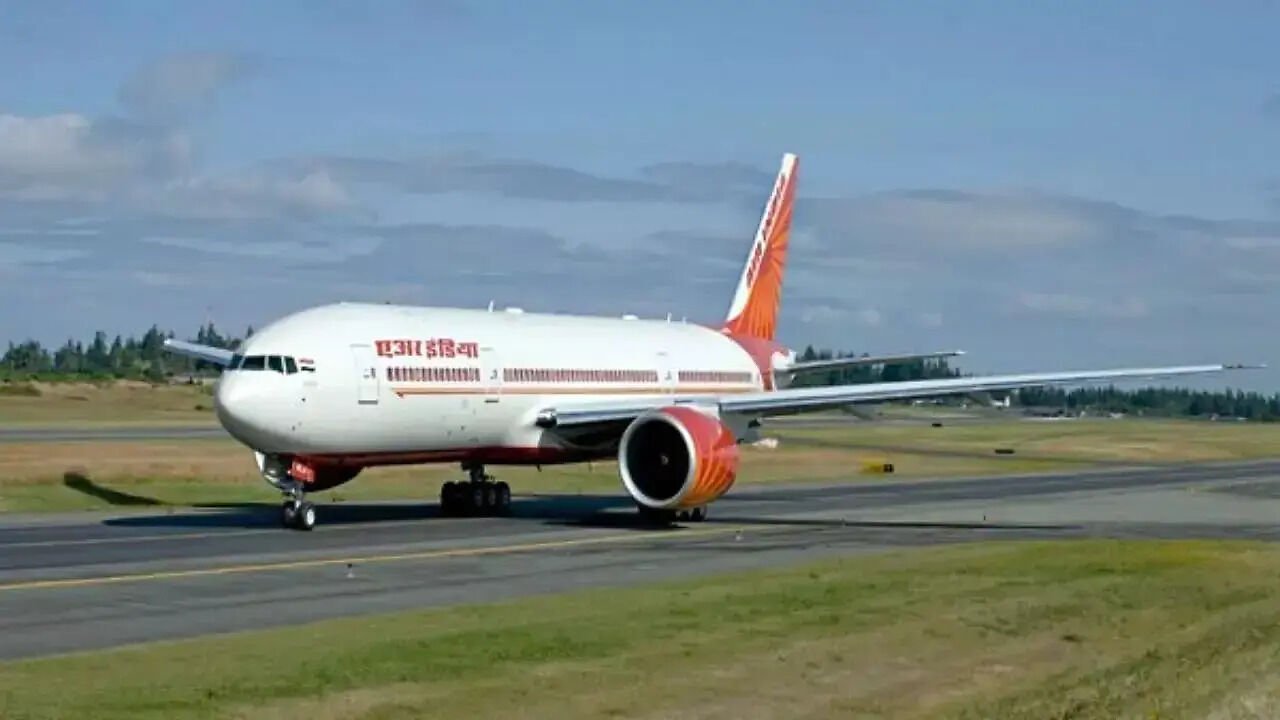
There is going to be a huge financial burden on the pockets of lakhs of air passengers planning to go home and spend holidays during the festive season. After the recent increase in fuel charges by IndiGo, now Tata Group’s airline Air India, Air India Express and fast-growing airline Akasa Air have also officially announced a sharp increase in the fuel surcharge on their air tickets. According to the new notification issued by the airlines, the revised rates have become mandatory for all new ticket bookings taking place from October 9, 2026. Under this, additional fuel surcharge ranging from ₹ 400 to ₹ 1,200 will be charged on tickets on domestic routes depending on the distance. At the same time, this increase is even higher on international flights, due to which air travel during Diwali and Chhath Puja will prove to be very expensive.
Aviation companies have cited the skyrocketing prices of Aviation Turbine Fuel (ATF – Aircraft Fuel) and the turmoil in the global oil market as the main reasons behind this decision. Due to deepening geopolitical tensions in West Asia and crude oil crossing $ 100 per barrel, government oil marketing companies have recently increased the prices of jet fuel sharply. Fuel alone accounts for 40 to 45 percent of the operating costs of airlines. Akasa Air and Air India spokespersons clarified that it was no longer financially feasible to bear the continuous increase in input costs over the past few weeks, hence it has been decided to transfer a part of this additional cost to the passengers to maintain the smooth operations.
For domestic flights, Air India, Air India Express and Akasa Air have created 4 main distance-based slabs on the lines of IndiGo:
-
Flights up to 500 km (eg Delhi-Jaipur, Mumbai-Pune): ₹400 per passenger
-
Flights ranging from 501 to 1,000 km (eg Delhi-Lucknow, Mumbai-Ahmedabad): ₹600 per passenger
-
Flights from 1,001 to 1,500 km (e.g. Delhi-Mumbai, Bengaluru-Kolkata): ₹850 per passenger
-
Flights beyond 1,500 km and above 2,000 km (e.g. Delhi-Chennai, Kashmir-Kerala): ₹1,200 per passenger
This simply means that if you are going from Delhi to Mumbai or Bengaluru, a fuel surcharge of ₹850 to ₹1,200 will be added directly on your one-way ticket on top of the base fare and other taxes. If a family books 4 round trip tickets, an additional amount of around ₹7,000 to ₹9,600 will have to be paid in fuel surcharge alone.
This decision has hit hard not only domestic travelers but also those traveling abroad. Air India and Air India Express have introduced dollar based surcharge on international sectors:
-
Gulf and Middle East (Middle East/West Asia): A surcharge of about $55 (about ₹4,600) per ticket. Akasa Air has set it at ₹2,500 on its international routes.
-
European Destinations (London, Paris, Frankfurt): One-way surcharge of $135 (approximately ₹11,300) per passenger. This will reach $270 for a round trip.
-
North America (US and Canada non-stop flights): The highest fuel charge on these long-haul flights has been fixed at $215 (about ₹ 18,000) per ticket. That means the fuel levy alone on a ticket to and from America is coming to $430 (about ₹36,000).
As a matter of relief, the airlines have clarified that this revised fuel surcharge will be effective only on new bookings made after the stipulated deadline of 9 October 2026 (midnight for Air India Express and 11 am for Air India). Passengers who have already booked their tickets before October 9 will not have to pay any additional fee during the journey. However, if they change or re-schedule the date of journey in their old ticket, the new fuel surcharge along with fair difference will be charged. Aviation experts believe that this surcharge is not permanent; If crude oil prices soften and ATF becomes cheaper in the coming days, airlines can review this levy and reduce it. Till then, those traveling by air during the festive season will have to keep additional budget ready for their travel.