 look news india

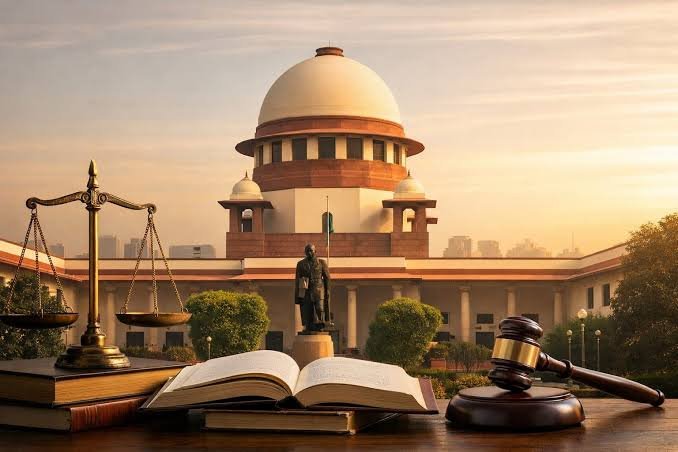
The Supreme Court has taken a tough stance regarding the safety of women and girls in the national capital Delhi. The country’s top court has directed the Delhi Police and related administrative agencies to create such a strong security infrastructure on the roads of the capital that every woman and citizen can feel completely safe at any time of the day or night – be it 11 pm or midnight. Justice J. B. Pardiwala and Justice K. Vinod Chandran’s division bench gave this important ruling during the hearing while taking suo motu cognizance of the recent incidents with women and minors in Delhi-NCR. The court clarified that it is not the responsibility of the police to merely investigate and register an FIR after a crime has occurred, but ‘preventive policing’ has to be the primary strategy.
The court questioned the functioning of lakhs of CCTV cameras installed in the capital, saying that if the cameras are not being monitored live, then they are only used to collect evidence after the incident and not to prevent crime. The bench directed Delhi Police to set up special ’24-hour war rooms’ and control-room command centers for round-the-clock surveillance of sensitive and busy areas. The court said that a real-time system should be made to immediately detect suspicious activities, gathering of anti-social elements on deserted roads and illegal activities through CCTV cameras and immediately send PCR and beat policemen to the spot.
Referring to the famous ‘Broken Windows Theory’ of criminology, the Supreme Court said that neglect of basic systems only prepares the ground for major crimes. The court underlined that malfunctioning street lights (dark spots), defunct cameras, deserted bus stops and illegally operating dhabas become dens of anti-social elements.
-
Identification of dark spots: All Municipal Corporations and PWD of Delhi along with the police have been asked to identify all those dark stretches and immediately ensure adequate illumination.
-
Action on illegal eateries: Orders have been given to take immediate action against those dhabas and outlets in the capital where liquor is served illegally or anti-social elements gather.
-
Crowd control near liquor shops: Regular patrolling and strictness have been asked to prevent haphazard crowding and open hooliganism around wine shops and vendors.
To curb incidents happening in moving vehicles, the Supreme Court has ordered to tighten the noose on public and private transport systems.
-
Mandatory Verification of Drivers: Intensive police verification of all drivers and assistants (conductors) of government DTC buses, private sleeper/tourist buses, app-based taxis (like Ola, Uber) and auto-rickshaws should be done.
-
Visible Identity Card: In any passenger vehicle, the driver’s authorized identity card and verification details must be displayed clearly visible to the passenger.
-
Checkpost and surprise inspection: Instructions have been given to immediately seize the vehicles being driven without valid documents and by unverified drivers by creating surprise vehicle check posts at various places and to check the functionality of the Vehicle Tracking System (GPS) and panic button.
The court has asked to activate ‘Anti-Eve Teasing Wing’ and intensify foot/beat patrolling to stop molestation of girl students in and around educational institutions, girls colleges, university campuses, coaching hubs and PG hostels. The Supreme Court said that there should be such fear of law and police in the minds of anti-social elements and miscreants that they cannot muster the courage to commit any wrongdoing on seeing any woman or girl. The court also underlined that the police should seriously listen to the complaints of the general public and local Resident Welfare Associations (RWAs) and take immediate action, so that incidents like Aastha Kunj Park are not repeated. The Supreme Court has also sought a detailed status report from Delhi Police on all these security measures, deployment of police force and implementation of the schemes.