 look news india

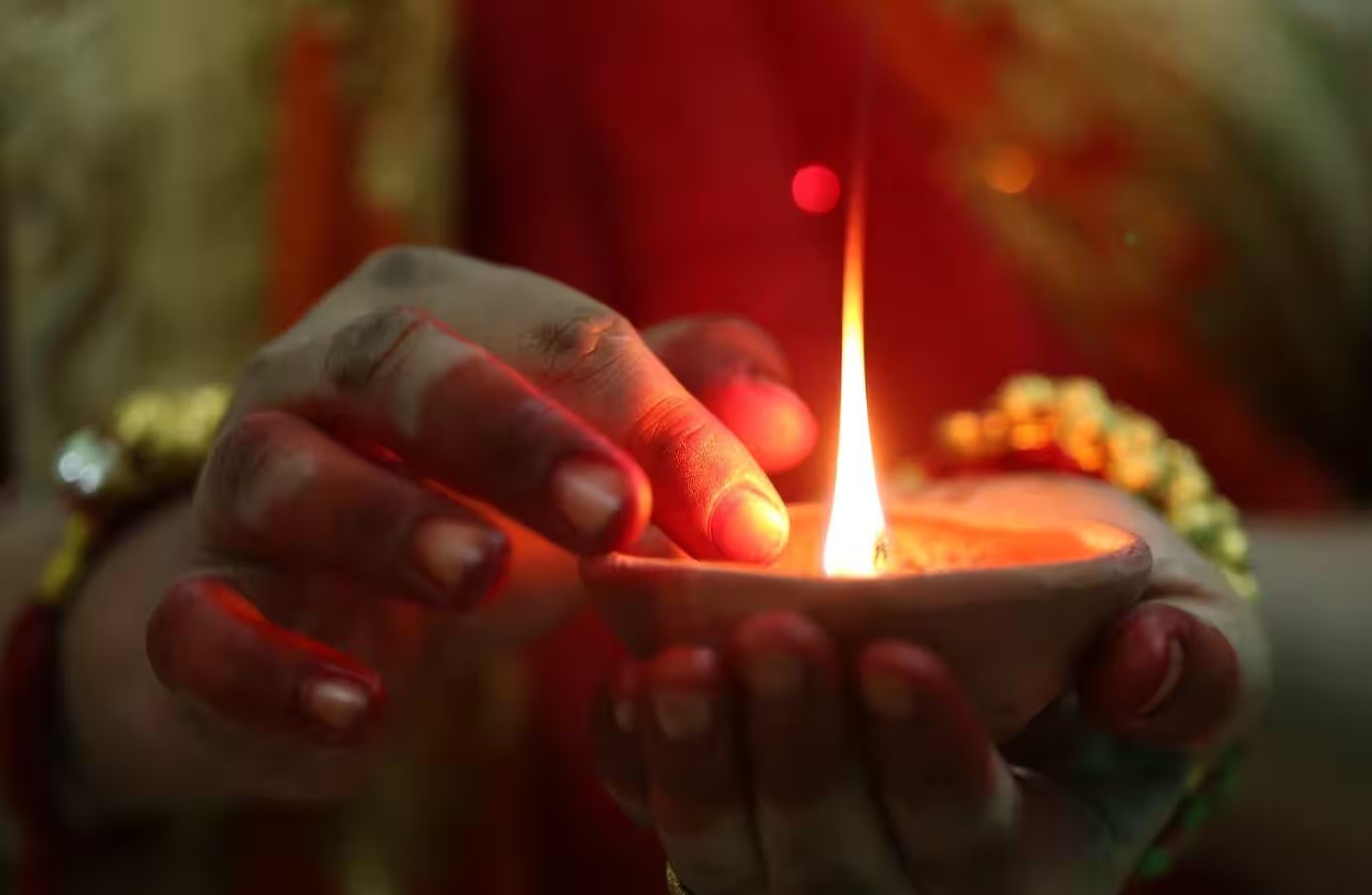
India is said to be a country of festivals and celebrations, where twelve months of the year are filled with some religious festival, fast or ritual. The dates of every small and big fast and festival celebrated in Sanatan culture are not decided just like that, but centuries old astronomical calculations, astrological rules and a very scientific and accurate mathematics of Panchang work behind it. In the modern era, when people often raise the question that why the same festival is celebrated on different days due to different calendars or beliefs, then it becomes very important to understand the secret and esoteric rules behind it which decide the fasts and festivals on the basis of dates, constellations and special periods. From the coordination of the movements of the Sun and the Moon to the determination of Udaya Tithi, this method of constructing the Indian calendar has always been a subject of deep curiosity for scientists and researchers around the world. Let us know in depth today what are those strict and definite rules on the basis of which the exact date of fasts and festivals is decided in our country.
Amazing combination of five main parts of Panchang and astronomical calculations
The entire structure of Indian time calculation rests on the word ‘Panchang’, which has five main parts – Vaar, Tithi, Nakshatra, Yoga and Karan. Without microscopic and astronomical calculations of these five organs, it is impossible to determine the date of any fast or festival. Of these, ‘Tithi’ is considered the most important, which is decided on the basis of the distance between the Moon and the Sun. Since the Moon’s movement around the Earth is different than that of the Sun, the dates are not fixed like the dates of the English calendar, but rather they wax and wane. According to Panchang experts and astrologers, the date which is present at the time of sunrise is considered to be the main Tithi of that day, but sometimes due to the combination of Ratri Vyapini Tithi or special constellations, major changes are seen in the rules of fasting. That is why this ancient system of calendar is as close to the principles of modern science as it is close to spirituality.
The irrefutable rule of ‘Udaya Tithi’ and the biggest basis for determining fasts.
In Sanatan Dharma, the principle of ‘Udaya Tithi’ has been considered the most paramount and irrefutable for determining any fast, fasting or worship. This simply means that the date which is moving in the sky at the time of sunrise is considered effective for the whole day. For example, if Ekadashi or Purnima Tithi starts after sunrise and lasts till sunrise the next day, then the decision on which day that Vrat will be observed depends on which day that Tithi was predominantly present at the time of sunrise. Additionally, there are many fasts that observe a specific night time or Pradosh Kaal, such as Mahashivaratri or Diwali, where Udaya Tithi alone is not sufficient but the Yoga and Kaal falling at night are also given priority. Due to these subtle rules, the common man often gets confused, but almanacs announce the correct date only after studying all these aspects closely.
Special importance of time, auspicious time and constellations in fasts and festivals
Apart from the date, the role of ‘Muhurta’ and ‘Nakshatra’ in the rituals of any festival is as important as the foundation of any building. Our sages and astrologers have divided the time into different periods, such as Brahma Muhurta, Abhijeet Muhurta, Twilight and Nishitha period. Every festival has its own special flavor and energy, which arises due to the position of particular constellations and planets. For example, the festival of Janmashtami is celebrated as the birth anniversary of Lord Krishna, for which the coincidence of Rohini Nakshatra and Ardharatri (Nishitha period) is considered mandatory. If that coincidence does not sit in Rohini Nakshatra, then the full results of the fast are not considered based on the date alone. Similarly, on major festivals like Karva Chauth, Makar Sankranti, Holi and Rakshabandhan, full attention is paid to the position of the Moon and Sun as well as Bhadra, Rahukaal and special Karans so that no ritual has any negative impact.
Relevance of Panchang in modern times and correct understanding of celebrating festivals
In today’s digital and fast-paced era, when people want to see everything immediately on Google or calendar, then maintaining these complex rules of fasts and festivals and following them properly is the biggest means of keeping our culture alive. Due to different methods like Drik Panchang and Surya Siddhant in different regions, sometimes there is a difference of one or two days in the dates of festivals, due to which it is natural to create doubt in the minds of people. But the scriptures make it clear that fasts and festivals should be observed as per your local calendar and the authentic decision taken by your priest or Acharya. The purpose of these eternal rules of Tithi, Nakshatra and Kaal is not just to perform rituals but to connect human life with the positive energy of the universe and the cycles of nature. When we observe any fast or festival under these rules, it is no longer just a tradition, but becomes a great means of physical, mental and spiritual purification.