 look news india

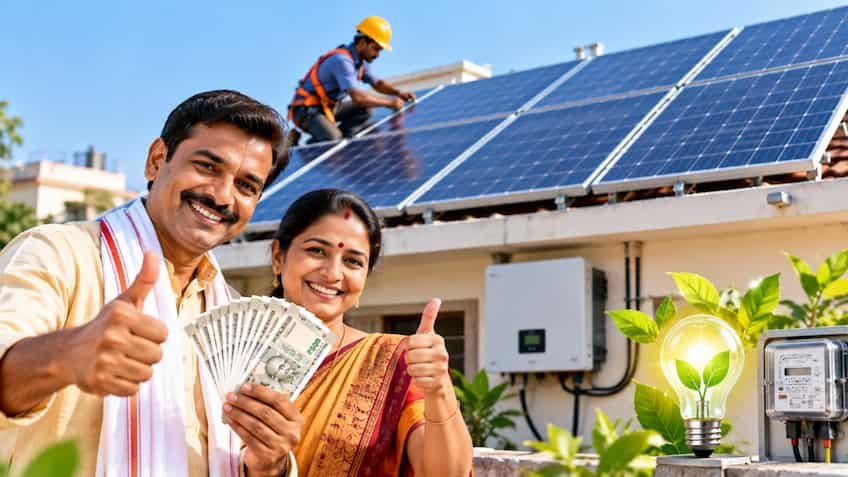
While fast running fans, coolers and ACs provide comfort during summer days, the huge electricity bill at the end of the month spoils the entire budget of the house. Sensing this problem of common middle class families, the Central Government has taken a revolutionary initiative, whose name is PM Surya Ghar Free Electricity Scheme. Through this scheme, common urban and rural citizens can now generate electricity themselves by using the vacant sunny space on their roof. This scheme not only ensures absolutely free electricity up to 300 units to households, but the government is also transferring a huge subsidy of up to Rs 78,000 directly into your bank account to lighten the initial solar panel expenses on your pocket. Lakhs of consumers in various states of the country like Uttar Pradesh, Bihar, Rajasthan, Madhya Pradesh, Haryana and Delhi-NCR are now rapidly moving to connect their electricity meters to the power of sunlight.
The mathematics of PM Surya Ghar Free Electricity Scheme is very simple and transparent, which every common citizen can easily understand. The structure of the scheme has been designed in such a way that the financial assistance will be determined according to the capacity of the rooftop solar system installed on the consumer’s roof. If a family installs a rooftop solar system of 1 kilowatt, a direct subsidy of Rs 30,000 is given by the central government. On installing a solar plant of 2 kilowatt capacity, this assistance amount increases to Rs 60,000. If your household electricity consumption is slightly higher and you install a system of 3 kW or more capacity, you are provided a maximum central subsidy of Rs 78,000. On an average, a 3 KW rooftop solar plant can comfortably produce around 300 to 360 units of electricity every month, which completely covers the expenses of normal home appliances, fridge, TV, lights and even inverter AC and reduces your monthly grid bill to practically zero.
To avail the benefits of this ambitious scheme, it is mandatory for the applicant to be a native of India. According to the main rules of the scheme, the applicant should have ownership rights on the roof on which solar panels are being installed or in case of a joint family, there should be a consent letter. Along with this, the most important condition is that your house should already have a valid domestic electricity connection in working condition, because the solar system is connected to the grid and net metering system of the DISCOM (electricity distribution company). At the time of application, you should have Aadhaar card, active mobile number, passbook of current bank account or canceled check (in which DBT is active), clear copy of recent electricity bill and suitable photograph of the roof. The biggest feature of this scheme is that the subsidy money is not deposited through any middleman or agency, but directly into the bank account linked to the applicant’s Aadhaar through Direct Benefit Transfer (DBT).
The entire process of applying for solar system has been made digital and paperless, so that consumers do not have to visit electricity offices. First of all the applicant has to visit the official national portal of the scheme pmsuryaghar.gov.in. By clicking on the ‘Apply for Rooftop Solar’ option given on the homepage, you have to select your state name, district name, your local electricity distribution company (like UPPCL, Discom etc.) and enter the consumer account number recorded on your electricity bill. After this, complete the registration by verifying OTP with your mobile number and email ID. After logging in, fill the application form for rooftop solar, in which you will have to provide information about your roof area, sanctioned load and proposed solar capacity. Once the application is approved, you will get the list of vendors registered by the Discom of your area, from which you can get the panels and inverters of your choice installed. After the solar plant is installed, the engineers of the electricity department will install the net meter and after inspection will issue the commissioning certificate on the portal. Once the certificate is issued, the subsidy of up to ₹78,000 will be credited to your account within a few weeks of submitting the bank details.
The biggest technical and economic benefit of installing rooftop solar panels comes through the net metering system. A net meter is a special type of two-way meter that records how much electricity your solar panels sent to the grid and how much electricity you took from the grid during the night. When your solar plant produces more units of electricity than required during bright sunlight during the day and the household consumption is less, then the excess electricity is automatically exported to your local discom. At the end of the month the electricity distribution company reconciles the units imported and exported. If you have supplied excess power to the grid, it gets added to your bill as credit or in many states is also paid financially by the discom. Thus solar panels not only free up your household electricity but also turn your home rooftop into a sustainable earning source. With these panels having a life span of 25 years, your initial investment is fully recovered in the next three to four years, after which you can enjoy free electricity without any worries for the next two decades.