 look news india

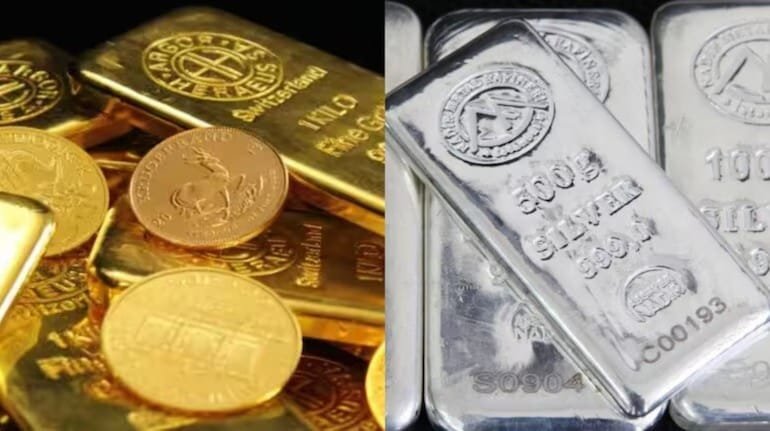
Amidst the economic signals coming from the global financial markets, a period of sluggishness and profit booking is being seen in the prices of precious metals i.e. gold and silver. On the foreign futures market COMEX, the prices of gold and silver are slipping from the upper levels and are trading in the red, the direct effect of which is clearly visible on the Indian domestic market and Multi Commodity Exchange (MCX) as well. This softening remains a topic of discussion for consumers and long-term investors preparing for festive shopping in major bullion markets like Lucknow, Delhi, Mumbai and Jaipur. Internationally, due to the strengthening of the US Dollar Index and the cautious environment regarding the policy stance of the US Federal Reserve (US Fed), foreign traders have made light sales in gold and silver contracts, due to which this technical correction has been recorded in bullion prices.
Mainly three major international factors are believed to be responsible for the breakdown and falling of prices of precious metals in foreign markets:
-
Strong Dollar Index and Bond Yields: The stable and strong US dollar index in the international currency market makes it expensive to buy gold in other foreign currencies, which puts pressure on its immediate demand globally. The rise in US Treasury yields also slightly limits the attractiveness of non-interest yielding assets such as gold.
-
Keeping an eye on the monetary policy of the Federal Reserve: Statements coming from the US central bank Federal Reserve regarding the future path of interest rates and economic data have forced speculators to lighten their long positions. Unless a clear and aggressive roadmap for cutting interest rates comes forward, large institutional investors are seen booking profits at upper levels.
-
Technical Profit Booking: Traders sold to lock in profits after gold and silver hit record levels in previous sessions. Silver in particular, which remains highly volatile along with industrial demand, saw more intense profit-taking by short-term traders.
This softness in foreign markets has had a direct impact on the Indian bullion markets. A decline has been recorded in gold and silver futures contracts on MCX, due to which a relief of a few hundred rupees has been seen in the prices of 24 carat and 22 carat gold in the retail markets. Silver prices have also declined technically at per kilogram level. Although the full benefit of international decline is sometimes not passed on directly to domestic buyers due to rupee and dollar (USD/INR) exchange rate fluctuations and import duty mathematics in the Indian market, the current levels are still considered a welcome technical correction just ahead of the festive season.
If you are thinking of making a new investment in gold or silver or are already an investor, then according to market analysts it is very important to pay attention to these five basic points:
-
Buy on Dips instead of outright buying: Never invest all your money in the commodity market at once. On every such fall of 1% to 2% in foreign markets, buy in small installments in a staggered manner. This strategy keeps your average purchase cost balanced.
-
Physical Gold vs Digital/ETF Options: 10% to 25% making charge and 3% GST is applicable on purchasing jewellery, which reduces the resale value. If your objective is only pure investment and wealth creation, then opt for Gold ETFs or Gold Mutual Funds where there is neither the hassle of purity nor the hassles of storage and making charges.
-
Be prepared for volatility in silver: Gold is considered a traditional safe haven, while silver is a hybrid metal with more than 50% of its consumption occurring in industrial sectors such as solar PV cells, electric vehicles (EVs) and electronics. Therefore, in times of global recession or industrial slowdown, silver falls or rises faster than gold. While investing in silver, take a long term view of at least 3 to 5 years.
-
Keeping a watchful eye on geopolitical developments: Gold always has a strong underlying support due to the ongoing geopolitical tensions in West Asia and Eastern Europe. Whenever an unexpected international crisis deepens, investors rush to gold as a safe haven, which can cause prices to rise again. So don’t turn any sudden decline into panic selling.
-
Rule of Portfolio Diversification (10-15% allocation): Financial planners have a clear rule that only 10% to maximum 15% of their total financial portfolio should be kept in gold and silver. See it as a hedge against inflation and a protective shield against stock market downturns, not as a speculative tool to get rich overnight.
The month of October is the time of big festivals in India like Navratri, Karva Chauth, Dhanteras and Diwali, soon after which the intense wedding season begins across the country. Historically, physical gold and silver consumption peaks in the months of October and November due to festive demand in the Indian domestic market. Bullion experts believe that this softening in foreign markets is providing a better opportunity for domestic buyers for advance booking and purchasing jewellery. As physical purchases pick up during the festive season, home prices are likely to get strong support from the downside due to local premium.