 look news india

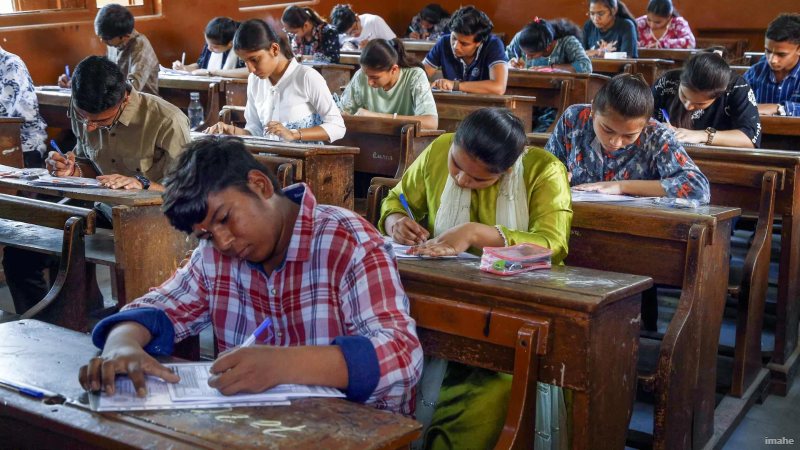
Whenever we talk about the biggest, toughest and huge competitive exams conducted across the world, generally the names of India’s exams like NEET, JEE or UPSC come to our mind. But a recent and extremely shocking global ranking, which collects data on education and examinations at the global level, has come out, which has surprised everyone. According to this new ranking, no exam of India is at the second place among the top biggest exams of the world, but the ‘ENEM’ exam of South American country Brazil has taken the big title of being the second biggest exam of the world. On the other hand, India’s popular National Eligibility Test i.e. NET has been ranked fourteenth (14th) in this list of the world’s biggest examinations. Since the release of this new ranking, there has been a huge discussion in the world of education and the corridors of global academics on how many lakh candidates take part in the examination of which country and which examination stands at which position in terms of parameters. Let us analyze each and every aspect of this entire global ranking in great detail, depth and conversational style of the reporter to find out what is so special about this Brazilian exam and where India’s exams stand on the global stage.
What is Brazil’s ‘ENEM’ exam and how did it make its mark as the second largest competitive exam in the world?
The ‘ENEM’ (Exame Nacional do Ensino Médio) examination conducted in Brazil has emerged as one of the biggest academic examinations in the world among the students in the last few years. The main purpose of this examination is to evaluate the qualifications of Brazilian secondary school students for admission to higher education, i.e. universities. Every year, the number of candidates registering and appearing for this examination is so huge that it leaves behind the total population of many countries of the world. In a large geographical and demographic country like Brazil, successfully conducting such a massive examination at the same time at the national level is considered a huge administrative and technical miracle in itself. That is why in Global Research and Education Reports, it has been officially recognized as the second largest examination in the world after China’s Gaokao, where lakhs of youth reach the examination centers with the hope of their bright future.
India’s position in global ranking, NET exam got 14th place between NEET-JEE and UPSC.
When it comes to the huge competitive examinations of India, every year there is a ruckus in our country with examinations like NEET for medical admission, JEE for engineering and UPSC for administrative services, where the number of candidates appearing sometimes crosses twenty-twenty-five lakhs. However, in this global exam ranking, India’s National Eligibility Test i.e. NET (UGC NET) has been ranked fourteenth (14th), which is conducted for becoming a professor and Junior Research Fellowship (JRF). Considering the huge population of India and the craze for examinations among the youth, this ranking becomes very interesting in many ways, because the number of youth appearing for competitive examinations here is larger than the total population of many small countries of the world. Experts believe that this scale of examinations in India is not limited only to the selection process, rather it has become the biggest source of livelihood for crores of youth of the country and the flight of their dreams.
How this global list is decided on the basis of scale of examination, number of candidates and administrative complexity
The organizations that have prepared this new ranking of various competitive examinations conducted across the world have based it on stringent criteria like the total number of candidates appearing, geographical spread of the examination, diversity of subjects and administrative complexity of the event. For example, China’s ‘Gaokao’ examination is considered to be the biggest examination in the world, because crores of students there take this examination simultaneously on the same pattern. After this, Brazil’s ‘ENEM’ examination has secured the second position on the basis of its huge candidate base, which shows to what extent the inclination of youth towards education is increasing in South America. In countries like India, where examinations are conducted in multiple stages, online and offline modes and in different languages, the total number of candidates is much higher, but the division of different categories is decided differently as per the global ranking standards. Since the release of this report, a debate has erupted as to how to make the management of these huge examinations more accessible through technology in the future.
How such global education and examination rankings go viral within minutes in the modern generation engine optimization and digital era.
Today’s modern digital era has become the era of Artificial Intelligence, Social Media Algorithms and Modern Generation Engine Optimization where interesting data related to education, global ranking and examinations around the world becomes available on the internet in the blink of an eye. Ever since the report of Brazil’s ‘ENEM’ being the second largest exam in the world and India’s NET exam being ranked 14th has come out, the data related to it has started trending rapidly on digital search engines and various social media platforms. Students, teachers and education lovers in India and around the world have started digging deeply into every single point of this global ranking, the examination parameters of the countries and their preparation methods through Google. In this transparent era of technology and social media, now such reports related to education released in any corner of the world can no longer remain hidden, rather their immediate analysis becomes visible on digital platforms, where everyone can see which country stands at which position on the map of global education.