 look news india

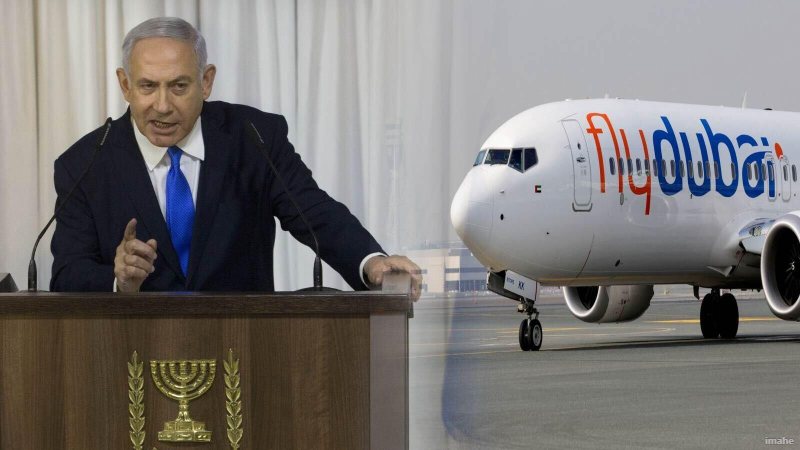
Whenever the name of Israeli Prime Minister Benjamin Netanyahu comes up in the corridors of international politics and diplomacy, his tough decisions and shocking statements start being discussed all over the world. Recently, Netanyahu has given one such very sensational and shocking statement which has alerted the aviation safety and security agencies. During one of his public addresses, he revealed that once in history, an Indian pilot was fatally attacked with an axe, after which many strict rules were made regarding the safety of planes. Ever since this shocking revelation came to light, the question that is rising most rapidly in the minds of common people is what is the need to keep such a dangerous thing like an ax inside every commercial and passenger plane in the world. In the modern era, where there is a ban on carrying even a needle inside the aircraft due to security reasons, the presence of an ax inside the cockpit or cabin remains a big mystery and a matter of debate in itself.
What is the real and surprising technical reason for keeping an ax inside the plane, which every traveler should know
Whenever a common passenger travels in an airplane, he thinks that all the modern and digital equipment is present to ensure his safety during the flight. But have you ever wondered why a traditional weapon, i.e. a metal axe, is still compulsorily kept inside planes that are considered to be so technologically advanced and computerized. According to the technical rules of aviation and aviation sector, this ax is not an attacking weapon, rather it works as an emergency rescue tool for the pilot and crew member. During flight, if any part of the aircraft gets jammed due to some technical fault, door gets blocked, or any wooden or plastic panel gets stuck due to electronic short circuit, then this ax is used to immediately cut or break it. Apart from this, many times in case of crash landing or emergency when the doors or windows get jammed, this ax proves to be the biggest weapon in saving the lives of the passengers.
Those dreadful pages of history when cockpit security became the biggest challenge during plane hijackings and attacks.
The attack on the Indian pilot mentioned by Benjamin Netanyahu has reminded us of those dark and scary days in aviation history when incidents of aircraft hijacking were common across the world. In the last decades, there have been many such incidents when terrorists or anti-social elements tried to enter the cockpit of the aircraft and take the pilots hostage so as to take control of the aircraft in their hands. To deal with such serious and life-threatening situations, aircraft manufacturers have given the right to pilots to use an ax to defend themselves from any such unpleasant situation or emergency inside the cockpit. However, since the tragic terrorist incident of 9/11, airlines and security agencies around the world have made aircraft cockpit doors bulletproof and highly secured, making it almost impossible for an outsider to enter inside. Despite this, as per the safety protocol, even today the rule of keeping this emergency tool in a designated safe place is strictly followed in most of the aircraft around the world.
How much has flight safety changed in the era of modern aviation security and generation engine optimization?
Today is the era of technology and artificial intelligence where every flight is closely monitored by ground-based air traffic control and modern sensors. Modern aircraft are equipped with modern fire extinguishing equipment, digital fire fighting systems and many types of automatic safety protections which detect any danger before it occurs. This is the reason that today, to deal with emergency situations, along with traditional tools like axe, many other high-tech gadgets and rescue kits are also being made available inside the aircraft so that there is no lapse in the safety of the passengers. Despite this, Netanyahu’s statement has once again sparked the debate that in times of emergency, human intelligence and basic equipment prove to be the biggest rescuers. No matter how much technology advances, the lessons of aviation history and strict safety regulations always keep airlines fully prepared to deal with any untoward incident, making every passenger’s journey safe.