 look news india

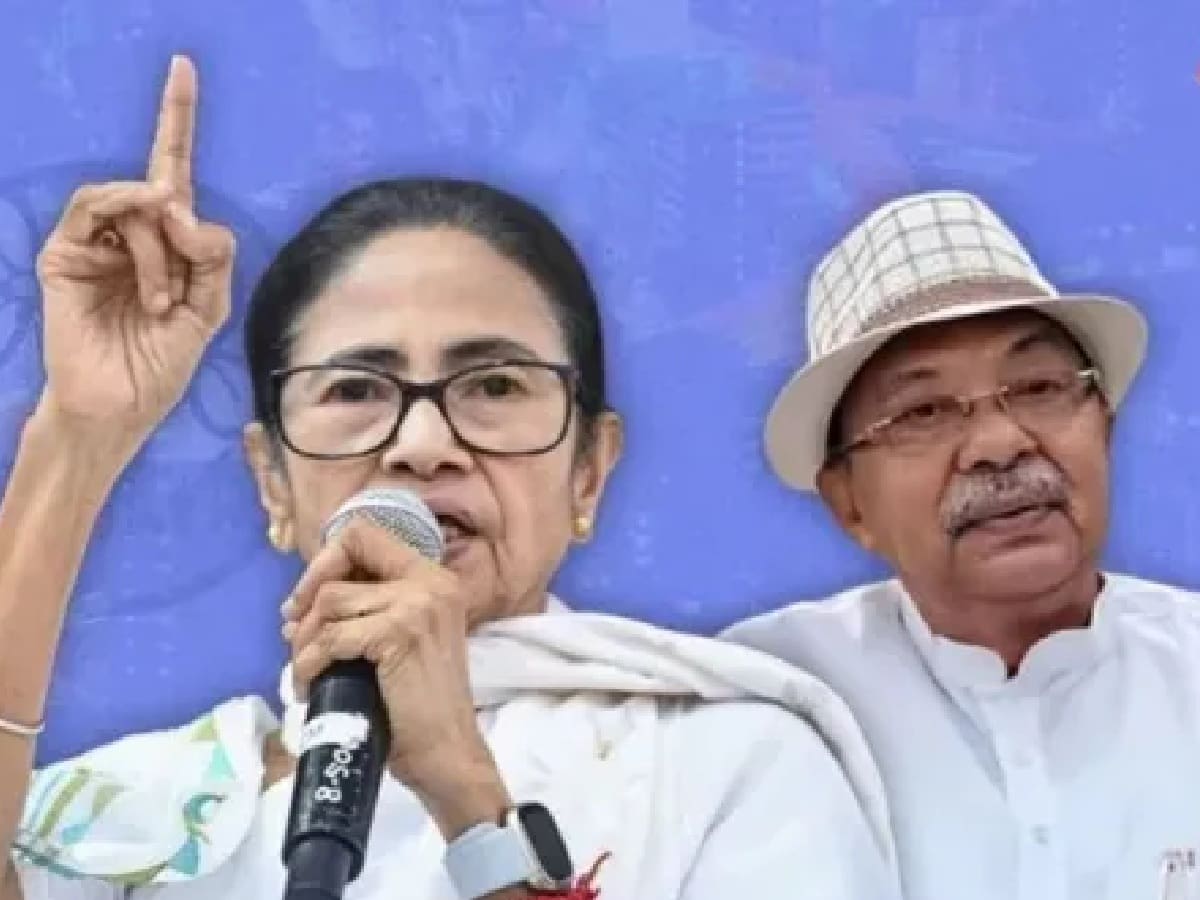
The Supreme Court of the country has taken a very important and decisive stand on the dispute over the name and election symbol of All India Trinamool Congress (TMC), which has been simmering in the politics of West Bengal and the political circles of the country for a long time. The Supreme Court on Monday gave clear instructions to the Election Commission of India (ECI) to provide a timely and permanent solution to the ongoing dispute over the party’s name and the historic ‘Joda Phool’ (flower and grass) election symbol. This legal battle had taken a serious turn when due to internal conflict within the party, two opposing groups came face to face and the matter passed through the Election Commission and reached the Supreme Court.
Hearing the entire case, a three-member special bench of Chief Justice Surya Kant, Justice Joymalya Bagchi and Justice V. Mohana has given a final opportunity of four weeks to both the parties involved in the dispute to complete their legal arguments. The court has made it clear that after the arguments and documents of both the groups are completed before the Election Commission, the Commission will have to give its final and binding decision within a maximum of three months. After this tough stance of the Supreme Court, now the countdown has started as to which group will ultimately get the symbol of ‘grass-flower’ which is the identity of Bengal politics.
This entire court case centered on the special leave petition filed by former West Bengal Chief Minister Mamata Banerjee. Mamata Banerjee had challenged in the Supreme Court the interim order of the Election Commission, under which the Commission had temporarily frozen (seized) the original name of Trinamool Congress and its reserved election symbol in view of the controversy. Mamta Banerjee had approached the apex court against this move of the Commission, arguing that the party’s formation and its entire support base stood under her leadership, hence banning the election symbol is contrary to the democratic processes and the morale of the party workers.
After hearing the arguments of Mamata Banerjee and the ground conditions, the Supreme Court bench accepted that the name and election symbol of any major political party cannot be kept in limbo for long. However, respecting the autonomy of the Election Commission, the court has handed over the statutory responsibility of taking a lawful decision within the stipulated time frame to the Commission itself, instead of directly handing over the symbol to any one party. With this order of the court, the movement to prepare a new legal and organizational strategy has intensified in both the camps.
The root of this entire controversy was the interim order passed earlier by the Election Commission, which had created a stir in the politics of Bengal. When internal divisions within the party came to the fore and two parallel factions presented their claims before the Commission, calling themselves the real Trinamool Congress, the Commission took strict measures to maintain fairness and electoral balance. The Election Commission had barred both the parties from using the name ‘All India Trinamool Congress’ and its reserved ‘flower and grass’ election symbol with immediate effect, pending a final decision on the dispute.
After the original identity was frozen, the Commission had allotted separate interim names and independent election symbols to both the opposing groups under a temporary arrangement, so that there is no hindrance in the election activities. The Commission had clarified in its interim order that after hearing the preliminary arguments of the representatives of the faction led by Mamata Banerjee and the other faction led by Arup Roy, it has become clear that there is a serious legal tussle between the two parties regarding the legislative and organizational majority. In such a situation, no final seal can be given without an in-depth investigation under the rules of the Election Symbols (Reservation and Allotment) Order 1968.
In Indian electoral history, whenever there is a split in a recognized national or state level political party, it is decided under the famous Para 15 of the ‘Election Symbols (Reservation and Allotment) Order, 1968’. On the basis of this legal provision, the Election Commission decides which of the separated groups is considered the original political party and which is the new party. For this, the Commission closely examines the claims of both the parties mainly on two major parameters: first, who has the majority in the organizational wing (the party’s National Working Committee, state units, office-bearers and primary members), and second, who has more support in the legislative wing (the number of MPs in both Houses of Parliament and MLAs in the Assembly and Legislative Council).
After the latest direction of the Supreme Court, now both the Mamata Banerjee faction and Arup Roy faction will have to file the signed support letters, affidavits and necessary documents of their respective MPs, MLAs and party’s National Council members before the quasi-judicial bench of the Election Commission within four weeks. After the cross-examination of the lawyers of both the parties is completed, the Commission will calculate the majority in both the wings. The group which has a certified majority of elected public representatives and organizational officials will be given the recognition of the original TMC and the legal right to the reserved ‘flower-grass’ election symbol.
This period of three months set by the Supreme Court is considered extremely sensitive for the future political scenario of West Bengal. Political analysts in Bengal believe that TMC’s ‘flowers and grass’ election symbol is not just a graphic symbol but is linked to the party’s grassroots identity among voters from rural Bengal to the slums of Kolkata. If the Election Commission’s decision goes in favor of one group, then the other group will have to re-establish its identity among the public with a new name and a new election symbol.
For Mamata Banerjee, this legal battle has become the biggest test of her political existence and protection of legacy. At the same time, Arup Roy’s camp is also leaving no stone unturned to strengthen its claim before the Commission on the basis of legislative numbers and legal documents. Now all eyes are on the headquarters of the Election Commission of India in New Delhi, where the next four weeks will see a heated legal debate between the veteran lawyers of both the groups and the final decision after that can completely change the equations of power and opposition in Bengal.