 look news india

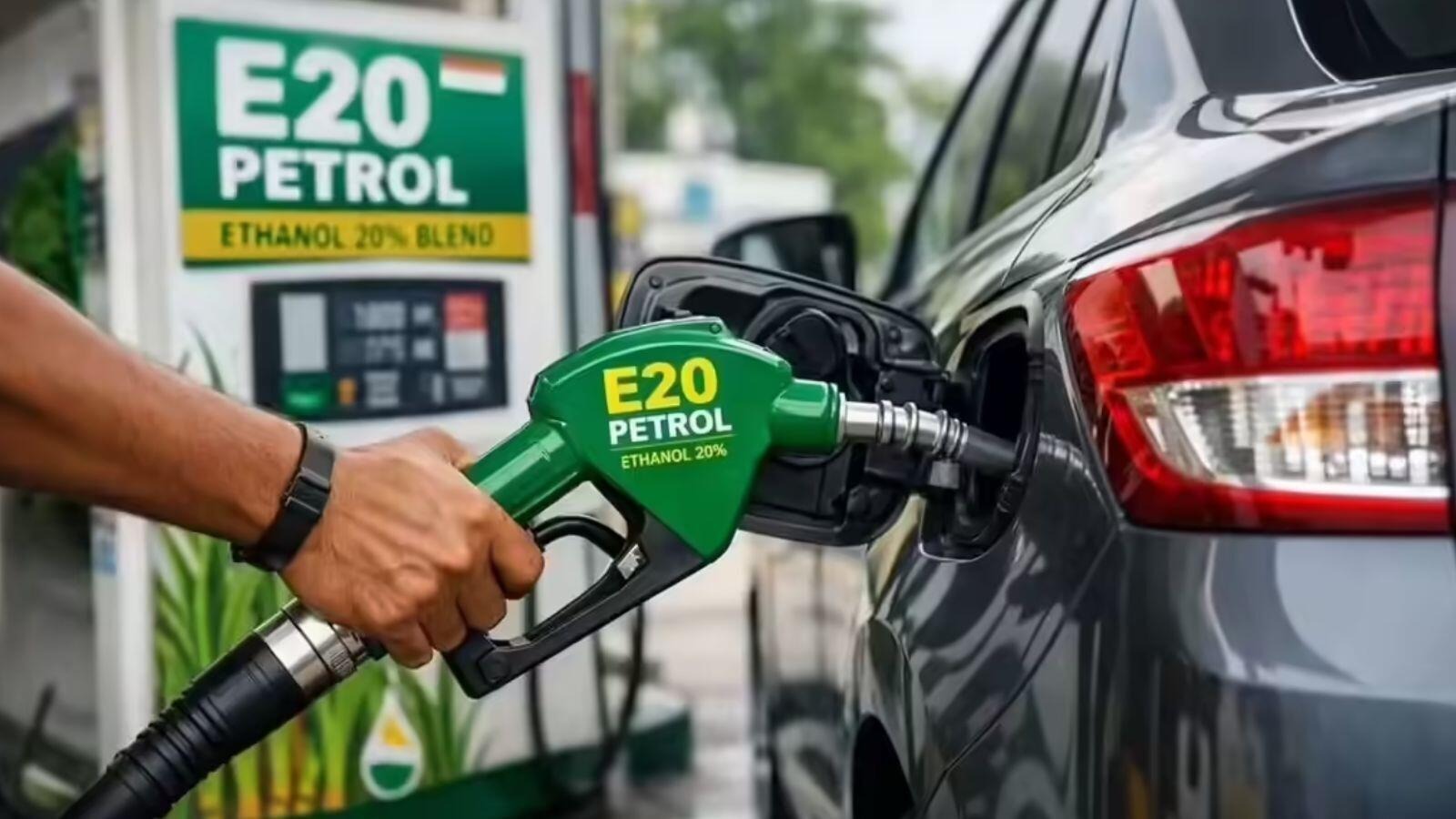
An ambitious plan to mix ethanol in petrol was launched by the Government of India to reduce the country’s dependence on crude oil imports and protect the environment. Under this, a target was set to rapidly implement E20 petrol i.e. a mixture of 20 percent ethanol and 80 percent petrol across the country. However, as this scheme is coming on the ground, many serious technical and practical problems have arisen before it. The current situation is that on one hand the consumption of ethanol produced by the country’s distilleries and sugar mills is not happening as fast as was expected, and on the other hand the proposals for high blend fuel i.e. E25 and E30 seem to be on hold. This entire situation has created a new stir in the energy sector and the automobile market, raising concerns from policy makers to motorists.
When E20 petrol was launched in the country in a phased manner, it was believed that this would save the country’s foreign exchange reserves and farmers would also get fair prices for their crops. But the picture at the ground level is telling something else. In many parts of the country, it has become a common discussion among consumers and petrol pump operators that petrol with high ethanol content is affecting the engine performance of vehicles. There have been complaints of engine and fuel pumps of many old vehicles malfunctioning due to the chemical properties of ethanol. Apart from this, due to slight decline in mileage, even common drivers are not completely comfortable with it. This is why oil marketing companies are facing various logistics and demand related challenges in smoothly running the sale of ethanol-blended fuel at petrol pumps.
The initial goal of the government and the automobile industry was to rapidly move the country from E20 to E25 and E30, so that dependence on fossil fuels could be further reduced. But these higher blending targets have been put on hold for now following practical difficulties in implementing E20 and objections from automobile manufacturers. Car and two-wheeler makers say most vehicles currently plying on Indian roads are designed to tolerate blends up to E20 only. If a highly ethanol-rich fuel like E25 or E30 is introduced into the market without adequate technological changes and stronger engines, vehicle parts may deteriorate quickly and engine life may decrease. Keeping this technical and safety aspect in mind, the high mixture rules have been put on hold for the time being, so that vehicle owners do not have to face any major losses.
The biggest blow in this entire game of ethanol blending has been suffered by those sugar mills and distillery units which had made huge investments on the call of the government and had increased the ethanol production capacity. In India, ethanol is being produced in large quantities from sugarcane juice and broken rice, but due to the pace of its consumption in petrol not being as expected, mills are facing storage and cash flow problems. If this slowdown in ethanol sales continues, it may have a negative impact on the payment of dues to sugarcane farmers. Industry experts believe that the government and oil companies will have to work together to correct this demand and supply imbalance as soon as possible, otherwise this entire model of green energy may lose its momentum.
After all these complexities and hurdles on the front of blending ethanol in petrol, the eyes of policy makers and energy experts have now turned to diesel, the second largest fuel in the country’s transportation sector. A large part of the total fuel consumption in India runs on diesel, especially commercial vehicles, trucks, buses and agricultural equipment are based on diesel. In such a situation, the government is now rapidly considering the strategic direction of promoting the blending of biodiesel and other alternative fuels with diesel. Although blending with diesel poses more technical challenges than petrol, it is becoming an essential option to reduce the crude oil import bill. It remains to be seen in the coming times how the government handles this new equation of diesel and biodiesel and whether it will bring relief to the country’s automotive sector or create new problems.