 look news india

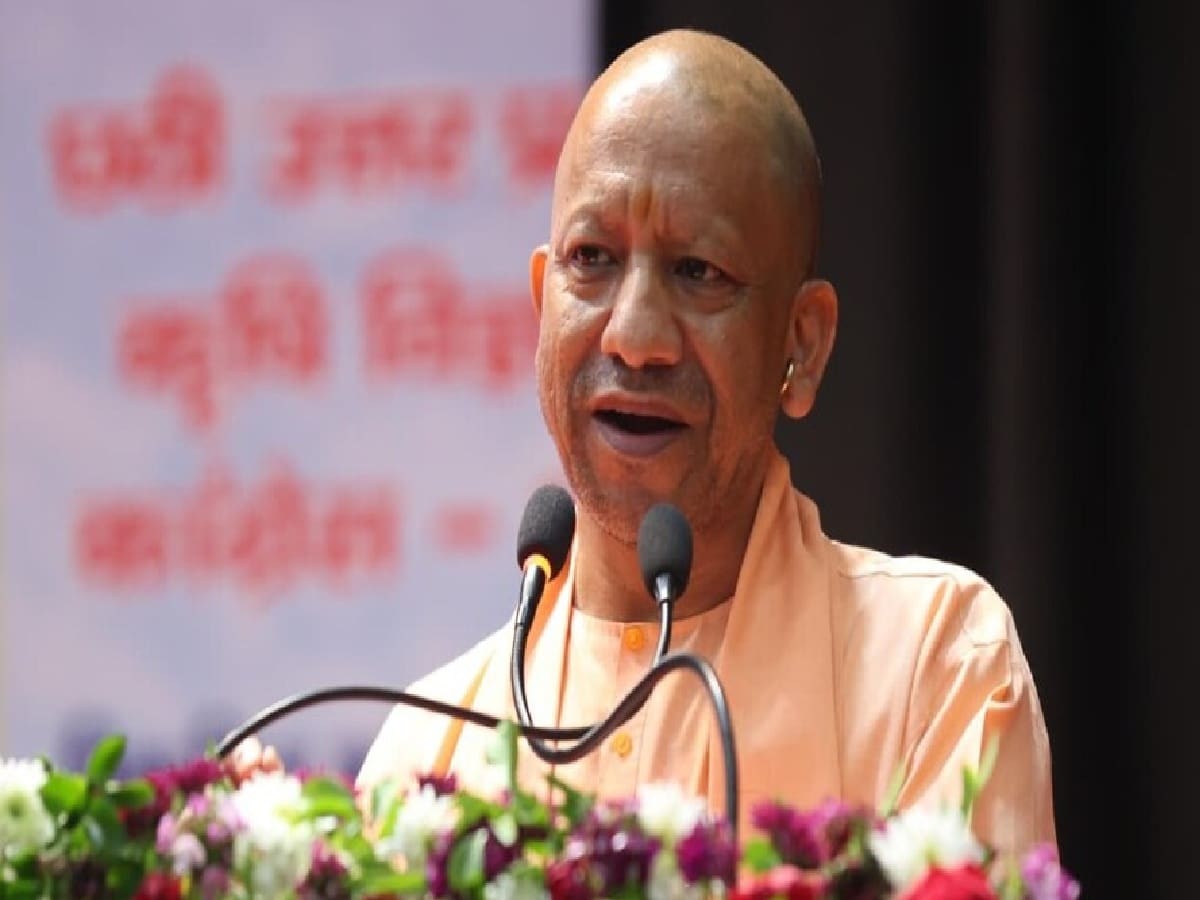
There is a relief news for common citizens and investors who want to build their house, establish a new business or set up an industrial unit in Uttar Pradesh. The state government led by Chief Minister Yogi Adityanath has given a huge relief to the people who have to visit government offices to change the land use (land use change) and has drastically reduced the change fee. The state government has almost halved the rates of fee prescribed for residential, industrial, institutional, office and commercial use from agricultural land. Along with this, important concessions have also been given in the rates for change from residential to commercial and industrial categories.
With the aim of bringing ease of doing business in the state and accelerating the pace of urban development, Principal Secretary Housing P. Guru Prasad on Friday issued the official notification of ‘Uttar Pradesh City Planning and Development (Determination, Levy and Collection of Land Use Change Fee) Third Amendment Rules-2026’. This step of the government is being considered as a revolutionary reform towards making the economy of Uttar Pradesh one trillion dollar, which will give unprecedented impetus to real estate, industry and infrastructure projects.
Under the new rules, development authorities (like LDA, KDA, VDA, GDA, NDA etc.) have been given direct power to change the land use of plots up to 6000 square meters at the local level. Earlier, files for land use amendment of small plots also had to be sent to Lucknow at the government level, due to which the process remained stuck for months. Now the development authorities will be able to dispose of these files quickly at their own level.
However, a clear restriction has also been added to this arrangement that the development authority will be able to change only a maximum of 1 percent of any specific land use under the master plan. If the land use of more than 1 percent of the area in any area has to be changed, then its final decision and authority will remain with the government as before. This balance has been created so that there is no unnecessary tampering with the basic structure of the planned development and master plan of the city.
Land use change fee is determined by the development authorities on the basis of a percentage of the prevailing circle rate of the concerned area. The state government has completely rationalized the old complex rates to provide affordable land to industries and realize the housing dreams of citizens. Earlier, 20 percent fee was charged on land use for agriculture, park, open space and green belt for public facilities, traffic and transportation, which has now been reduced to 15 percent.
The comparative details of new and old rates of change from agricultural land to other categories are as follows:
| range of use | Old Conversion Charges (% of Circle Rate) | New Revised Charges (% of Circle Rate) |
| Residential | 50% | 25% |
| Commercial | 150% | 75% |
| Office / Institutional | 100% | 50% |
| Mixed Use | 125% | 65% |
| Small and large industries (Industrial) | 20% | 15% |
| Public Facilities / Parking | 20% | 15% |
Now zero percent i.e. no fee will be charged for using land from the residential category for public facilities, traffic and parking. Apart from this, no fee will be payable for converting small or big industry from residential building. Now only 25 percent fee has been fixed for residential and office use and only 50-50 percent for mixed and commercial use.
In the new rules, a very scientific and transparent ‘telescopic basis’ has been fixed for determining fees for large plots. This means that as the area of the plot increases, the slab of fee applicable on it will automatically reduce. For example, land use change charges for a large plot of 15 hectares will be calculated as per the prescribed formula of (0.25×1) + (1-0.25)x0.9 + (5-1)x0.8 + (10-5)x0.7 + (15-10)x0.6 times circle rate times applicable percentage.
The guidelines regarding determination of circle rate have also been made completely clear. The final fee will be calculated by multiplying the entire area by the circle rate decided by the authority. If the circle rate is not available in a particular scheme or sector, the circle rate of the nearest scheme will be taken as the basis. Where agricultural or commercial circle rates are not recorded, the rate for non-agricultural (non-agricultural) land will be considered. Apart from this, in areas where the circle rate of agricultural land is not fixed separately, it will be calculated considering 20 percent of the residential circle rate. A nominal application fee of Rs 1000 per hectare will have to be deposited along with the application.
To protect citizens from unnecessary delays, strict time lines have been set in the new rules from application to final approval. As soon as the Development Authority receives the application, a copy of it will be sent to the Chief Town and Country Planner. Both the departments will complete the joint review within a maximum of 22 days and present their recommendations to the Authority Board. If additional clarification is required in any case, a maximum time of 60 days will be given for the same.
After getting the in-principle approval of the Authority Board, objections and suggestions will be invited from the general public within 15 days by publishing the proposal on the Authority’s website and in at least one major daily newspaper. If no valid objection is received, the proposal will be sent to the Vice Chairman of the Development Authority for final signature within 15 days. After receiving the official notice of fee determination, the applicant will have to deposit the prescribed amount through challan within 90 days. A formal certificate of land use change will be issued within just 15 days of receiving the full payment.
The Yogi government has clarified that relaxing the rules does not at all mean laying uncontrolled concrete traps. To protect environmental balance and public facilities, a complete ban on land use change of some sensitive lands will continue. According to the rules, the land use of green areas, natural forests, amusement parks, playgrounds, drainage drains, natural ponds, lakes and wetlands will not be changed at any cost.
Along with this, any kind of change in the land use of public and semi-public land like sewage treatment plant (STP), solid waste management plant, water treatment plant (water works), cremation grounds, cemeteries, roads, railway land and lands reserved for public parking will be completely prohibited. A high-level committee constituted under the chairmanship of the Vice Chairman in each development authority will strictly monitor that 100 percent compliance of these rules is ensured.