 look news india

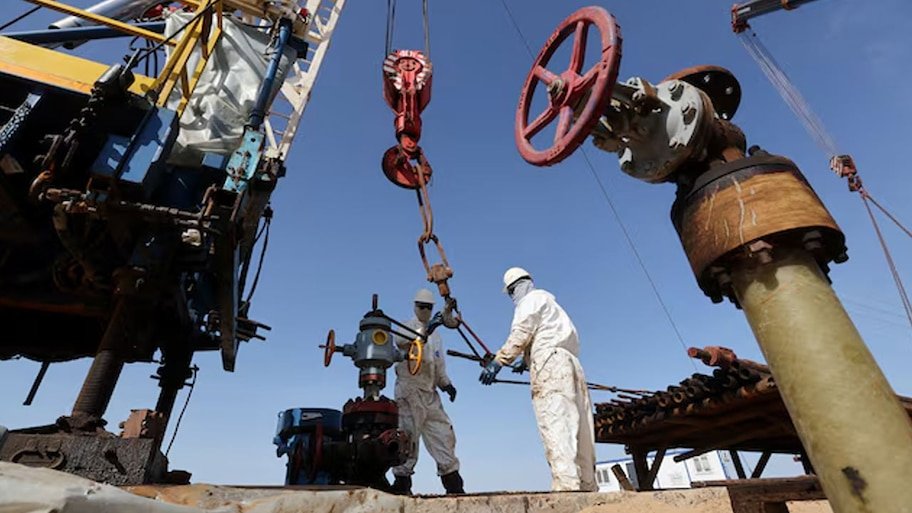
New Delhi. The movement of crude oil in the international commodity markets has surprised analysts amid the growing military tension in West Asia (Middle East) and the shadow of looming attacks on oil exporting countries. Brent crude rose sharply by about 3% to 5% in early trading and reached $106.60 per barrel after Yemen’s Houthi rebels fired ballistic missiles targeting Saudi Arabia’s main oil export hub Yanbu and Taif. However, despite this serious geopolitical tension, the rise in crude oil could not be sustained and the prices in the futures market slipped to around $105 per barrel.
Generally, whenever the infrastructure of the world’s largest oil exporter country like Saudi Arabia is attacked, the prices of crude oil start skyrocketing in the global market. But this time, despite the news of missile attacks, oil prices have seen profit booking from higher levels and a declining trend. This unexpected trend has raised a question in the minds of Indian consumers and drivers whether the prices of petrol and diesel can become cheaper in the domestic market in the coming days.
According to commodity and energy market analysts, there are three major global reasons behind prices holding back and falling from higher levels even after the Saudi attacks:
-
Six missiles intercepted in air, infrastructure safe: The Saudi Arabia-led coalition clarified that all six ballistic missiles fired from Yemen were shot down in the air by Saudi air defense systems. The Yanbu oil refinery and Red Sea export terminal suffered no physical damage, eliminating fears of immediate supply disruption.
-
Saudi Arabia’s Strategic Supply Diversion: Despite pressure on the East-West Pipeline, Saudi Aramco has increased its shipments through the Strait of Hormuz from 2.9 million to 4 million barrels per day. The flow of Saudi oil in the global market remains strong, due to which the supply crisis was averted.
-
Expectations of US-Iran diplomatic talks: The news of a possible peace agreement between the US and Iran to reduce tensions behind the scenes during the United Nations General Assembly (UNGA) meetings in New York and the unhindered movement of ships in the Strait of Hormuz has reduced the ‘war premium’ from the market to a great extent.
Despite the slight softening in crude oil from its high of $106, the chances of petrol and diesel becoming cheaper immediately in the Indian retail market appear to be very slim. It is important to understand the mathematics behind this:
-
Crude level above $100 challenging for companies: According to the financial models of Indian oil marketing companies (IOCL, BPCL, HPCL), unless Brent crude remains in the range of $75 to $80 per barrel, there is no scope for cutting retail prices. Currently, crude being at $100 to $105 level is putting huge pressure on refining and marketing margins.
-
Compensation Policy of Government Oil Companies: When crude oil is extremely expensive, companies suffer under-recovery (losses) by keeping domestic prices stable. In such a situation, instead of passing on the benefit of a slight drop of $2-$3 in international prices to the end customers, companies use it to compensate for their losses.
-
Rupee exchange rate: Imported oil bills remain high due to pressure on the Indian rupee against the US dollar, limiting the scope for cuts in retail prices.
Petrol and diesel rates remain completely stable even today in four big metros of the country:
| Metropolitan | Petrol (₹ per liter) | Diesel (₹ per liter) | Situation |
| New Delhi | ₹94.72 | ₹87.62 | steady |
| Mumbai | ₹104.21 | ₹92.15 | steady |
| Kolkata | ₹103.94 | ₹90.76 | steady |
| Chennai | ₹100.75 | ₹92.34 | steady |
Industry experts believe that if US-Iran talks are successful and Brent crude falls below $85-$90 as tensions in the Middle East calm down, then only during the festive season the government and oil companies can consider giving excise duty concession or relief of ₹2 to ₹3 per liter in retail price. Till then, the current prices in the domestic market are likely to remain stable.