 look news india

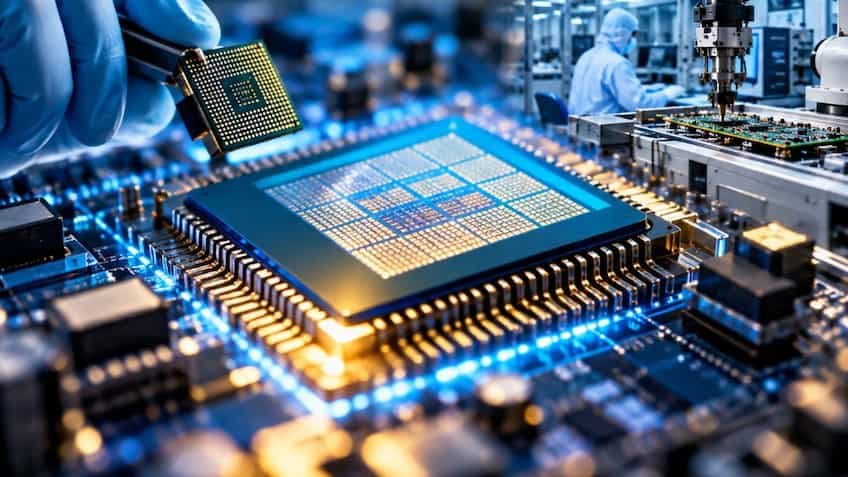
New Delhi. Semicon India 2026 conference, organized with the aim of making India the global electronics and chip manufacturing leader, has created a new history in the tech and manufacturing sector of the country. Through this international platform, global and domestic majors have committed new investments of more than $11 billion (approximately ₹90,000 crore to ₹1 lakh crore) in India’s semiconductor and allied ecosystem. Under the ‘Semicon 2.0’ mission with a proposed outlay of ₹1.27 lakh crore approved by the government, the country will no longer be limited to chip design alone, but will move forward aggressively on fabrication (Fabs), advanced packaging (ATMP/OSAT), device manufacturing and component localization.
The direct and fastest positive impact of this huge policy support and capital investment will be on India’s Electronics Manufacturing Services i.e. EMS (Electronics Manufacturing Services) Is going to affect the companies. For Indian EMS companies, which till now have been dependent on Taiwan, China and South Korea for most of their chips and active components, local chip production will be a game-changer in reducing logistics costs, speeding up working capital cycles and significantly enhancing profit margins.
Semiconductor chips and microprocessors account for 30% to 50% of the total manufacturing cost of electronics products (such as smartphones, laptops, automotive electronics, smart meters and defense equipment). Till now, Indian EMS companies had to face huge freight, currency risk and global supply chain constraints on importing these chips.
Setting up of Fab Units and OSAT plants within the country will have the following four basic benefits:
-
Boom in local value addition: With chips being manufactured in the country, localization at the component level will increase from 15-20% to 40-50%, due to which companies will get maximum incentive from the government PLI scheme.
-
Reduction in supply chain and inventory costs: With chips available domestically, companies will not have to hold inventory months in advance, freeing up their working capital.
-
High-Margin Orders (Box Build & High-Complexity EMS): Moving beyond traditional low-margin mobile assembly, companies will be able to manufacture complex electronics such as EV, aerospace, medical and data center hardware.
-
Own OSAT/Packaging Detail: Many leading EMS companies are now entering the chip packaging and testing business directly, transforming them from pure assemblers to integrated tech-manufacturers.
According to market researchers and brokerage reports, the expansion of the semiconductor ecosystem could see a sharp jump in the order book and earnings growth of these domestic companies:
| Company Name | core focus area | Direct benefit from semiconductor boom |
| Kaynes Technology | Automotive, Railways, IoT and Defense EMS | ₹3,307 crore dedicated semiconductor OSAT plant in Sanand, Gujarat; Packaging capacity of more than 60 lakh chips per day. |
| Dixon Technologies | Consumer Electronics, Mobile and IT Hardware | India’s largest EMS player; massive expansion in display and component manufacturing; Margin improvement due to easy availability of chips. |
| Syrma SGS Technology | Industrial, Healthcare and Auto Electronics | Projects under Component Manufacturing Scheme; High-margin industrial PCB design and semiconductor supply chain integration. |
| Cyient DLM | Aerospace, Defense and Mission-Critical Electronics | Strong hold in complex electronic systems and design-led manufacturing; Big benefit from demand for defense chips. |
| CG Power & Ind. Sol. | Power Equipment and Industrial Systems | ₹7,600 crore mega semiconductor assembly and test plant (CG Semi) in collaboration with Renesas and Stars Microelectronics. |
The participation of more than 500 global companies (such as Micron, Applied Materials, ASML, Fujifilm etc.) from more than 20 countries in Semicon India 2026 has proved that India has become not just a big market but also a safe and reliable global manufacturing hub. The recently announced ₹800 crore semiconductor materials plant by Japan’s Fujifilm and investments by global venture capital funds in Indian chip-design startups are visible proof of this.
Brokerage firms estimate that the Indian EMS basket has the potential to grow at an annual revenue CAGR of more than 30% over the next 3 to 4 years. If infrastructure, skilled workforce and the government’s ‘Semicon 2.0’ policies take off in a timely manner, this decade could prove to be a historic golden age for Indian electronics and hardware manufacturing.
(Disclaimer: This analysis is for educational and informational purposes only. Must consult your SEBI-registered financial advisor before investing in any stock.)