 look news india

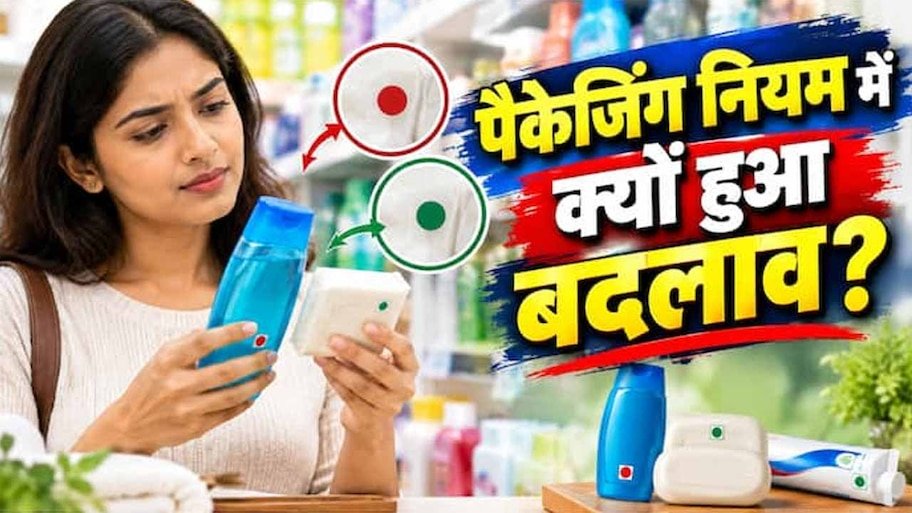
New Delhi. Chip packets, children’s favorite chocolate biscuits, 2-minute noodles, frozen snacks and colorful packaged drinks adorning the gleaming shelves of supermarkets—which millions of Indians are buying indiscriminately every day to quench their thirst for taste and appetite, are they actually proving to be slow poison for your health? Amid rising cases of serious lifestyle diseases in the country—obesity, type-2 diabetes, high blood pressure and heart attacks at an early age—a major policy change is taking shape from the corridors of the Supreme Court of India and the food safety regulator. There is now a big sign on the front of all packaged foods sold in the country. ‘Red Warning Label’ (Red Flag Warning Symbol) Preparations are underway to make it mandatory, seeing which the consumer will understand how harmful this product can be for his health.
Till now, packaged food companies used to get away with printing nutritional charts (nutritional information) in very small and fine print on the back of the packet, which the common consumer could neither read nor understand properly. But after the strong comments of the Supreme Court and pressure of PIL, the Food Safety and Standards Authority of India i.e. FSSAI (Food Safety and Standards Authority of India) But now there is all-round pressure to implement ‘Front-of-Pack Labeling’ (FOPL) rules with immediate effect.
The court has taken a tough stance during the hearing on an important PIL filed in the Supreme Court regarding mandatory front labeling of excessive sugar, salt and saturated fat in packaged foods. The petitioners argued before the apex court that multinational and domestic food companies are keeping Indian consumers in the dark and selling ultra-processed foods, which are much more unhealthy than European and American standards.
The court said in clear words that health and clean eating habits of citizens are an integral part of the ‘Right to Life’ guaranteed under Article 21 of the Constitution. During the hearing, when FSSAI sought time citing consultation with stakeholders (industry) in implementing the rules, the court made it clear that this ruckus of the regulator is pushing the future generation of the country towards making it the capital of diabetes and heart diseases. Following this strong stance of the court, FSSAI has accelerated the process of finalizing the revised draft of warning labels on the front of packaged foods.
According to the World Health Organization (WHO) and medical experts, any packaged food HFSS (High in Fat, Sugar, and Salt) It is placed in the sugar category when it contains more sodium (salt), refined sugar (sugar) or saturated/trans fat than the prescribed daily limit.
The rules under the proposed ‘Red Flag’ or ‘Red Octagon’ warning system are being set out to:
-
Front-of-pack display: There shall be a clear red warning box or symbol occupying at least 10 to 15 percent of the main front display area of the packet.
-
Clear identification of content: If the amount of salt in a snack exceeds the standard, it will be written with a red mark –“HIGH IN SALT”If there is too much sugar “HIGH IN SUGAR” and having more fat “HIGH IN SATURATED FAT”.
-
Opposition to star rating: The food industry had been advocating for the implementation of ‘Health Star Rating’ (1 to 5 stars) for a long time, but health experts and pediatricians (IAP) strongly opposed it. Experts say star ratings are misleading (companies can get even an unhealthy product to get 3 or 4 stars by adding a little fiber or protein). In contrast, a ‘red flag’ gives a direct and clear warning message that the product poses a danger.
The truth about popular packaged snacks sold in the Indian market may surprise anyone:
-
Potato Chips and Salted Bhujia: A typical 50 gram packet of chips contains 40% to 60% of an adult’s recommended sodium (salt) limit for the day. Additionally, they are deep-fried in palm oil, which increases artery-clogging bad cholesterol (LDL).
-
Cream Biscuits and Breakfast Cereals: Just 4 to 5 pieces of children’s favorite biscuits contain 3 to 4 teaspoons of hidden sugar. Even packaged cornflakes or energy drinks that are marketed as ‘healthy’ are high in fructose corn syrup.
-
Instant Noodles and Ready-to-Eat Meals: The tastemaker in noodles contains extremely high levels of monosodium glutamate (MSG) and sodium, which are the main causes of childhood obesity and fatty liver at an early age.
Latin American countries like Chile, Mexico and Brazil witnessed a revolutionary change in consumer behavior when black and red front warning labels were made mandatory on packaged foods. Sales of chips, carbonated soft drinks and junk foods declined drastically by 25% to 30%. Its biggest positive impact was that food companies were forced to develop new and healthy formulas by reducing the amount of sugar, salt and fat in their products.
When this red symbol becomes mandatory in India too, any parent will be forced to think before handing over a box of chips or cold drink to their child after seeing the red danger symbol printed on the packet. This rule will not only empower consumers to make informed choices, but will also permanently stop multinational companies from running fake advertisements by advertising their unhealthy products as ‘nutritious’ or ‘energy-rich’.