 look news india

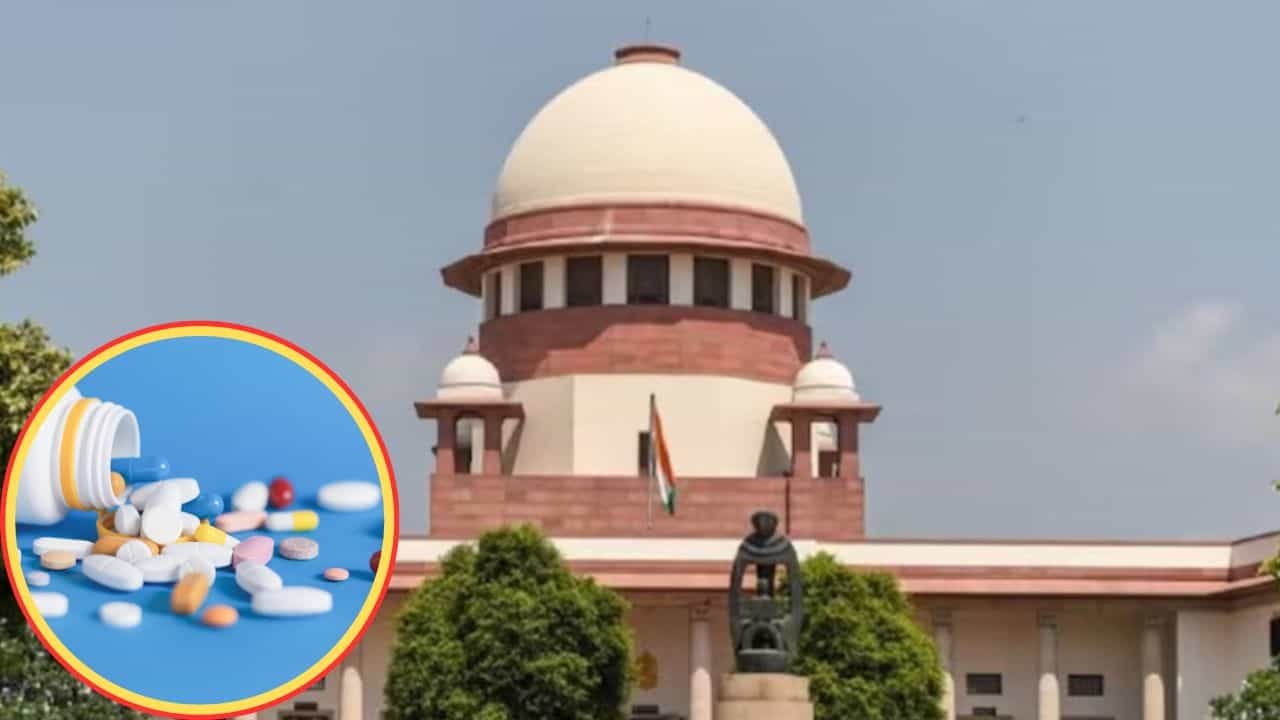
The country’s top court has taken a tough stand on the exorbitant prices of life-saving drugs, especially those used in the treatment of deadly diseases like cancer, and uncontrolled profits of pharmaceutical companies. The Supreme Court has expressed deep displeasure over the huge trade margins of 800 to 1000 percent being charged by pharmaceutical companies on essential medicines. During the hearing of a serious case, the top court made a scathing comment and said that charging a maximum retail price (MRP) of ₹ 27,000 from the patients for a medicine whose actual manufacturing and wholesale cost is only ₹ 2,700 is no less than ‘daylight robbery’. The court made it clear that the right to health is an inalienable part of the fundamental right to life and companies cannot be given free rein to take unfair financial advantage of human helplessness.
A division bench of the Supreme Court made this scathing comment while hearing PILs related to the pricing policy of essential medicines and the guidelines issued by the National Pharmaceutical Pricing Authority (NPPA). Citing data produced on record, the court underlined how a huge gap exists between the manufacturing cost and retail MRP of chemotherapy and immunotherapy drugs for cancer and other rare diseases.
The court said that when a family suffers from a serious illness like cancer, it becomes completely financially devastated due to the exorbitant medicine expenses. In such sensitive times, pharmaceutical companies, distributors and some private hospitals form syndicates and charge trade margins of 900 to 1000 percent. The bench remarked that earning reasonable profits in business is one thing, but such exploitation at the cost of the lives of helpless patients is plainly anti-people and unethical.
The top court asked the drug price regulator NPPA, which works under the Central Government and the Ministry of Chemicals and Fertilizers, as to why an effective mechanism has not been developed till now to rationalize drug prices. The court directed the authorities to:
-
Trade Margin Rationalization (TMR): An upper limit (Cap) should be fixed on the trade margin on all non-scheduled life saving drugs, especially oncology (cancer) drugs from the point of sale (price to stockist) till it reaches the consumer.
-
Drug Price Control Order (DPCO): The scope of the National List of Essential Medicines (NLEM) should be expanded so that even rare and extremely expensive anti-cancer drugs can be brought directly under the purview of price control.
-
Transparency and Audit: The production expenses of pharma companies and the MRP formula decided by them should be financially audited by independent technical experts.
Health sector experts and petitioners highlighted before the court that the MRP is often kept artificially high in the pharmaceutical industry. The main reason behind this is to attract private hospitals, wholesalers and retailers.
The MRP of a medicine whose production and bulk supply cost is ₹2,700 is recorded at ₹27,000. After this, hospital or medical store operators earn huge profits of more than 800 percent per unit by giving ‘sham discounts’ of 10 to 20 percent to the patients. Due to this game of branded medicines, patients and their families are unable to access affordable generic medicines available in the market, as the prescriptions are often carrying specific expensive brand names.
After this strict stance of the Supreme Court, it is expected that the Central Government will implement a strict regulatory framework to control the prices of medicines for cancer and other incurable diseases.
Various public health activists believe that if the government limits the trade margin to 30 to 40 percent, the cost of a normal cancer chemotherapy cycle can come down from lakhs of rupees to a few thousands. The court has asked the concerned ministries to file a concrete action plan and affidavit for the next hearing of the case, to ensure that no citizen is deprived of treatment merely due to lack of expensive medicines.